
The Cupid of Romance
Kijimadaira, where the name is cute and the turns are serious
 木島平
木島平The Cupid of Romance
8.3~10m
Snowfall
1271m
Elevation
4
Lifts
¥5,700
Price
Romance branding, no-nonsense riding
If you knew this hill as Kijimadaira, don’t stress, you’re not lost. It’s the same North Shinshu ski area, just wearing a very new outfit: Snow Resort The Cupid of Romance. Yes, that’s the actual vibe now, and yes, it’s a little ridiculous in the best way. The rebrand leans hard into playful energy, but the skiing is still the point: uncrowded groomers, quick access to steeper pockets, and a proper vertical that makes the day feel longer than you’d expect.
The setting is pure rural Nagano: small roads, farmland and forests down low, then a tidy lift network that climbs into a colder, snowier band where storms do their thing. It’s not a destination mega-resort with a fancy base village. It’s a real-deal local mountain with enough lift-served terrain to keep upper intermediates smiling all day and enough steeper, less-manicured zones to keep advanced riders hunting for soft snow when the groomers get busy.
Crowds are usually a non-issue compared to the big-name magnets. Weekdays can feel like a private session, and weekends are more family-focused than full-send chaos. The lift system is simple, and the mountain’s best skiing is not hidden behind marathon traverses. You can be on snow fast, get into rhythm early, and keep stacking quality turns without needing a battle plan.
English is not a big part of the experience here. You’ll get by with basic resort signage, a translation app, and polite vibes, but this isn’t built around international tourism. That’s part of the charm: less hype, more skiing, and a mellow local feel that’s perfect when you want a reset day away from the busier mountains nearby.
Resort Stats
- Vertical796m (1271m → 475m)
- Snowfall~10m
- Terrain 40% 50% 10%
- Tree Riding
- Lift Pass¥5,700
- Lifts4 doubles, 2 surface lifts
- Crowds
- Out of Boundsnot allowed
- Night Skiing
- Family Friendly
- Trails10
- Skiable Area~80ha
- Viberural, friendly, low-fuss
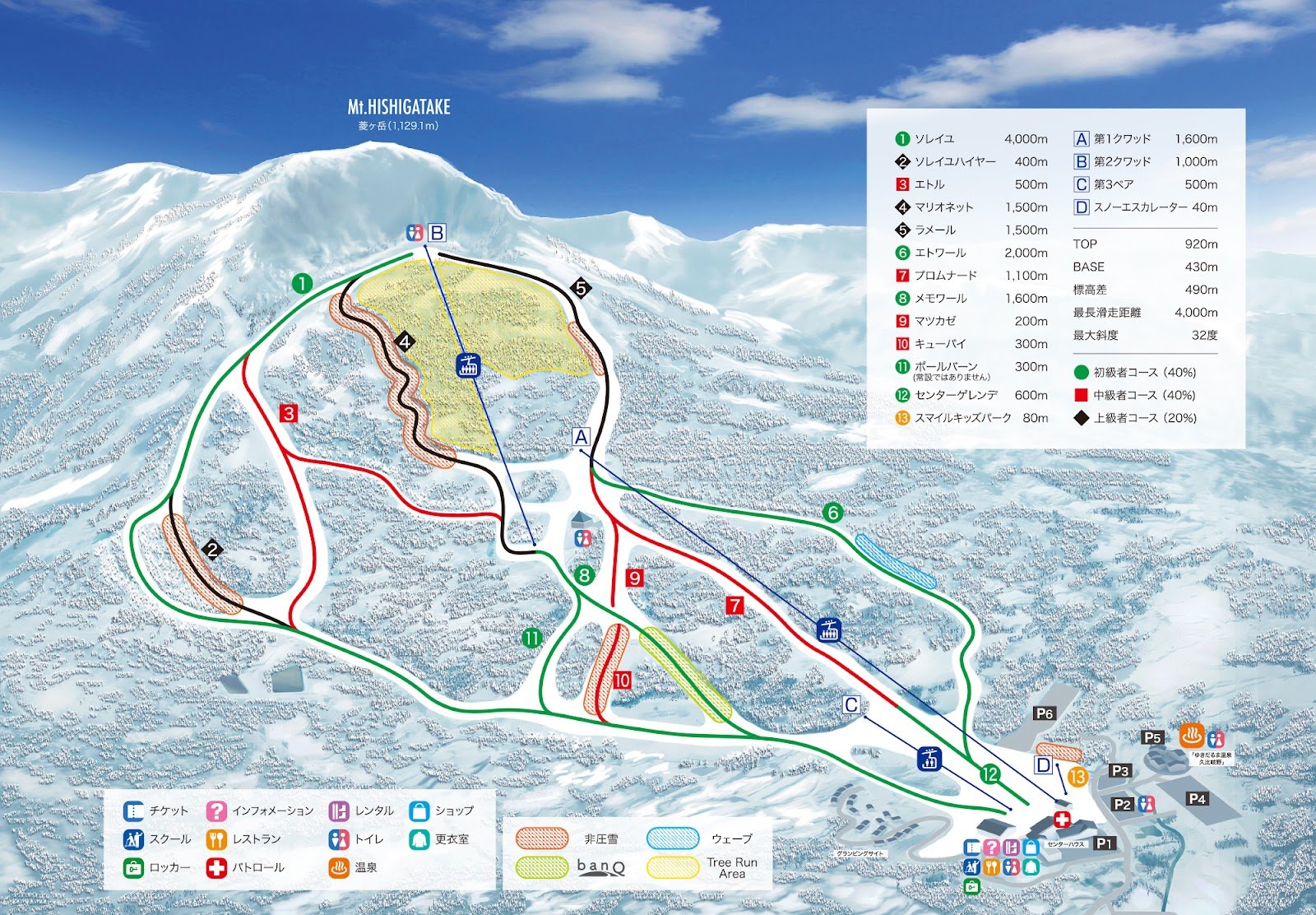
Trail Map
Accommodation
View MapIf you want the simplest ski day possible, go slopeside at SBC Resort Kijimadaira. You’re right there at the hill, you can keep your mornings easy, and you get that classic Japan ski-hotel routine: gear dry overnight, breakfast, click in, go. It’s not about nightlife, it’s about being efficient and maximizing snow time.
For a more local, homey stay, the Kijimadaira area has small pensions and guesthouses that lean practical and friendly rather than fancy. A solid example is Pension Doumu (ペンション童夢), the kind of place where the vibe is warm, the routines are simple, and you’re close enough to the lifts that early starts don’t feel like a mission.
If you want a proper onsen town atmosphere, base in Yudanaka or Shibu Onsen and drive in. You’ll trade a bit of morning convenience for a better post-ski soak-and-stroll routine, which can be the move if you’re traveling with non-skiers or you want the evenings to feel more like Japan and less like a ski carpark dinner. Yudanaka Seifuso Ryokan is one of those classic, comfortable options that fits the onsen-town rhythm nicely.
Powder & Terrain
Kijimadaira’s storm personality is classic Nagano: when the Sea of Japan is firing, you’ll get consistent reloads, and the snow stacks up quickly in the sheltered zones. The quality can swing a bit with temperature, but in a proper cold cycle it’s the kind of soft, supportive snow that makes even basic terrain feel fun. On storm days, visibility can come and go, so you’ll want to keep things treed and avoid getting lured into the most open, featureless pitches if the light turns flat.
The terrain mix is exactly what the numbers suggest: a big, friendly intermediate heart with enough variety that you don’t feel trapped on one motorway run. You’ve got long cruisers that let you open it up, plus sections where the trail shape rolls and bends, so it doesn’t feel like you’re just pointing it down the fall line all day. The longest top-to-bottom lines are satisfying, and the vertical gives you that proper leg-burn without needing a monster resort.
Where it gets more interesting is the steeper end of the trail list. Pioneer is the obvious headline: it’s the one that feels like someone quietly snuck a serious pitch into a family-friendly mountain. It’s not a huge zone, but it’s steep enough to demand attention when it’s firm, and when it’s soft it becomes the place you keep drifting back to because it actually has teeth.
Tree riding here is about picking the right day and staying inside the ropes. There’s no big gate network, no obvious sidecountry culture, and you should assume boundary enforcement is real. The best tree skiing is usually adjacent to the steeper or less-trafficked runs, where you can dip in, grab softer snow, and pop back out without committing to anything sketchy. It’s not endless glades, but there are enough pockets to keep you hunting for soft turns after the main pistes have been tracked out.
Crowd dynamics are straightforward: families and locals tend to concentrate on the gentler zones, especially in the middle of the day, while stronger riders can keep cycling the steeper options and less obvious edges. If you want your best snow, go early and be decisive. First chair matters more here than heroics, because the good lines are accessible, and that means they get found. The upside is you don’t need to fight for them, you just need to move with purpose.
Getting There
The cleanest public-transport approach is Shinkansen to Iiyama Station, then a taxi or local bus connection depending on timing and season. If you’re coming from Tokyo, it’s a very doable day move, and it’s one of the reasons this area works well for Nagano samplers.
Driving is the easiest option if you want flexibility, especially if you’re pairing multiple resorts. Winter tires are non-negotiable, and after a big dump you’ll want to budget extra time for slower roads and snowbanks narrowing the lanes. The last stretch into the village can be proper winter driving, not the polite city version.
Gotcha to remember: when storms are firing, the roads can look fine until they suddenly don’t. Keep your schedule loose, keep fuel topped up, and don’t assume you’ll be cruising at summer speeds.
Who's it for?
- First-timersGood
- Powder huntersGood
- Non-skiersLimited
- BudgetGood
- LogisticsOkay
This place is a sweet spot for upper intermediates who like speed, clean turns, and a resort that doesn’t make you work for every vertical meter. It’s also a great day for advanced riders who are happy to make their own fun: hot-lapping the steeper run when it’s soft, ducking into in-bounds trees when visibility is cooked, and treating the mountain like a playground rather than a checklist.
If your idea of a good time is big alpine, huge bowls, or a sprawling gate system with sidecountry lines for days, Kijimadaira will feel limited. It’s not built for that. It’s built for efficient skiing, mellow logistics, and sneaky-good laps when the bigger mountains nearby are busy or having a bad visibility day.
Families are very well served. The trail mix, the general vibe, and the way the mountain funnels people onto sensible terrain makes it feel safe without feeling boring. If you’re traveling with mixed ability levels, it’s an easy win.
Food & Après
On-mountain food is mostly about function: warm up, refuel, get back out. Think the usual Japanese ski menu staples, quick service, and solid value without much ceremony. The real win here is that you’re in rural Nagano, so the off-mountain food options are better than you’d expect if you’re willing to drive a little.
For something more memorable, aim for soba and local set meals in the surrounding towns, then finish the day with a proper soak. Après, in the rowdy bar sense, is not the headline. This is more onsen, convenience store snacks, and a quiet night that sets you up for a strong dawn patrol tomorrow.
If you want a more social evening, pair Kijimadaira with an onsen town base, or do it as a day trip while staying somewhere with a bigger restaurant scene.
Japow Travel Tips
Lift hours: Expect a standard day schedule around ~8:30am to ~4:30pm, with earlier last lifts in midwinter depending on conditions.
Avalanche / backcountry reality: There’s no gate network culture here. Treat the rope lines seriously, assume out-of-bounds is unmanaged, and understand that losing your pass is a real outcome if you ignore boundaries.
Weather & snow patterns: North Shinshu can deliver deep cycles, but it can also throw mixed temps and flat light. Trees are your best friend when visibility goes sideways.
Language/cultural quirks: English support is limited. A translation app and good manners go a long way, and locals are generally helpful if you’re not acting like a grom on energy drinks.
Anything unique to this resort: The rebrand is real, the signage leans into it, and the whole place feels like it decided to have fun with itself without changing the actual skiing DNA.
Nearby resorts worth pairing:
- Nozawa Onsen: Big vertical feel plus a real town vibe for evenings, great if you want a heavier ski day and better dining after.
- Madarao: Tree terrain focus and a different style of storm-day skiing, perfect when you want to keep it playful in the woods.
- Ryuoo: A good alternative day with a different lift setup and a more developed base feel.
- Shiga Kogen: When you want scale and variety, especially if conditions are stable and you’re chasing mileage.
- Togari Onsen: Chill, low-fuss skiing that complements Kijimadaira’s mellow logistics for a true Nagano sampler.
Verdict: Cute name, serious turns
Kijimadaira’s new Cupid of Romance identity is funny, but the reason you come back is simple: efficient skiing, a legit vertical, and just enough steeper, less-groomed terrain to keep strong riders engaged when the snow is soft. It’s the kind of place that makes a Nagano trip smarter: ski here when the big names are crowded, ride the trees when visibility is cooked, and enjoy how easy the day feels when you’re not fighting for space.