
Mt. Norikura
Free kids, wild volcano, zero fuss
 Mt.乗鞍
The volcano with a ski hill attached
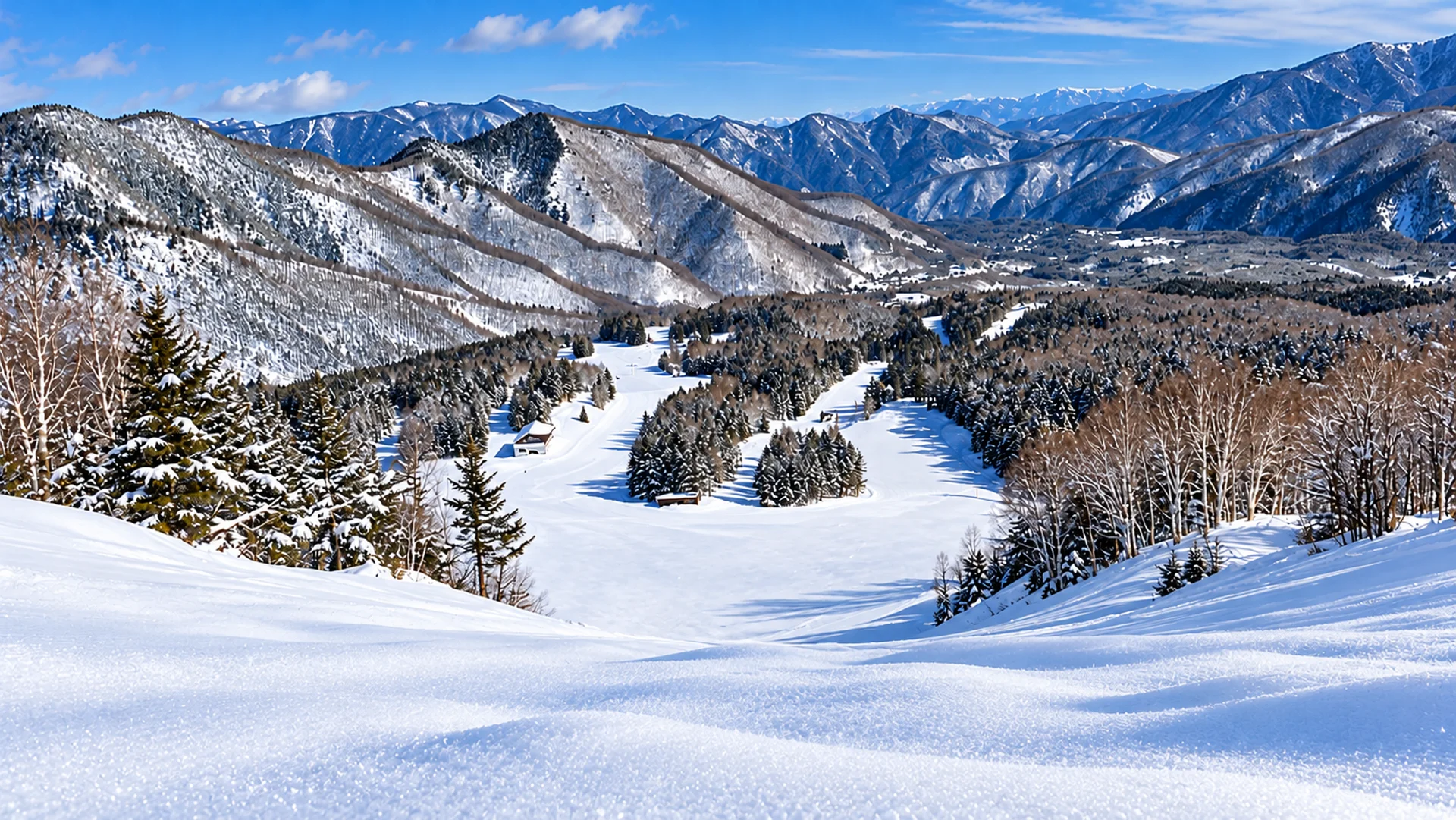
Most ski resorts are the main event. At Mt. Norikura, the resort is more like the welcome mat. The lifts climb to 2,000 m on the eastern flank of a 3,026 m volcano, and above the last chair the mountain just keeps going: wide alpine snowfields, wind-sculpted ridges and a summit that ski tourers have been chasing for generations. Below the lifts, there is a friendly, low-key resort with long cruisers, a kids park and a hot-spring village where the water comes out milky white and smelling faintly of boiled eggs.
It is a place that almost didn't make it. A few seasons back, falling visitor numbers and rising costs pushed the resort close to closing, and the operator answered with a bold move: lift tickets for anyone 18 and under are free. That makes it one of the cheapest family ski days in Japan, and it means the slopes are full of kids who have never once been told to hurry up because the ticket was expensive.
The catch is snow volume and access. This side of the Northern Alps sits in the rain shadow, so you won't get Myoko-style overnight dumps. What you do get is altitude: the base is higher than the summit of many Niigata resorts, so the snow stays dry and the season runs into April. Getting here takes about an hour from Matsumoto by car, and longer by train and bus.
This review covers the lift-served terrain, what the touring above the resort actually involves, where to soak and sleep, and how to fit it into a Matsumoto or Takayama trip.
Also, not to be confused with Hakuba Norikura Onsen, the resort beside Cortina in Hakuba Valley.
Resort Stats
Estimated cumulative fresh snowfall at major on-mountain ski areas; actual totals vary substantially by resort, elevation, measurement location, and season.
- Vertical500m (2000m → 1500m)
- Snowfall~7m
- Terrain 40% 45% 15%
- Tree Riding
- Lift Pass¥5,500
- Lifts1 quad, 3 pair
- Crowds
- Out of BoundsAllowed with registration
- Night Skiing
- Family Friendly
- Trails18
- Skiable Area~60ha
- Vibehigh, quiet, volcano-backed
Trail Map

Accommodation
View MapThe village at the foot of the slopes is a scatter of family-run pensions, small hotels and onsen inns spread through the birch forest rather than a walkable ski town. Kyukamura Norikura Kogen is the reliable all-rounder: a government-backed resort hotel with big milky-water baths, simple Western and Japanese rooms, hearty dinners and ski packages that bundle lift tickets. It is a short drive or shuttle from the lifts and is popular with families, so book early for weekends in February.
For something more intimate, the pensions dotted along the road up from the village are the classic way to stay. Expect home-cooked dinners, drying rooms, warm owners and very early nights. Norikura Hotel Yamayuri Yurari is a comfortable mid-range option linked to the resort, and the Yukemuri-kan public bath, a minute's drive from the base, is where you'll end most days, soaking in cloudy sulphur water with snow piled outside the window.
If you want more choice, more food and nightlife beyond a vending machine, stay in Matsumoto. The castle town has plenty of business hotels around the station, good izakaya and an easy hour's drive to the lifts. Shirahone Onsen, a famous milky-white hot-spring hamlet about 20 minutes away by car, is the romantic option: old ryokan, deep snow and very little to do except soak and eat. Our guide to onsen etiquette for skiers is worth a read before your first bath.
Powder & Terrain
The resort is laid out as a long, gently stepped fan running from 1,500 m at the base up to 2,000 m. The Yumenotaira Quad is the workhorse, a long chair that carries you into the middle of the mountain, and the Kamoshika lift above it reaches the high point. The Kamoshika slope under that top lift is the steepest pitch on the hill, maxing out around 33 degrees, and on a fresh morning it is the first place to go. It catches the coldest snow on the mountain and gets tracked by the handful of locals who know it, rather than by a crowd.
From the top, the longest run winds around 5 km all the way back to the base, mostly gentle and tree-lined, which is perfect for a warm-up or for kids who have just discovered speed. The middle of the mountain is classic intermediate cruising: wide, rolling and groomed, with enough fall line to open up a carve but nothing that will scare a confident blue skier. The 18 courses are a little generous as a count, since several are short links between lifts, but the overall layout flows well.
Snow quality is the strength here. With the base at 1,500 m, rain is rare and the snow stays dry deep into the season. Storms are smaller and less frequent than on the coast, so this is not a place to plan around nonstop face shots. Think of it as a high, cold resort that serves boot-top refills over a firm base, with the odd bigger storm when a low pushes in from the south. The upside is visibility and grip on the days between storms.
The real draw for strong skiers sits above the lifts. A well-known touring route climbs from the top of the resort through the last of the subalpine forest to the open plateau of Kurai-ga-hara, then on toward the summit. It is a genuine alpine route: exposed, wind-affected and avalanche-prone in places, with weather that changes fast above treeline. The resort publishes backcountry guidance, and anyone heading beyond the boundary should file a climbing plan (a tozan todoke, the mountain trip form police and resorts ask for) and carry a beacon, shovel and probe. Spring, from late March into May, is the classic season, when the snowpack settles and the corn harvest on the big open faces is spectacular. If you've never toured in Japan's high alpine before, book a local guide.
Inside the ropes, tree riding is limited to the edges of the forest runs and a few short gaps between them. Patrol tolerates sensible skiing beside the groomers, but the lift-served off-piste is not the reason to come. The two reasons to come are the quiet slopes and the mountain above them.
Getting There
By car: allow about an hour from Matsumoto interchange on the Nagano Expressway, or around 80 minutes from Takayama. The final climb is a mountain road through tunnels and switchbacks, so winter tyres are essential and chains are a smart backup. Parking is free, with about 1,000 spaces at the base. Our winter car hire and driving guide covers snow tyres and rental tips.
By train and bus: take the Matsumoto Dentetsu line from Matsumoto Station to Shin-Shimashima (about 30 minutes), then a local bus up to the resort, which takes roughly an hour. A free shuttle has run from Shin-Shimashima on weekends in past seasons, with booking required, so check before you travel. Matsumoto itself is about two and a half hours from Tokyo on the Azusa limited express.
Storm notes: the road in is well maintained, but heavy snow can slow the last stretch considerably. Leave early on a storm day and give yourself time.
Who's it for?
- First-timersGood
- Powder huntersGood
- Non-skiersOkay
- BudgetGood
- LogisticsLimited
Families are the obvious winners. Free lift tickets for kids, gentle top-to-bottom runs, a kids park with sledding and day care at the base make Mt. Norikura one of the easiest family days in Nagano, especially if you're based in Matsumoto. Beginners and intermediates get long, uncrowded groomers and room to practise without someone flying past every ten seconds.
Ski tourers and splitboarders are the other group who will love it. The lifts are a cheap, fast way to gain the first 500 m before you start skinning, and the alpine terrain above is some of the most accessible high-altitude touring in central Japan. Advanced skiers who only want lift-served steeps and trees will find a morning's worth, then get restless. Pair it with Hakuba Valley or Ontake for the big lift-served days.
Food & Après
Food on the mountain is simple. The rest house at the base serves ski-hill staples like curry rice, ramen, katsudon and soba, with sweet treats for the kids. The ticket office, restaurant and shop take cash only, so bring yen. In the village, a handful of small cafes and soba shops open in winter, though hours are patchy midweek.
Après here means one thing: the onsen. The milky sulphur water is the signature of this valley, and a soak after the last chair is non-negotiable. For a proper night out, head down to Matsumoto. Try sanzokuyaki, the city's giant garlic-marinated fried chicken thigh, soba made from Shinshu buckwheat and local sake from the breweries around the old town. Takayama, over the pass in Gifu, is the other dining option if you're road-tripping west.
Japow Travel Tips
- Lift hours: 8:45 to 16:30. The season runs from mid-December to early April, with some midweek closures in March. There is no night skiing.
- Free kids: lift tickets are free for anyone 18 and under, which is the best ski deal in the region for families.
- Cash only: the ticket office, restaurant and shop don't take cards, so bring enough yen.
- Backcountry: touring above the resort is real alpine terrain. File a climbing plan, carry avalanche gear and go with a guide if you're new to it. Our backcountry safety guide explains the basics.
- Weather: clear, cold days between storms are common, so pack goggles for both flat light and full sun.
- Language: English is limited. Signage is mostly Japanese, but staff are friendly and the layout is easy to read.
Nearby resorts worth pairing
Ontake is about 90 minutes south, with more vertical and similar high, dry snow. Hakuba Valley is roughly two hours north and makes a natural next stop for bigger terrain. If you're crossing into Gifu, Star Spur Ryokufu Resort Hida Nagareha is a fun day near Takayama. For a planned route that links them, see our Nagano Alps and Hokuriku road trip.
Verdict: the quiet gateway to a big mountain
Mt. Norikura will never win a snowfall contest, and the lift-served terrain is modest. But it has something most resorts can't fake: a huge, beautiful volcano rising straight above the lifts, quiet slopes, free skiing for kids and milky hot springs at the bottom of the hill. For families, it is a bargain. For ski tourers, it is a doorway to some of the best spring touring in central Japan. Come for the onsen and the empty runs, and leave with a new respect for what's above the last chair.