
Star Spur Ryokufu Resort Hida Nagareha
Hida’s quiet powder playground
 飛騨流葉
飛騨流葉Star Spur Ryokufu Resort Hida Nagareha
8.0~6m
Snowfall
1422m
Elevation
6
Lifts
¥4,700
Price
The Gifu side mission that feels like you’ve got the hill to yourself
Star Spur Ryokufu Resort Hida Nagareha sits up in the mountains above the old mining town area of Kamioka, on the Takayama side of Gifu. It’s not a flashy destination setup, and that’s the whole point. You drive in, gear up, and you’re on snow fast, with a proper top-to-bottom fall line that doesn’t feel like a tiny local bump.
This place is built for riders who like practical skiing: good pitch, reliable coverage, and enough variety to keep you entertained all day. The trail network is straightforward, the grooming is consistent, and when a storm rolls through you can duck off the edges into tree bombs and soft pockets without needing a full backcountry plan.
It’s also refreshingly low-key on the international front. English is limited, signage is mostly Japanese, and the vibe is local crews, school groups, and regional day-trippers. Weekdays can feel like a private resort. Weekends and holidays can get busier, but it’s rarely a full-blown singles line scrum unless you’ve timed it perfectly with a big dumpage.
Families will be fine here too: there are friendly lower slopes and a mellow progression feel, plus the onsen option nearby for the post-ski reset. Food is simple but solid on-mountain, and the real meal move is pairing ski time with Takayama or Hida-Furukawa for proper Hida comfort food later.
Resort Stats
- Vertical672m (1422m → 750m)
- Snowfall~6m
- Terrain 300% 40% 30%
- Tree Riding
- Lift Pass¥4,700
- Lifts1 quad, 5 doubles
- Crowds
- Out of Boundspatrol may take pass
- Night Skiing
- Family Friendly
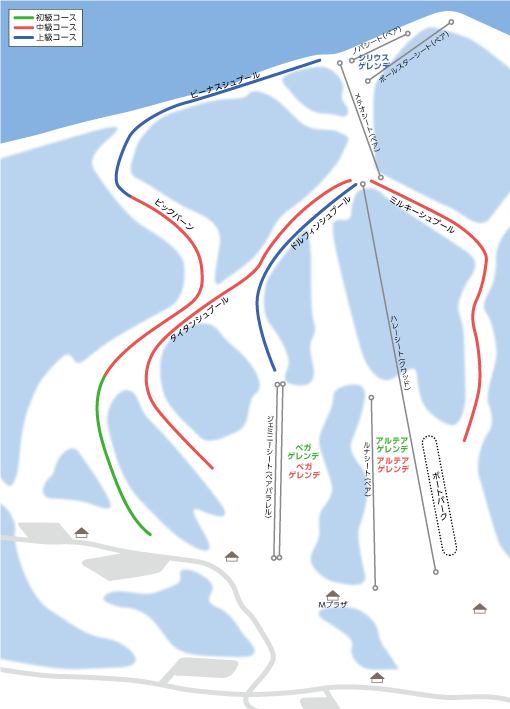
- Trails13
- Skiable Area~55ha
- Vibequiet, local, storm-proof
Trail Map
Accommodation
View MapYour closest and most ski-focused option is to base near the onsen complex by the resort, with Nagareha Onsen M Plaza being the obvious post-ski warm-up. This area is all about early starts, easy parking, and quiet nights. Think hot water, big dinner, sleep, repeat. Don’t expect nightlife beyond a vending machine mission and a low-key wind-down.
For a better mix of food and atmosphere, base in Takayama. It’s the easiest “real town” option with plenty of stays and a proper dinner scene. Solid, comfortable picks include Takayama Green Hotel for space and convenience, and Hida Hotel Plaza if you want that classic full-service hotel feel with a strong onsen-and-breakfast rhythm.
If you want something quieter and more local-feeling, Hida-Furukawa is a great base with a slower pace, pretty streets, and an earlier bedtime that actually helps when you’re chasing first chair. It’s also handy if you’re stitching together multiple ski days and want a calmer, less touristy home base than Takayama.
Powder & Terrain
Snow quality here is better than people expect for central Honshu. You’re high enough for colder temps, and far enough inland that the snow often lands a touch drier than the wet-edge coastal stuff. When it’s puking, the resort skis like a slow-motion reset: groomers fill in quickly, and the off-trail edges keep offering soft turns even after the main runs get tracked.
The terrain layout is classic Japanese practical: a main spine of groomed trails with consistent pitch, and then the fun lives just off the sides where trees tighten up and the snow stays sheltered. You don’t come here for endless cliff bands or massive bowls. You come for fall-line riding that stays enjoyable all day, with enough advanced options to keep strong skiers honest.
Lift access is simple and functional. The main quad does the heavy lifting for vertical and gets you into the heart of the trail network quickly. From there, the pair lifts step you higher and spread you across the upper mountain. It’s not a high-speed lift factory, but the low crowds mean you’re rarely standing around anyway. On a storm day, the move is to keep riding the upper chairs where visibility and wind are typically more manageable in the trees.
Lines evolve in a predictable way. First chair gives you the cleanest corduroy or the freshest soft snow on the main runs. By mid-morning, the obvious routes get chopped up into hero snow and then into light chunder, while the edges and trees keep their softness. If you’re chasing the best snow feel, keep your eyes on wind buffed pockets near ridgelines and the shaded sides where the cold smoke hangs around longer.
There’s no formal gate network vibe here. Treat it like a resort-first mountain: stay within open areas, respect closures, and don’t assume you can just disappear beyond ropes without consequences. If you want to tour or step out, it’s a different day with different planning, and it’s not something you casually bolt onto a casual resort session.
Getting There
Closest airport options depend on your route. Toyama Airport is often the most practical regional airport for a drive-in trip, while Chubu Centrair International Airport works well if you’re building a bigger Gifu loop from the Nagoya side. From either direction, a rental car is the move.
By road, expect roughly ~1 hour from Takayama in good winter driving conditions, and around ~1.5 hours from Toyama city area depending on the route and snowfall. Public transport is possible in theory but tends to be awkward in practice unless you’ve lined up exact bus timing. If you’re serious about storm chasing, having wheels makes the whole experience smoother.
Winter driving tips: proper snow tires are non-negotiable, and storms can turn “easy drive” into slow-motion trenching on the roads. Carry a small shovel, keep your tank topped up, and don’t assume the last stretch will be cleared instantly after a big dumpage. If a storm really hits, leave earlier than you think and drive like you want to ski tomorrow too.
Who's it for?
- First-timersLimited
- Powder huntersOkay
- Non-skiersLimited
- BudgetOkay
- LogisticsLimited
If you like quiet hills with real vertical, this is your jam. It’s ideal for upper intermediates who want to level up on consistent pitch, and advanced riders who don’t need a scene to have a good time. It’s also a strong choice if you’re building a Gifu road trip and want a less crowded day to stack turns when the bigger names are busy.
If you need a modern village, loads of English support, or a big freeride gate culture, you’ll feel limited. Park rats will also find it pretty minimal compared to the Okumino mega-parks. This is more about clean snow, practical terrain, and riding what the mountain gives you.
Food & Après
On-mountain food is typically cafeteria-style comfort: curry rice, ramen, udon, and the kind of quick fuel that gets you back out before the next rope drop. It’s not a foodie mountain, but it does the job, and on a cold day you’ll be stoked to find something hot and fast.
For the real meal, do it off the hill. Takayama is the obvious winner for dinner variety, with plenty of izakaya options and regional classics like Hida beef and hearty winter noodles. If you’re the type who measures a ski day by both turns and dinner, this is a great pairing.
Après is mostly onsen, not bar stools. Hit the hot water, thaw out properly, then lean into a relaxed evening. If you want a little more atmosphere, Takayama’s compact nightlife is more about mellow drinks and small spots than big parties, which suits the early-start skiing rhythm perfectly.
Japow Travel Tips
- Lift hours: Day skiing typically runs ~8:30am to ~4:30pm. Night skiing is usually offered on select evenings, generally finishing around ~9:00pm.
- Avalanche / backcountry reality: This is not a resort with a big controlled gate culture. Treat anything beyond open terrain as serious terrain that requires planning, partners, and proper avy awareness.
- Weather & snow patterns: Being inland helps keep temps colder and snow feel lighter than the coastal edge. Storm cycles can be consistent, and visibility can still go white room during heavier snowfall.
- Language/cultural quirks: Expect a local-first experience. Staff are helpful, but English support is limited, so a simple, polite, point-and-smile approach goes a long way.
- Anything unique to this resort: The combo of real vertical and low crowds is the standout. It’s the kind of place where you can keep skiing without feeling rushed, and still find soft snow off the sides well into the day.
- Nearby resorts worth pairing: If you’re doing a Gifu mission, stitch it into a multi-day loop with Honoki Daira for wide-open groomers, then drop south into the Okumino cluster: Dynaland and Takasu Snow Park for big terrain and parks, Meiho for long cruisers, and Washigatake for night missions. If you’re chasing smaller, quieter turns, Hirugano Kogen and White Pia Takasu are easy add-ons, and Winghills Shirotori is a solid elevation play when the storm line shifts.
Verdict: The quiet Gifu vertical fix
This is the kind of resort that makes a storm day feel simple again: show up, ride good terrain, find secret stash turns in the trees, and finish with an onsen soak instead of a crowd battle. It’s not a flashy, internationalized destination, but for pow chasers who value real vertical and low-key vibes, Hida Nagareha is a seriously satisfying piece of the Gifu puzzle.