
Washigatake
The Okumino night mission that keeps delivering
 鷲ヶ岳
鷲ヶ岳Night skiing energy with big-groomer comfort
Washigatake sits in the Okumino cluster in northern Gifu, the same storm corridor that feeds the bigger names around Gujo. The vibe is very “get in, get turns, eat something hot, go again” with a big base area, good facilities, and terrain that’s built for mileage. You come here for consistency and convenience, not for a backcountry flex.
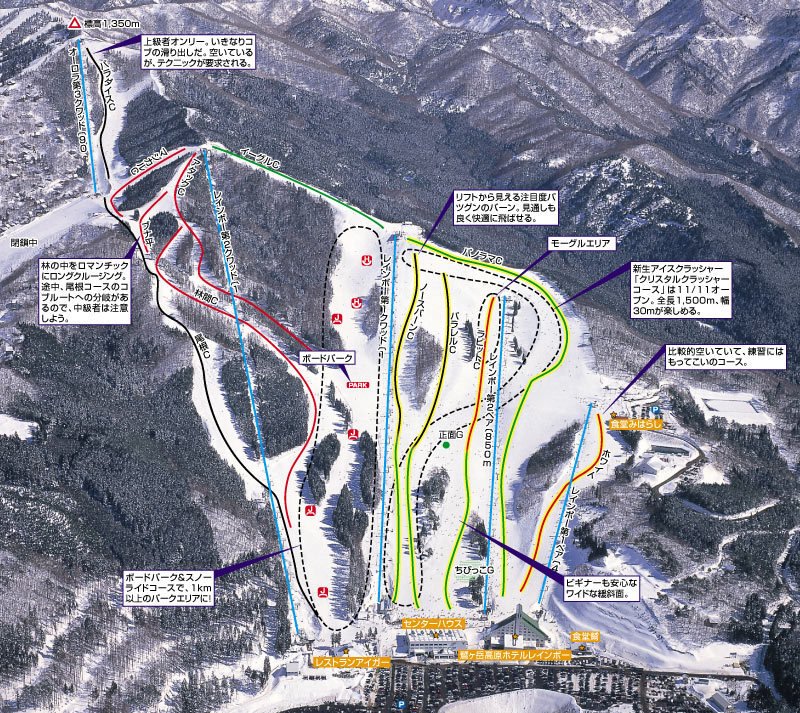
The mountain skis best for strong intermediates and up, especially riders who like to mix corduroy, side hits, and a few steeper pitches when visibility is decent. There’s a proper park scene, and the resort is set up to handle crowds in a way many mid-sized Japanese hills struggle with. If you’ve got a crew with mixed ability, it’s easy to regroup and keep everyone moving without endless traverses.
Washigatake is also one of those rare places where night skiing is not an afterthought. It’s a real second session, and on all-night dates it becomes a full-blown night mission. That makes it popular with Nagoya day-trippers and bus tours, so expect weekends to feel busy, especially after fresh snow when everyone has the same idea.
English support is limited and the crowd is mostly domestic, but it’s an easy resort to navigate even if you don’t speak Japanese. It’s family-friendly in the practical sense: smooth logistics, clear signage, kid zones, and food that’s easy to grab. For a low-stress Okumino base day with solid lifts and lights-on skiing, Washigatake is a very safe bet.
Resort Stats
- Vertical440m (1350m → 910m)
- Snowfall~8m
- Terrain 30% 40% 30%
- Tree Riding
- Lift Pass¥5,500
- Lifts3 quads, 1 double
- Crowds
- Out of Boundsnot allowed
- Night Skiing
- Family Friendly
- Trails13
- Skiable Area~59ha
- Vibenight skiing, park, fast day-trip
Trail Map
Accommodation
View MapIf you want the pure ski-in convenience, the on-mountain play is Washigatake Kogen Hotel Rainbow. It’s the classic “wake up, gear on, you’re already there” option, and it suits anyone planning to stack two sessions in a day, especially if you’re doing night skiing and don’t want to drive tired. Expect a practical resort-hotel vibe geared around skiers and snowboarders, not boutique luxury.
For a quieter stay nearby, the Takasu and Hirugano areas are full of small lodges and pensions that feel like proper winter bases: warm dining rooms, drying rooms that matter, and owners who understand early starts. Options in the area include places like Gujo Vacance Village Hotel and smaller lodge-style stays such as Lodge NakaYa (you’ll find a bunch of these scattered through the plateau). These are great if you want a mellow, snow-country routine and easy access to multiple Okumino resorts.
If you want more restaurants and an evening stroll that isn’t just the hotel corridor, base yourself down in Gujo Hachiman and drive up. A classic pick is Hotel Sekisuien, which gives you a more “town stay” feel with winter comfort. If you’re road-tripping and just want something straightforward on the approach, a chain stop like Hotel Route-Inn Seki can also work, though it turns your mornings into more of a commute.
Powder & Terrain
Washigatake’s snow story is classic Okumino: frequent storms, good refresh cycles, and snow quality that’s best when the temps stay locked in. It’s not Hokkaido cold smoke every day, but on midwinter storm cycles you’ll get light, grippy snow that skis fast and forgiving. When things warm up, the snow can get heavier and you’ll feel it most on lower-elevation groomers and high-traffic zones.
The terrain is laid out in a way that makes it easy to rack up vertical. With three quads doing the heavy lifting, you can move quickly from the base to the upper mountain and back without bottlenecking into a single slow chair. On a fresh morning, the first chair window matters, because the most obvious fall-line runs get chopped up quickly once the crowds arrive.
Advanced terrain here is more about pitch and speed than technical terrain. You’ll find steeper groomed lines and a few sections where snow piles up in the lee, but you’re not dealing with exposed no-fall zones or complex route-finding. It’s the kind of “go fast with control” advanced skiing that keeps strong riders happy even when visibility is average.
Tree skiing exists mostly as “between-the-trails” texture rather than a dedicated tree network. You can sneak softer snow along the edges, especially where people don’t want to commit off the groomed surface, but there’s no formal gate system and it’s not the place to push boundaries. Treat anything beyond the marked runs as off-limits, because patrol enforcement in Japan can be strict and it’s not worth losing your pass.
Storm-day strategy is simple and effective. When it’s nuking and visibility is cooked, stay low-to-mid mountain where landmarks are clearer, use the groomers to keep speed manageable, and work the terrain that naturally shelters wind. Later in the day, shift to side-hit lines and the park zone if you want variety without chasing sketchy off-piste. If you’re here for a night session, accept that the surface will be firmer, then lean into it: clean edges, corduroy, and controlled speed with the lights on.
Getting There
The closest major airport base is Nagoya (Chubu Centrair), and Washigatake is a very common day-trip target from Nagoya. Driving is the cleanest way to do it, usually ~2 hours from central Nagoya depending on weather and traffic, using the expressway network into the Gujo area. From Gifu City it’s typically ~1.5 hours.
Public transport is possible in theory, but it’s not the kind of resort where you want to be improvising transfers in a storm. If you’re not driving, look for a direct bus option from Nagoya during peak season, or base yourself somewhere that offers resort shuttles. For most pow chasers, a rental car with proper winter tires is the move.
Winter driving here can be legit. Storms can stack up fast, and the last stretch into resort areas can get slick, especially after dark. Bring chains even if you have winter tires, drive like you want to ski tomorrow, and keep an eye on parking lot conditions if you’re leaving after a night session.
Who's it for?
- First-timersOkay
- Powder huntersOkay
- BudgetOkay
- Après / nightlifeOkay
- LogisticsOkay
Washigatake is for riders who want reliable resort skiing with solid lift access, a real night skiing option, and terrain that keeps most strong intermediates stoked all day. If you like carving corduroy, hunting soft snow along the sides, and mixing in park features, you’ll have a great time.
If your version of a good day is tight trees, sidecountry exits, and a gate network that rewards you for knowing the mountain, you might feel limited. The advanced terrain is fun, but it’s not a destination for technical freeride lines or deep in-bounds tree zones. Think high-efficiency resort day, not wilderness
Food & Après
On-mountain food is what you’d expect from a well-run Japanese resort: quick, warm, and easy to repeat. Grab a filling set meal, ramen, curry, or a donburi bowl, then get back out while your legs still have spring. The big win is convenience: it’s easy to refuel without losing half the day.
Off the hill, Gujo and the surrounding towns are where you’ll eat better. This is a good area to lean into hearty winter staples like miso-based dishes and local chicken styles (keichan is a classic in Gifu), plus anything Hida-inspired if you’re hunting a bigger meal. Après here is low-key: think a casual beer, a hot drink, and a good night’s sleep rather than a party scene. If you want proper nightlife, you’re in the wrong valley.
Japow Travel Tips
- Lift hours: Day skiing typically runs 8:00 to 16:30. Night skiing commonly runs 16:00 to 22:30, and on all-night dates it can run through to 6:00 the next morning.
- Avalanche and backcountry reality: This is a resort-first mountain. There is no gate network, and anything outside marked runs should be treated as off-limits. If you want touring, plan it elsewhere and do it with proper knowledge and gear.
- Weather and snow patterns: Okumino storms can be frequent and intense. Visibility can go from fine to flat in a hurry, and wind can firm up exposed ridgelines. Midwinter is the sweet spot for the best snow quality.
- Language and etiquette: Expect mostly Japanese signage and a domestic crowd. Queueing is orderly, and the vibe is friendly. A little patience in busy periods goes a long way.
- What makes it unique: Night skiing is a core part of the experience here, not a token add-on. The park scene is also a big draw, and it’s one of the reasons the resort pulls a dedicated local crowd.
- Nearby resorts worth pairing: Washigatake works well as part of an Okumino trio. Pair it with Dynaland and Takasu Snow Park for variety, and add Hirugano Kogen or Whitepia Takasu if you’re chasing a different vibe or conditions.
Verdict: The easiest Okumino day and night hit
Washigatake stands out because it makes skiing simple: good lift access, terrain that works in all conditions, and a night session that feels like a real second round instead of a novelty. If you’re chasing fresh snow in Gifu, want to keep the crew moving, and like the idea of turning your day trip into a night mission, this one belongs high on the Okumino hit list.