

Winter Car Hire & Driving in Japan
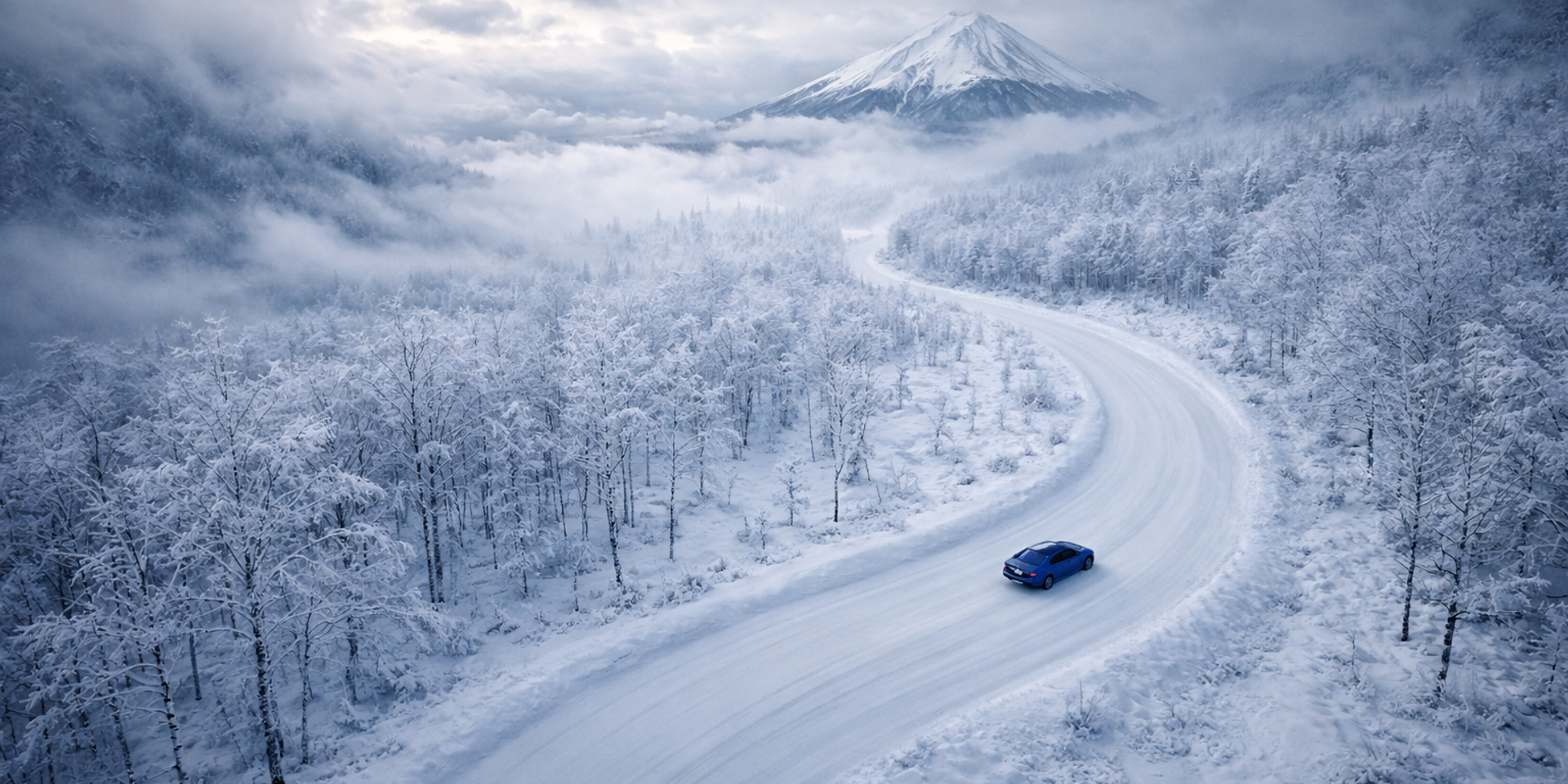
Winter Car Hire & Driving in Japan
Hiring a car in winter Japan is one of those small decisions that can make the whole trip feel smoother. You’re not timing your day around a bus, you can stock up once instead of living off konbini snacks, and your accommodation options really open up, not to mention being far friendly on the wallet.
Japan also does winter driving well. Roads get cleared fast, ski regions are set up for snow, and rental companies are used to people rolling in with ski bags and optimistic plans. Get the setup right and drive with a bit of patience, and it’s generally a calm, comfortable way to do a ski trip.
Left-side driving
Japan drives on the left.
If you’re coming from a left-side country, you can relax on that front. Your brain power goes into winter conditions.
If you drive on the right at home (USA, Canada, most of Europe), the only truly dangerous moment is the “just leaving a car park” turn. That’s where muscle memory tries to put you on the wrong side. Make it a ritual: pause, breathe, say “left” out loud, then go. It sounds silly. It works.
Snow tires in Japan
When rental companies say snow tires, they usually mean studless winter tyres. They’re not a marketing sticker. The rubber stays grippy in cold temps, and the tread is packed with tiny cuts designed to bite into snow, slush, and that cold wet road that feels fine until you touch the brakes.
They are a big upgrade over normal tyres. Packed snow feels manageable. Slush stops being terrifying. You don’t feel like you’re driving on soap.
But they don’t cancel physics. On polished ice your stopping distances still stretch, and downhill corners will still punish you if you come in too hot. Think of studless tyres like good Gore-Tex: they keep you dry in most conditions, but if you stand under a waterfall, you’re still going to get humbled.
Chains
Chains are not something everyone needs. They’re something you want when your trip has a decent chance of colliding with proper winter conditions.
You should get chains if any of these sound like your trip
You’re planning to drive on a storm day, or the forecast shows heavy snow in the window you’re travelling. In Japan, certain routes can switch into “chain regulation” during big dumps. When that happens, winter tyres alone may not be enough. If you want to keep moving no matter what, chains are your ticket.
You’re driving to a high-elevation base or steep access road where ice is common and conditions can change quickly. A classic example is Shiga Kogen, where the access road climbs and chain fitting points are part of the normal winter setup. If Shiga Kogen is on your plan, treat chains as part of the kit, not an optional extra.
You’re doing a multi-resort road trip that relies on mountain routes and you don’t want a single storm to delete your itinerary. Chains don’t just help traction. They help you keep your plan alive.
You’re picking up a car outside snow country and driving straight into it. City-to-mountains is where people get caught out. The car feels normal until the road starts climbing, the temperature drops, and suddenly everyone else has more grip than you.
You’re likely fine without chains if this is you
You’re sticking to major ski towns on maintained roads, you have proper studless winter tyres, and you’re happy to be flexible if the weather turns ugly. For most “drive to resort, park, ski” days, winter tyres are enough.
You’re not planning to drive during active snowfall. If you treat storm days as “ride the resort and stay local” days, chains become far less relevant.
The simple summary: studless tyres cover most winter days. Chains are for storm days, steep access roads, and routes that can switch to chain-only rules.
Not every rental company will give you chains
Some rental companies offer chains as an add-on. Some don’t. And chains are only useful if you can actually get the right ones for your tyre size and fit them correctly.
If your trip ticks any of the “you should get chains” boxes above, handle it early. The first time you think about chains should not be in a blizzard at 7pm, watching the last available set disappear into the boot of the car in front of you.
How much does winter car hire cost
Pricing swings with season, location, and how early you book, but you can plan with sane ranges.
A small car often lands roughly around ¥8,000 to ¥12,000 per day outside peak holiday surges.
A family-sized minivan or wagon is commonly more like ¥15,000 to ¥20,000+ per day, depending on class and location. It costs more, but it buys comfort: room for bags, room for people, and fewer daily arguments about who has to hold the snacks.
Then there are the winter add-ons that matter: winter tyres (if not standard), 4WD upgrades, child seats, and insurance options. In snow regions, winter tyres are more likely to be standard. In city pickups, you may need to add them explicitly.
See pricing at Toyota “from” pricing and car classes.
2WD vs 4WD
4WD helps you get moving and climb hills when it’s dumping. It feels calmer pulling out of a snowy carpark, and it’s a nice safety margin if your accommodation is up a steep little access road.
It does not help you stop. Braking is still tyres and grip. So 4WD is confidence, not a cheat code.
If you’re choosing one thing to prioritise, prioritise winter tyres first, then space (if you’re travelling with family or a lot of gear), then 4WD if your route is rural, steep, or storm-exposed.
Pickup strategy
If your trip is mostly ski country, picking up in a snow region is the low-stress move. The cars are more likely to be winter-ready without fuss, and staff are used to ski travellers.
Picking up in Tokyo can still work perfectly, but you need to be deliberate. Confirm your winter setup on the booking. Don’t rely on “it’ll probably be fine”.
Expressways, tolls, and ETC
Expressways are often worth it in winter because they’re maintained well and reduce the sketchy bits. They’re also tolled.
ETC is the system that lets you roll through toll gates without stopping. Most rental cars have the ETC device fitted, but you’ll often need to rent an ETC card from the rental company.
It’s not mandatory, but it’s one of those “make your day easier” upgrades, especially if you’re doing long drives or multiple legs.
The winter driving playbook
Drive like you’ve got a full bowl of ramen on the dashboard and you’re trying not to redecorate the windscreen. That means: smooth steering, gentle throttle, early braking, and big following gaps. If you do one thing differently from your home driving, make it this: brake earlier than you think you need to. The road might look fine, but shaded sections, intersections, and downhill corners can be sneakily slick.
On descents, keep your speed under control early instead of relying on late braking. If the car starts talking to you through ABS pulsing or stability control lights, that’s not a failure. That’s your early warning system.
And if it’s properly nuking snow, don’t force the mission. Japan’s great at clearing roads, but storm timing wins eventually. Sometimes the best play is a slow day, a close-by resort, and a long onsen after.