
White Pia Takasu
Takasu’s quiet storm-day groomer stash
 ホワピア
ホワピアWhite Pia Takasu
7.9~8m
Snowfall
1405m
Elevation
4
Lifts
¥5,200
Price
Takasu’s easy button for winter turns
White Pia Takasu is the kind of resort you hit when you want maximum snow time and minimum faff. It sits up in the Takasu highlands above Gujo, close enough to the highway that it’s a legit day mission from the Nagoya sprawl, but far enough into the hills that storms still stack up properly. The vibe is friendly and domestic, with a clean, well-run base area and a layout that funnels you quickly onto the main lifts.
On snow, it’s a groomer-forward mountain with just enough spice in the trees to keep powder hounds entertained for a few hours, especially if you know where to look. The best days are when it’s nuking overnight and you can farm fresh refills in the sheltered pockets between runs before the sun and traffic do their thing. If you’re chasing massive vertical or a big gate system, this isn’t that hill. If you’re chasing efficient turns, quick access, and a no-drama storm day, it’s a very good time.
Crowds are the main swing factor. Midweek can feel mellow and local, with plenty of room to open it up on corduroy and still duck into the glades for a secret stash. Weekends and holidays pull in day-trippers and school groups, and the car park energy shifts fast from quiet to grom chaos. The upside is that the lift network is simple and you can move around without long traverses or brutal cat tracks.
English is limited, but you don’t need much. Signage is straightforward, rentals and ticketing are easy, and the whole experience is plug-and-play. Families do well here thanks to beginner terrain and a forgiving base setup, but strong riders will want to treat White Pia as part of a Takasu sampler, or as the “storm morning” option before hopping to nearby hills for variety.
Resort Stats
- Vertical430m (1405m → 975m)
- Snowfall~8m
- Terrain 30% 50% 20%
- Tree Riding
- Lift Pass¥5,200
- Lifts2 quads, 2 doubles
- Crowds
- Out of Boundsnot allowed
- Night Skiing
- Family Friendly
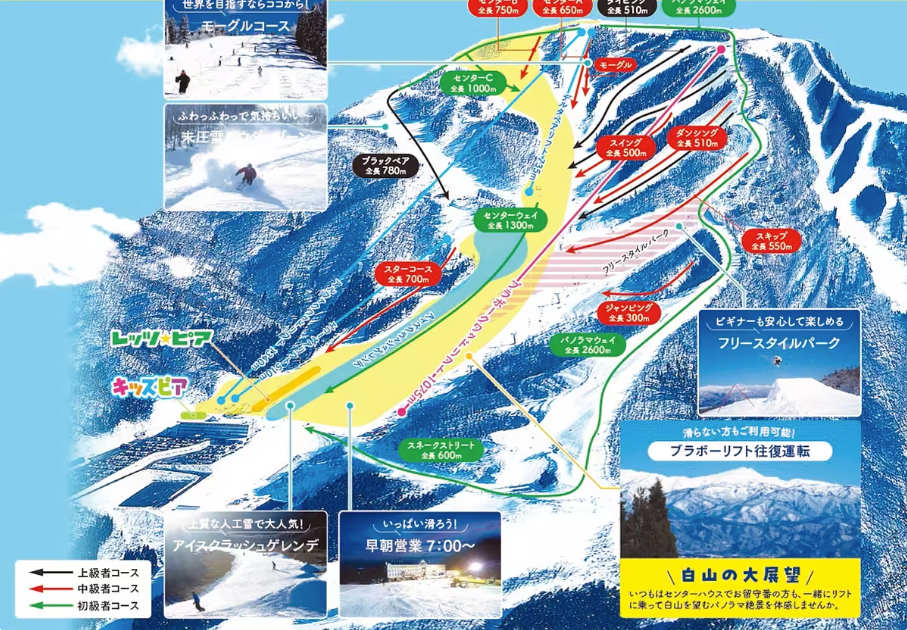
- Trails13
- Skiable Area~55ha
- Vibefast day missions, groomers, sneaky trees
Trail Map
Accommodation
View MapFor a proper ski-stay vibe close to the action, the Takasu area has classic lodge-and-pension style options that are designed around early starts and quick mountain access. Resort Pension Shikisai is the sort of place you pick for warm hospitality, drying-room practicality, and a simple routine: breakfast, first chair, back to a cozy base when the legs are cooked.
If you’re pairing multiple Takasu resorts and want something that feels more “ski hotel” than “roadside business,” Hotel Villa Mont Saint is a strong anchor for the region. It’s geared toward winter travelers, works well for groups, and makes it easy to bounce between different hills depending on wind, visibility, and where the fresh snow is holding.
Over near Washigatake, Washigatake Kogen Hotel Rainbow is another practical pick if you want a no-fuss base with that resort-adjacent convenience. If nightlife is your priority, temper expectations: this region is more about early nights, strong coffee, and getting on snow. For more dining variety, staying down in Gujo and driving up can work, but it’s a trade: you’ll want to be disciplined about morning timing and winter road conditions.
Powder & Terrain
White Pia rides best when the storm line is doing its Japan Sea side thing and you wake up to a clean reset, because the mountain’s sweet spots are all about sheltered snow that stays soft. Your workhorses are the two quads, with the doubles (Echo Pair and Delta Pair) being the underrated move when it’s busy because they thin the crowds and give you quick repeats onto the quieter sections. The “powder plan” is simple: first chair, grab the freshest lines in the trees just off the main pistes (especially where the forest is tight enough to block wind, but open enough to keep speed), then rotate back to groomers once things get chopped and chundery. There’s no gate network and no real sidecountry program, so treat the boundary as a hard line and keep your tree runs within the resort’s controlled zones.
Getting There
White Pia Takasu is a highway-friendly resort, which is a big part of its appeal. The most common entry point is Chubu Centrair International Airport, then a transfer through Nagoya and up toward the Takasu area by car. In good winter conditions, you’re looking at roughly a few hours from the airport to the resort area once you’ve got your wheels sorted.
Public transport exists in the broader region, but this is very much a “car makes it easy” zone, especially if you want flexibility across multiple resorts. In storms, the gotchas are the usual: commit to proper winter tires, carry chains as backup, and expect snowbanks and slick sections on the final approach roads. Leave extra time on weekends because traffic stacks up early when the day-tripper wave hits.
Who's it for?
- First-timersOkay
- Powder huntersOkay
- BudgetOkay
- LogisticsLimited
If you like efficient turns and you’re happy mixing groomers with short tree shots, White Pia is a winner, especially midweek or on a storm morning. Upper intermediates who can handle variable snow will get the most out of it: you can cruise, slash, dip into tight trees, and still find hero snow when the timing is right.
If you’re hunting big vertical, long fall-line pitches, or a legit backcountry scene with gates and bootpacks, you’ll feel capped out quickly. Advanced riders can absolutely have fun here, but you’ll want to bring the “make your own terrain” mindset: side hits, tree bombs, quick route choices, and a willingness to move around when a run gets tracked.
Families and mixed groups do well. There’s enough beginner and mellow intermediate terrain that everyone can stack turns, and the mountain is compact enough to regroup without radios and rendezvous drama.
Food & Après
On-mountain, expect the usual Japanese ski cafeteria staples done well: curry rice, ramen, katsu, and the kind of hot miso soup that brings you back from a white room morning. It’s functional fuel, not a destination dining scene, so treat it as a warm-up stop rather than the main event.
For better food, aim for the broader Gujo and Takasu area. This part of Japan does hearty winter eating properly: grilled meats, warming noodle shops, and local specialties like keichan (seasoned chicken cooked hot and fast) that hit perfectly after a cold day. Après is mostly DIY: convenience store snacks, a low-key beer back at your lodge, and a proper soak if you’ve picked accommodation with an onsen or bath setup.
Japow Travel Tips
- Lift hours: Typically 8:00 to 16:30 (plan your day around an early start and an early finish).
- Avalanche / backcountry reality: This is a controlled resort experience. No gate system, no sanctioned sidecountry. Keep it in-bounds.
- Weather & snow patterns: Best after overnight storms; trees hold soft snow longer than the open pistes when wind is up. Visibility can flatten fast in active weather.
- Language/cultural quirks: English is limited but everything is straightforward. Be ready for busy base areas on weekends with lots of families and lessons.
- Anything unique: Lift mix is simple and effective: Alpha Quad and Bravo Quad do most of the heavy lifting, while Echo Pair and Delta Pair can be the quiet move when crowds build.
- Nearby resorts worth pairing: Washigatake for more variety next door, Dynaland for a bigger-feel day, Takasu Snow Park for park and groomer mileage, Meiho when you want longer runs and a different mountain rhythm.
Verdict: The storm-morning specialist
White Pia Takasu is the kind of hill you keep in your back pocket because it makes winter easy: quick access, efficient lift layout, and enough sheltered terrain to turn a fresh reset into a genuinely fun day even when the forecast is moody. It’s not a big-mountain flex and it’s not a gate-hunting playground, but for pow chasers who value timing, trees, and clean groomers with minimal logistics, it absolutely earns its spot in a Takasu road-trip rotation.