
 御嶽
御嶽Above the slop line, below the hype
Ontake 2240 sits up on the flank of Mt. Ontake in the Kiso region, and the altitude is the headline. The base is high, the top is properly alpine, and that one detail changes everything on marginal Honshu weeks. When lower resorts are juggling rain lines, heavy snow, or weird freeze-thaw, Ontake often stays in the colder lane and keeps the surface fun.
The vibe is functional and local. Think day-trippers, strong intermediates, and a handful of powder hunters who’ve learned that high base elevations matter. It’s not a village scene, and it’s not trying to be. You show up, click in, ride, eat something warm, and get back out there. That simplicity is part of the charm.
Crowds are usually light on weekdays and still pretty reasonable on weekends, especially compared to the big-name destinations. When it does get busier, it’s more of a parking-lot-and-rental-counter kind of busy, not a liftline horror show. The two quads keep things moving, and the hill skis bigger than you’d expect because you can stack good runs without constant bottlenecks.
English support is limited, but it’s not a hard place to navigate. Trail layouts are straightforward, the on-mountain flow is intuitive, and the day is easy even if you don’t speak Japanese. Families can have a great time here thanks to wide groomers and a calm atmosphere, but the real sweet spot is confident intermediates and advanced riders who like hunting soft snow in the trees between groomers.
Resort Stats
- Vertical560m (2240m → 1680m)
- Snowfall~9m
- Terrain 30% 50% 20%
- Tree Riding
- Lift Pass¥5,500
- Lifts2 quads, 1 pair
- Crowds
- Out of Boundspatrol may take pass
- Night Skiing
- Family Friendly
- Trails16
- Skiable Area~55ha
- Vibehigh-alpine, low-fuss, local stoke
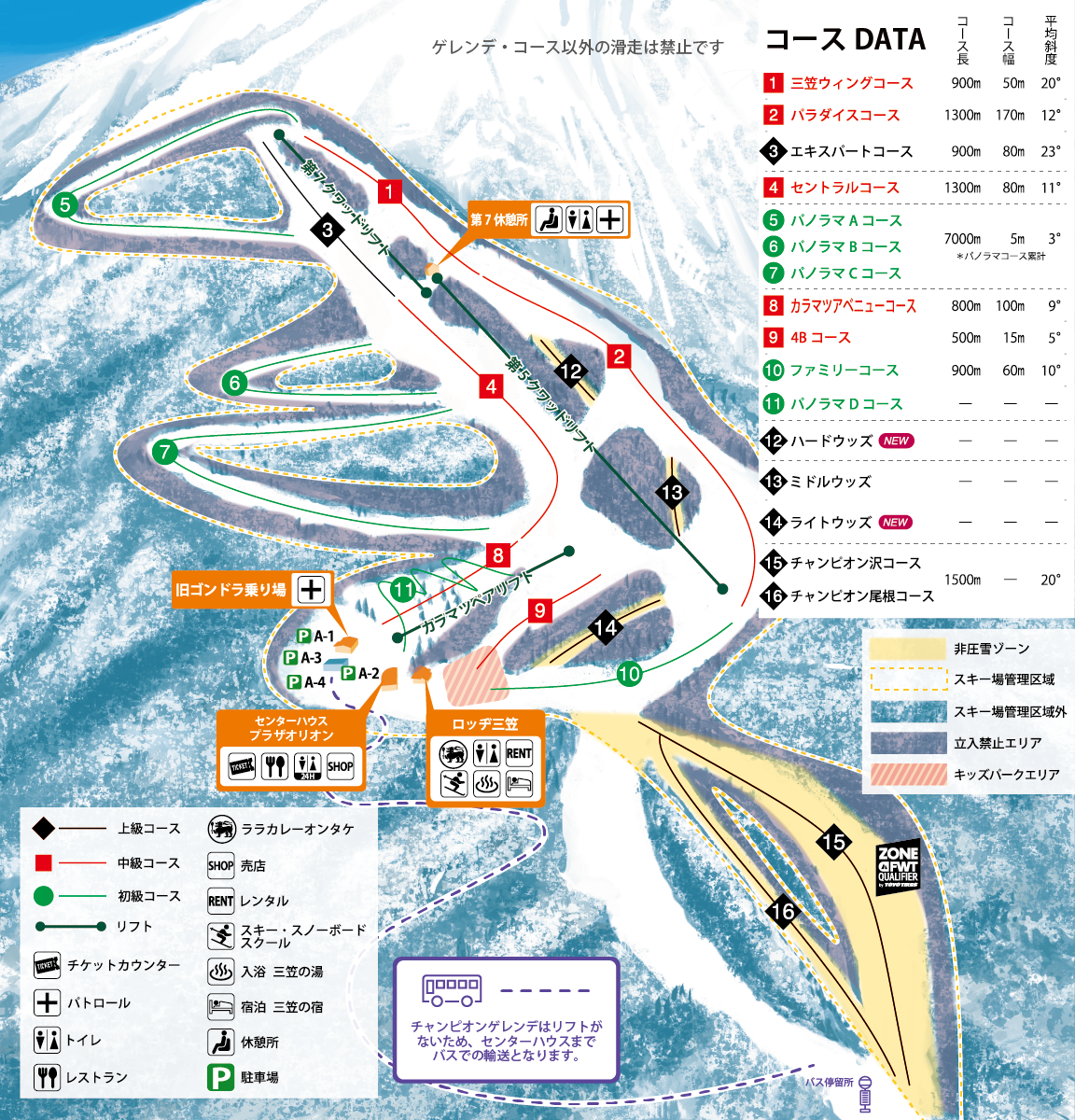
Trail Map
Accommodation
View MapMost people treat Ontake 2240 as a day trip or a simple overnight, and that’s the right mindset. The closest practical base is Kiso-Fukushima, a small town with a classic Kiso Valley feel and enough services to make your ski day easy. For a proper traditional stay, 街道浪漫おん宿蔦屋 is a standout option in the area, leaning into historic ryokan vibes and a slower pace that fits the region.
If you want more choice and a smoother logistics setup, Matsumoto is the bigger hub. It’s not ski-in/ski-out, but it has reliable city accommodation, good food, and the kind of evening options that make multi-day trips feel less repetitive. A solid pick here is Dormy Inn Matsumoto, which is popular for good reason: easy comfort, strong convenience, and a great way to recover after a cold mountain day.
On the mountain side, you’ll find simpler lodges and pensions around the Ontake Kogen area depending on what’s operating that season, but don’t come expecting a resort village. Nights are quiet, mornings are early, and you’re doing this for snow and terrain, not nightlife. If you value first chair and you hate long morning drives, a nearby lodge-style stay can be worth it.
Powder & Terrain
Ontake’s snow story is less about insane totals and more about consistency and quality for its latitude. That high base and higher summit keep the snow colder, and you feel it underfoot: softer landings, less gluey chop, and fewer of those mid-winter rain dramas that can wreck lower hills. When it’s snowing hard, visibility can get flat up high, so the mountain naturally pushes you toward trees and sheltered pitches.
The trail network leans groomer-forward, and that’s not a bad thing here. You’ve got wide intermediate cruisers that hold good snow, and you can use them as fast return routes after dipping into the side trees. The best days at Ontake are a rhythm: drop into the woods, pop out to a groomer to reset speed and sightlines, then duck back in before the next group tracks it.
Tree riding is where Ontake quietly shines for a resort that doesn’t market itself as a powder mecca. The woods zones and off-piste pockets tend to be tighter and more technical than they look from the map, with natural rollers, small wind lips, and terrain that rewards good speed control. After a storm, you can find sheltered snow that stays soft well into the day, especially when the alpine gets brushed by wind or visibility goes sideways.
Lift layout is simple and effective: the quads are your workhorses, and the pair chair fills in the lower-mountain access. On storm mornings, start by riding the most sheltered lift line first, get your tree turns while the alpine is still whiteout, then migrate higher if the clouds lift. If it’s sunny and cold, go straight to the top and take advantage of the altitude before the groomers get scraped or the steeper lines get pushed around.
There’s no formal gate network vibe here, and you shouldn’t treat it like a resort-built backcountry system. If you push past boundaries, expect the usual Japan reality: patrol may not be thrilled, and losing your pass is on the table. The smarter play is to ride the in-bounds trees and off-piste zones hard, and if you want true touring terrain, plan a separate day with the right skills, partners, and avalanche tools.
Getting There
Ontake 2240 is in the Kiso region of Nagano, and most visitors come by car. From Nagoya, it’s a straightforward winter drive into the valley and up toward Ontake Kogen, typically around ~2.5 hours depending on conditions. From Matsumoto, it’s also doable as a day mission, generally ~1.5 to 2 hours.
Public transport can work, but it’s more effort. The usual path is train to Kiso-Fukushima Station, then a bus or taxi connection up to the ski area depending on the schedule that season. If you’re chasing storms, flexibility matters, and a car makes life much easier.
Winter driving tips: proper winter tires are non-negotiable, and storms can stack up fast on the access road. Keep chains in the car, fuel up before you head into the mountains, and don’t assume your phone signal will be perfect everywhere. After heavy snowfall, give yourself extra time and expect slow plows and reduced visibility on the final climb.
Who's it for?
- First-timersOkay
- Powder huntersGood
- Non-skiersLimited
- BudgetGood
- LogisticsOkay
If you’re the kind of rider who checks freezing levels before you check Instagram, Ontake 2240 makes a ton of sense. It’s a strong pick for upper intermediates who want reliable conditions, lots of fast groomers, and enough side trees to keep things interesting. Advanced riders will have fun on storm days and can stay entertained hunting soft snow, but if you’re chasing massive vertical, big-mountain lines, or a full gate-access sidecountry scene, you’ll eventually hit the ceiling.
Beginners can learn here, but it’s not the cuddliest beginner hill. The mountain’s best personality comes out when you’re comfortable linking turns at speed and handling variable snow in the trees. Families will like the calm vibe and the lack of chaos, especially midweek, but it’s still a mountain environment with real weather and cold temps, so plan layers and warm breaks.
Food & Après
On-mountain food is the usual Japanese ski cafeteria mix: hot noodles, curry rice, and the kind of quick fuel that tastes better when it’s snowing sideways outside. The move is to eat early or late to dodge the lunch crush, then get back out while everyone else is unbuckling boots and scrolling phones.
For better food, head into Kiso-Fukushima or Matsumoto after skiing. Kiso Valley is great for simple, hearty meals that match a cold day: soba, set meals, and izakaya-style plates that feel earned after a day of leg burn. Après here is low-key: a warm drink, a good meal, and an early night so you can do it again.
Japow Travel Tips
- Lift hours: typically ~8:30 to ~16:00, with weather-dependent changes in storms
- Avalanche / backcountry reality: In-bounds pockets are the safe play; outside boundaries is not a casual add-on day
- Weather & snow patterns: Altitude helps, but the upper mountain can get wind-affected; trees are your friend when visibility is flat
- Language/cultural quirks: English is limited; bring a translation app for signs and cafeteria menus, and be patient in rental areas on weekends
- Anything unique to this resort: The high base elevation makes it a reliable option when lower Honshu resorts get warm or wet
- Nearby resorts worth pairing: Kisofukushima for a quick local change-up, and Kaida Kogen Mia for another quieter Kiso-area day if you’re building a regional loop
Verdict: High-altitude honesty
Ontake 2240 is the kind of place experienced Japan riders keep in their back pocket. It won’t wow you with sprawling size or a party village, but it delivers where it counts: cold snow, efficient laps off the quads, and enough tree zones to keep a storm day properly fun. When Honshu is flirting with rain lines, Ontake often stays in the game, and that reliability is worth more than hype.