
Akakura Onsen
Hot springs at the base, real skiing up top
 赤倉温泉
赤倉温泉Hot springs basecamp with a proper ski-town heartbeat
Akakura Onsen is one of those places where the skiing and the village actually match each other. You’ve got a traditional onsen town at the bottom, a genuine ski-field above it, and that rare Japan combo where you can ski hard, soak properly, then wander out to dinner without needing a car. It feels lived-in, not manufactured, and that matters when you’re basing a week around snow chasing.
On snow days, Akakura’s vibe is simple: get up early, get your turns in while it’s quiet, then let the mountain and the town do the rest. The terrain is friendly for strong intermediates but still has enough steeper pitches and tree pockets to keep advanced riders entertained, especially if you’re happy hunting features rather than expecting endless open bowls.
It’s also one of the more international corners of Myoko Kogen, which means rentals, lessons, and English-friendly logistics are easier than the average Japanese hill. You’ll hear plenty of Australian accents in winter, but it still feels Japanese at its core: small streets, ryokan hospitality, and a strong onsen culture that shapes the whole rhythm of the place.
Weekdays are the sweet spot. You can generally ski freely, pick your lines, and grab lunch without queuing for half your day. Weekends and holidays are a different story, with more families and day-trippers, and powder getting chopped up faster. The good news is the resort layout and night skiing give you more options than most Myoko Kogen fields for timing things well.
Resort Stats
Estimated cumulative fresh snowfall at major on-mountain ski areas; actual totals vary substantially by resort, elevation, measurement location, and season.
- Vertical550m (1200m → 650m)
- Snowfall~13m
- Terrain 35% 40% 25%
- Tree Riding
- Lift Pass¥7,000
- Lifts2 quad, 4 triple, 8 pair
- Crowds
- Out of Boundspatrol may take pass
- Night Skiing
- Family Friendly
- Trails17
- Skiable Area~80ha
- Vibeonsen village energy, classic Myoko
Trail Map
Accommodation
View MapIf you want the classic Akakura experience, stay in the village and lean into the onsen rhythm. Big, traditional hotels like Akakura Hotel make it easy to keep everything simple: breakfast, skiing, soak, repeat. It’s a very Japanese experience, and it’s hard to beat if you want comfort and convenience without fuss.
For something more boutique and iconic, Akakura Kanko Hotel is the statement stay in the area. It’s the kind of place you book when you want the ski trip to feel special, with a more refined onsen-and-dining vibe. Even if you don’t stay there, it’s worth knowing it exists because it anchors the resort’s more premium side.
If you’re here to chase snow and keep things practical, there are plenty of smaller lodges and pensions that cater well to international skiers. Hotel Mumon is a familiar name in the village scene, and places like Hotel Taiko are popular for travellers who want a comfortable base with a strong onsen focus. Nightlife is there if you look for it, but it’s more low-key bars and post-dinner drinks than all-night chaos, which suits early starts perfectly.
Powder & Terrain
Akakura Onsen sits in that Myoko Kogen snow lane where storms don’t have to be legendary to deliver. When it’s dumping, the snow quality is what you’d expect from Niigata: plentiful, often slightly denser than Hokkaido, and very skiable as long as you stay on top of timing. On warmer cycles, the lower mountain can get a bit heavier in the afternoons, while upper zones stay fresher longer. Mid-winter is the prime window where everything just works.
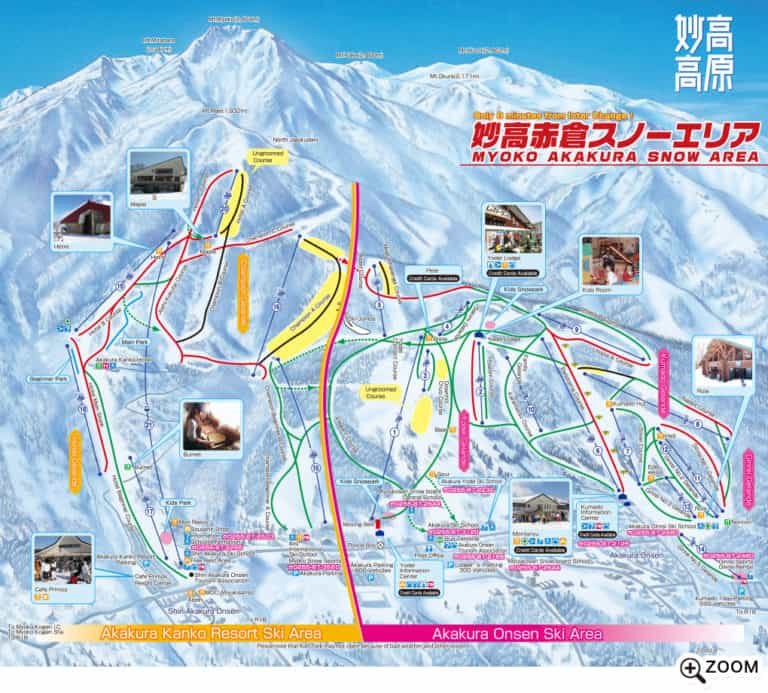
On-piste, this is a resort built around width and flow more than extreme pitch. There are plenty of groomers that feel fast and confidence-building for upper intermediates, plus a few steeper faces that keep it honest when your legs want something more direct. The layout breaks into three main zones (Yodel, Kumado, Ginrei), which is handy because you can choose your terrain by vibe: cruisey, steeper, or mixed.
The best tree skiing here is not the kind that’s handed to you on a platter with big signs and a neat gate system. It’s more about finding the right pockets between runs, staying respectful of boundary ropes, and keeping a conservative mindset when visibility drops. In-bounds trees exist, and they can be very good after a storm, but enforcement is real: ducking ropes and freelancing out of bounds is the sort of thing that can cost you your ticket in Japan.
How the day skis depends on crowds and fresh snow. If it has snowed overnight, you’ll want to get moving early, because this is a popular base and the obvious lines get chopped up quickly. The move is to ski the clean, fall-line groomers first while they’re still silky, then transition into trees and side features once the main runs start to look tracked. If it’s a bluebird after a storm, expect a faster reset on the most visible pitches and save your energy for the more sheltered aspects.
Two practical perks shape your storm-day plan. First, Akakura Onsen links across to neighbouring Akakura Kanko Resort, and a joint ticket can turn a good day into a much better one by adding higher lifts and different aspects. Second, night skiing is a real option here, which is rare in Myoko Kogen. If you’ve had a busy morning or you hit crowds mid-day, you can treat the afternoon as a reset, soak, eat, and come back under lights for a second session when the hill is quieter.
Getting There
The usual path is Tokyo to Joetsu-Myoko by Hokuriku Shinkansen, then onward to the Myoko Kogen area by local transit. From Myoko Kogen-Kogen Station, it’s a short hop into Akakura Onsen village, and local buses run on the Akakura line in winter. Door-to-door from Tokyo is very doable in a half-day travel block if you time trains well.
Driving is straightforward by Japanese standards: good roads, clear signage, and lots of travellers doing the same run in winter. The main gotcha is timing storms. Heavy snowfall can slow the final stretch into the village, parking fills faster on weekends, and you’ll want proper winter tyres. Carry chains even if you think you won’t need them, because the conditions can change quickly.
If you’re building a Myoko Kogen-based trip, Akakura’s location is a strong advantage. You’re well placed to bounce between resorts in the area by bus or car, and you can keep Akakura as your base even when you plan day missions elsewhere.
Who's it for?
- First-timersGood
- Powder huntersGood
- Non-skiersExcellent
- BudgetOkay
- Après / nightlifeGood
- LogisticsExcellent
Akakura Onsen is perfect for snow-savvy intermediates who want a proper Japanese ski town with reliable snowfall and a lot of variety without needing to overthink logistics. If you’re the type who loves a groomer that lets you open it up, plus the occasional duck into trees when conditions line up, you’ll have a very good time here.
Advanced riders will enjoy it most as a base that offers options rather than as a single-mountain mission. The steep terrain exists, but it’s not endless, and the best off-piste rewards local knowledge and good decision-making more than it rewards charging blind. Pairing it with Akakura Kanko and other Myoko Kogen resorts makes it a stronger proposition for experts.
Beginners and families are also well served. The town is easy, the terrain mix includes plenty of forgiving runs, and the after-ski routine is one of the best in Honshu for families who want a relaxed, walkable setup rather than nightlife chaos.
Food & Après
On-mountain food is functional and warm: the usual Japanese ski cafeteria mix with curry rice, ramen, katsu, and quick comfort bowls that do the job on storm days. The real win is that you’re rarely stuck with only slope food, because the village is right there and easy to reach when you time it well.
In town, you’ve got a surprisingly good spread for a small onsen base. Restaurant Shibata is a regular mention for good reason, and Panorama Café & Dining is another solid option when you want something a bit more modern. If you’re craving something familiar after a big day, spots like Mr. Burger can hit the mark, and you’ll find plenty of small Japanese joints tucked along the main street that are perfect for a simple, satisfying dinner.
For apres, Akakura Onsen is the social centre of Myoko Kogen. Jack’s Bar is a well-known spot for a drink and a lively vibe, and you’ll also find places like Grape & Grain for a more relaxed, polished drink after a soak. The best apres move here is still the simplest: onsen first, dinner second, then a drink if you’ve got energy left.
Japow Travel Tips
- Lift hours: Day skiing typically runs 8:30 to 17:00, with night skiing in the evening (commonly 17:00 to 21:00, and later on some nights depending on the season schedule).
- Avalanche / backcountry reality: Treat anything beyond marked boundaries as serious terrain. Myoko Kogen snowfall can load quickly, visibility can go bad fast, and patrol enforcement around ropes is strict. If you want to tour, do it with proper knowledge and a conservative plan.
- Weather & snow patterns: Akakura gets frequent storms and quick resets. Snow can be heavier than Hokkaido, but the consistency is the point. On warmer spells, upper mountain timing matters.
- Language/cultural quirks: This is one of the more international Myoko Kogen bases, but it’s still very Japanese in how rules are enforced. Follow signage, respect ropes, and don’t assume informal behaviour is tolerated.
- Anything unique: Night skiing is a genuine advantage here, and the onsen town at the base makes the whole trip feel easy. You can build a rhythm that keeps your legs fresh for the next storm.
- Nearby resorts worth pairing: If you’re basing in Akakura, it’s smart to treat it as your hub and cherry-pick days elsewhere. Akakura Kanko is the obvious add-on for higher lifts and different aspects with minimal travel. Myoko Kogen Suginohara is the long-cruiser day with a gondola and plenty of room to spread out. Seki Onsen is the storm-day wildcard for steeper terrain and a more old-school feel. Lotte Arai is the big-vertical, modern-lift option when you want a bigger mountain day. Madarao is the tree-day mission if you’re chasing gladed terrain and a different flavour of riding.
Verdict: Onsen town base, real Myoko Kogen snow
Akakura Onsen stands out because it’s not just a ski field, it’s a complete winter base that makes day-to-day life on a snow trip easy. The mountain delivers reliable Myoko Kogen snowfall, enough terrain variety for a full week, and night skiing that can rescue your schedule when crowds or timing get in the way. Add the walkable onsen village, strong food options, and easy access to the rest of Myoko Kogen, and you’ve got one of Honshu’s best all-round bases for Japow chasers who want both turns and culture without the hassle.