

Suginohara
Big Vert, Fast Gondola, Sneaky Trees
 杉ノ原
杉ノ原Myoko Kogen’s long-run crowd-pleaser
Suginohara is one of those resorts you keep coming back to because it just works. It’s not trying to be a scene, it’s not pretending to be “extreme”, and it doesn’t need to. When Myoko Kogen is getting refills, this mountain gives you long fall-line mileage, a fast gondola to reset quickly, and enough trees off the sides to stay entertained when the obvious lines get tracked.
The vibe is classic Japanese ski hill meets sneaky-good pow day. Families and intermediates love it because the groomers are wide and confidence-boosting, and the lift system makes it easy to repeat your favourite zones. Advanced riders love it because the vertical is real, the snow stacks up, and there are pockets of tight trees and natural features that feel way more playful than the trail map suggests.
It’s generally good value compared to the big-name international magnets, and it sits in a region with a serious depth chart of nearby resorts. English isn’t “everywhere” on the hill, but it’s not a barrier either. In the Myoko Kogen area (especially Akakura), you’ll find plenty of places that can help international visitors with basics like rentals, lessons, and dinner orders.
Weekdays can feel relaxed and roomy, especially outside peak holiday periods. Weekends and powder mornings draw a stronger local crowd, so the early bird gets the goods. If you’re chasing storms, this is a resort where first chair matters, then smart line choices keep you in soft snow longer than you’d expect.
Resort Stats
Estimated cumulative fresh snowfall at major on-mountain ski areas; actual totals vary substantially by resort, elevation, measurement location, and season.
- Vertical1124m (1855m → 731m)
- Snowfall~13m
- Terrain 40% 40% 20%
- Tree Riding
- Lift Pass¥8,000
- Lifts1 gondola, 2 quad chairs, 2 double chairs
- Crowds
- Out of Boundspatrol may take pass
- Night Skiing
- Family Friendly
- Trails16
- Skiable Area~90ha
- Vibebig runs, mellow buzz, storm-day workhorse
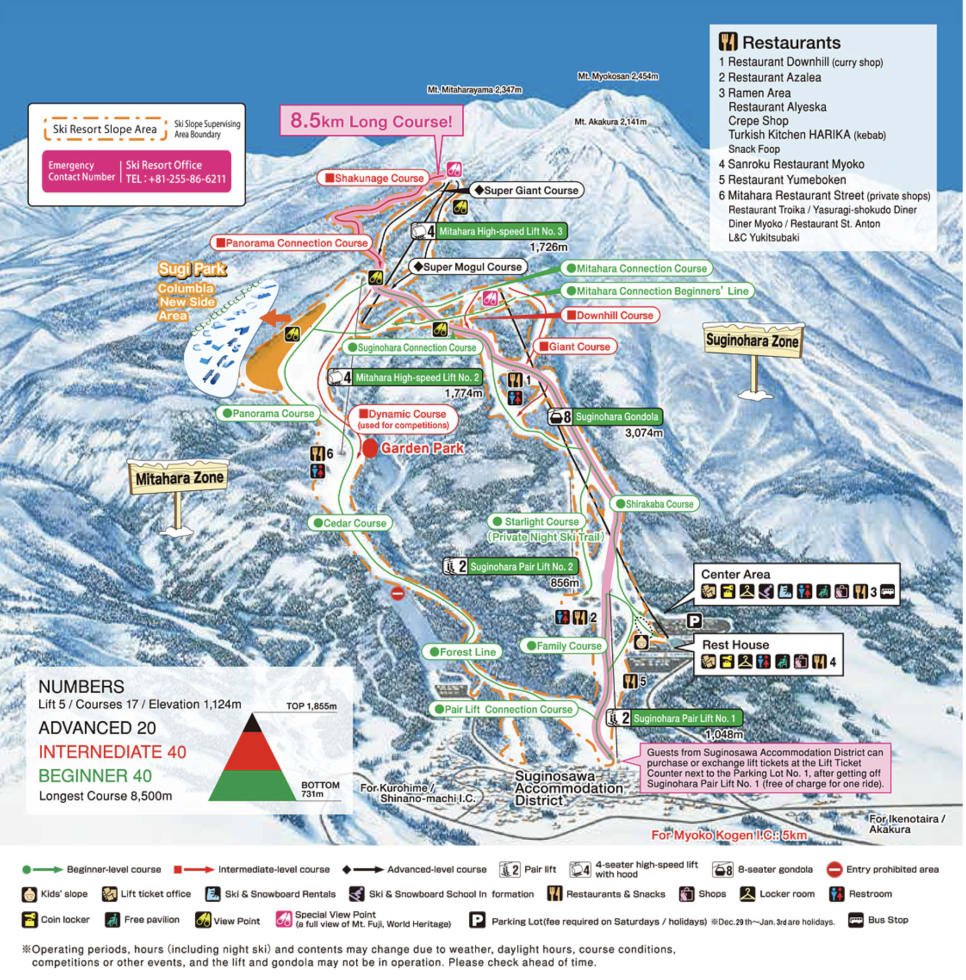
Trail Map
Accommodation
View MapIf you want the closest, sleepier base vibe, look around Suginosawa and the immediate Myoko Kogen foothills. Places like Ryokan Tabataya and Gozan Lodge put you in a calm, snowy little pocket where evenings are about hot baths, early nights, and waking up ready to be on the gondola before the crowds. This is the move if your perfect holiday is ride, eat, soak, repeat.
For more energy and easier food choices, base yourself in Akakura Onsen, about a short drive away. You’ve got a deeper bench of lodges and hotels like Hotel Taiko, Akakura Hotel, and Hotel Mumon, plus friendly ski lodges such as Myoko Kogen Ski Lodge. Akakura is where you’ll notice the most international presence in the Myoko Kogen area, and it’s the easiest spot to find a lively dinner, a casual drink, and people who are also chasing storms.
If you want a quieter resort-hotel feel with good facilities and a mellow pace, Hotel Alpen Blick around Ikenotaira Onsen is a solid pick, and Lime Resort Myoko Kogen leans into the modern retreat vibe. These options work well if you’re traveling with family or you want comfortable downtime between ski days. Nightlife is not the headline here, but the onsen culture absolutely is.
Powder & Terrain
Suginohara’s powder personality is very “Myoko Kogen”: storms can roll in hard, temperatures stay cold enough that the snow doesn’t turn into heavy sludge, and the mountain shape catches snow well. The best days are when it’s actively snowing and visibility is manageable. When the clouds clamp down, the trees become your best friend, and Suginohara has more of them than first-timers usually realize.
The terrain layout is simple in a good way. The gondola is the spine, and most of your day is built around riding up, dropping a long line, then choosing whether you want another groomer burner or a detour into the soft stuff on the margins. The groomed runs are where you’ll find your rhythm, especially early when they’re freshly combed or later when you want to open it up and let the skis run.
For advanced riders, the fun is often just off the edges rather than “way out there.” There are tree pockets and side zones that stay soft longer because they’re slightly out of the main sightlines. The trick is to look for places where terrain undulates and groups naturally spread out, rather than piling onto the same obvious pitch. If you follow the herd all day, you’ll be skiing chop. If you hunt for the quieter lines, you can keep finding soft turns well into the afternoon.
Lift-wise, the gondola keeps things efficient, but it also concentrates traffic into the same few return routes. On a busy powder morning, you’ll feel the rhythm: fast early access, then a mid-morning crowd swell where the main lines get skied out quickly. That’s when you pivot to trees, less-obvious fall lines, and anything that requires a tiny bit of patience or exploration. It’s not a place where you need heroic hiking to find snow, but small decisions make a big difference.
Backcountry and sidecountry realities here are not the “do whatever you want” vibe you might be used to elsewhere. Think of Suginohara as a resort-first mountain: stay within the ski area and the clearly appropriate zones, and treat anything beyond as a serious undertaking that may not be welcomed or supported. If you want proper touring objectives, there are better places to plan that day, and you’ll want the right crew, gear, and conditions. Suginohara shines when you keep it simple and ride it smart.
Getting There
Suginohara sits in the Myoko Kogen area of Niigata, and it’s one of the easiest powder regions to reach from Tokyo without a full travel day. The standard route is Tokyo to Joetsu-Myoko Station by shinkansen, then onward by bus, shuttle, taxi, or rental car into Myoko Kogen. From the station to the resort area is typically under an hour by road depending on where you’re staying and winter conditions.
If you’re flying, Tokyo (Haneda or Narita) is the usual entry point for international visitors, then the train does the heavy lifting. Car rental is excellent if you want flexibility across Myoko Kogen’s cluster of resorts, especially for storm-chasing between Suginohara, Akakura, Ikenotaira Onsen, and beyond. Just commit to proper winter driving: real snow tires, a calm approach on icy mornings, and chains in the boot when the forecast is angry.
Storm “gotchas” are the usual Japan winter classics: heavy snowfall can slow roads, visibility can drop fast, and parking areas can turn into snowbanks if you arrive late. Build a little buffer into travel days, and if a mega storm rolls through overnight, expect the morning to start a touch slower while crews dig out and lifts spin up.
Who's it for?
- First-timersGood
- Powder huntersGood
- Non-skiersLimited
- BudgetLimited
- LogisticsOkay
If you’re an upper intermediate who wants longer runs, reliable lifts, and a mountain that feels easy to understand on day one, Suginohara is money. It’s also excellent for mixed-ability groups because everyone can ride the gondola, pick their own flavour of run, and regroup without drama.
Advanced riders will have a blast on storm days and the day after, especially if you like finding tree stashes and natural hits rather than chasing a formal gate system. If you’re only satisfied by steep, sustained, high-consequence terrain or big marked freeride zones, you might find Suginohara a bit tame compared to the rowdier corners of Japan. The vertical is legit, but the “expert” terrain is more about smart line choice than full-time intensity.
Food & Après
On-mountain food at Suginohara is practical and filling rather than a culinary mission. Expect the usual Japanese ski cafeteria hits: curry rice, ramen, katsu, and quick warm-ups that get you back out the door fast. On storm days, that hot lunch break can be the difference between a good day and a frozen one.
The real food story is in the Myoko Kogen towns, especially Akakura. For a proper sit-down meal, you’ll find everything from casual Italian to Japanese comfort food. Spots that regularly get a nod from visiting skiers include Pomodoro for easy crowd-pleasing dinners and Shibata for a more local Japanese meal vibe. If you’re hunting noodles, Arakin Ramen is a classic “warm your soul back up” stop.
Apres is more low-key than Hakuba, but it’s there if you know where to look. Two Pines is a well-known hangout for a drink and a bit of energy after the lifts close, and you’ll also find small bars and izakaya around town for a relaxed night. The default Myoko Kogen apres move, though, is still the best one: soak in an onsen, then go hunting for dinner with a crew who’s already planning tomorrow’s first chair.
Japow Travel Tips
- Lift hours: Typically daytime operations around 8:30 to 16:00, with changes depending on weather and season timing.
- Avalanche / backcountry reality: Treat anything beyond the resort boundary as serious terrain with real consequences. Patrol controls the ski area, not the wider mountain.
- Weather & snow patterns: Myoko Kogen can get hammered by storms. Visibility can be the limiter, so tree zones often ski best when it’s snowing hard.
- Language/cultural quirks: On the hill, expect Japanese-first signage and announcements, but staff are used to visitors. In Akakura, English support is more common.
- Anything unique: That long gondola-accessed vertical is the headline. You can rack up big mileage without feeling like you’re just lapping the same short pitch.
- Nearby resorts worth pairing: Akakura Onsen and Akakura Kanko for more town vibe and variety, Ikenotaira Onsen for mellow cruising, and other Myoko Kogen-area hills if you want to chase conditions day by day.
Verdict: Big Vert, Low Fuss, High Stoke
Suginohara is the kind of mountain that makes a Myoko Kogen trip feel easy: show up, ride the gondola, pick your lines, and let the storm cycle do the talking. It’s not a “one run wonder” and it’s not a pure expert playground, but it consistently delivers what pow chasers actually want on a Japan trip: reliable access, proper vertical, and enough tree stashes to keep you grinning long after the obvious tracks appear.