
Tengendai
High ridge turns above a steaming onsen valley
 天元台
天元台High, cold, and quietly excellent
Tengendai Kogen sits above Shirabu Onsen in southern Yamagata, a ridge-line ski area that feels more alpine than most of Tohoku. You rise out of the steam and cedar into a different world the second the ropeway doors slide open. The elevation matters here, both for snow quality and for the way the terrain holds its shape. On reset days you get that boot-top surf on the upper benches and clean fall lines down the main groomers. On bluebird days it is about carving arcs with big mountain views of the Azuma range.
The scene is low key and very local in the best way. You will see school groups learning on the mid-mountain slopes, race clubs trenching gates, and a handful of powder hounds working the fences and rollers after rope drop. English is limited on the hill, but the network is simple, and staff are friendly. In Shirabu and nearby Yonezawa you will find enough English menus to get fed and hydrated. Families settle in fast, because lessons, rentals, and hot baths are minutes apart.
Weekdays are a gift. You can ride straight onto chairs, make long, meditative runs, and grab a curry or tonjiru without a wait. Saturdays bring a bump in traffic, but the ropeway pulses people up the hill efficiently, and the three stacked pair lifts spread riders along the ridge. There is no night skiing to chase, so everyone squeezes the most out of daylight and then migrates to the baths by late afternoon. Lot beers are common in the carpark while steam rolls off the valley below.
Affordability sits in the sweet spot for Tohoku. Day tickets are reasonable, lodging ranges from simple pensions to serious ryokan, and food is honest and filling. You can do a long weekend here without a car thanks to buses from Yonezawa Station. If you are driving, the parking is easy and the mountain road is maintained well. The whole place feels like a good secret that locals are happy to share with anyone who shows up ready to ride and ready to soak.
Resort Stats
Estimated cumulative fresh snowfall at major on-mountain ski areas; actual totals vary substantially by resort, elevation, measurement location, and season.
- Vertical900m (1820m → 920m)
- Snowfall~11m
- Terrain 30% 40% 30%
- Tree Riding
- Lift Pass¥5,500
- Lifts1 ropeway, 3 pairs
- Crowds
- Out of Boundspatrol may take pass
- Night Skiing
- Family Friendly
- Trails7
- Skiable Area~60ha
- Vibehigh ridge, retro chairs, onsen base
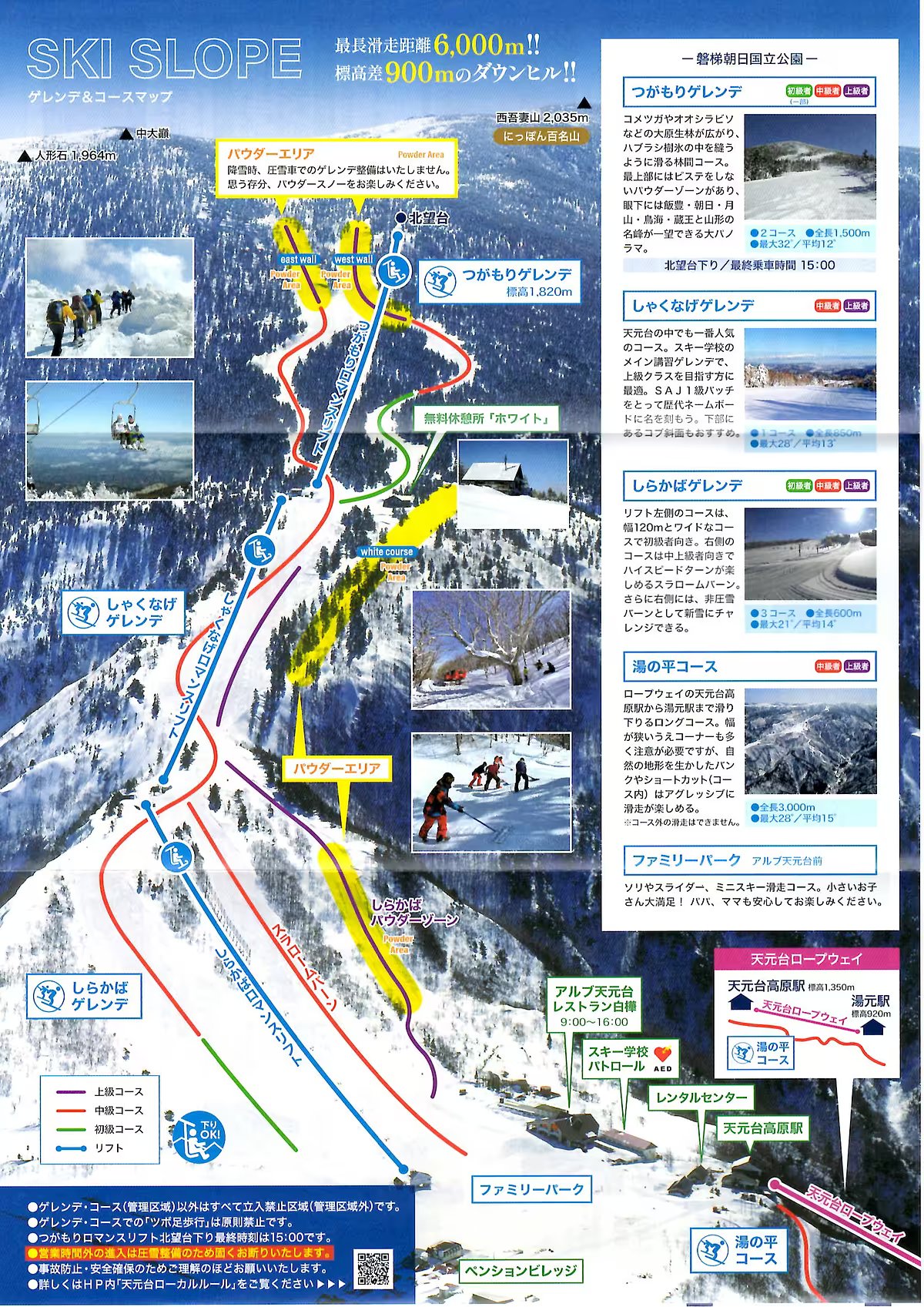
Trail Map
Accommodation
View MapShirabu Onsen is the obvious base, both for proximity and for the kind of evenings that make a powder trip feel complete. Higashiya Ryokan brings timber beams, steam-filled baths, and hearty seasonal dinners that set you up for first chair. Nakaya Bekkan Fudokaku has an old-school elegance and outdoor tubs where you can watch snow drift through the pines. Nishiya Ryokan leans nostalgic with thatched-roof DNA and a tucked-away feel. All three sit minutes from the ropeway, and staff are used to skiers shuffling in with boot bags and big appetites.
On-mountain, simple pensions make life frictionless when weather is surly. Pension Edelweiss is the archetype here, a straightforward lodge above the valley where breakfast is early and gear rooms are warm. When the ropeway starts spinning, you are already halfway to the good stuff. Expect shared facilities, the occasional waxing bench in the hallway, and a communal lounge where plans are made over maps and tea.
Down in Yonezawa city, business hotels like Hotel Benex Yonezawa and Hotel Montoview Yonezawa offer clean rooms, easy parking, and a short walk to casual dining. This base works well if you want city conveniences at night or you plan to pair Tengendai with day trips to Zao Onsen or the Bandai area. Early breakfasts are common and staff are used to early departures in winter.
Powder & Terrain
The snow at Tengendai feels different from the coastal hills. The ridge sits high and inland, so you tend to get dry storms, colder nights, and a surface that cleans up fast when the wind buff fades. The lift-served core runs between the ropeway’s upper station and the top pair lift give you a proper fall line for carving and short, satisfying shots for storm riding. After a reset, soft snow piles along the course edges and behind low fences. The patrol keeps ropes tight and expects you to respect them. Stay on course lines and mine the soft berms, benches, and rollovers as they refill.
Layout is simple and effective. Ride the ropeway from the onsen valley to the mid-station, then stack the three pair lifts in sequence to the high point. The classic warm-up is to take the middle pair, cut into the main ridge run, and work progressively steeper lines as visibility and legs allow. If wind is a factor, tuck into the lower slopes near the trees and let the terrain funnel you back toward the lift. When the ceiling lifts, push to the upper pair early for the best snow and the least traffic.
There is a full top-to-bottom option that matters for feel and flow. From the high ridge at 1,820 meters you can link the official pistes into the long hairpin route that descends all the way to the ropeway base at 920 meters. It is a real leg-burner, a 6-kilometer journey that mixes fall line with narrower cat tracks and gives a tangible sense of vertical. You will not do it every run, but when coverage is fat it is a signature glide that stamps the day as special.
Trees and off-piste are limited inside the boundary, but the ridgeline is a portal to proper backcountry. Nishi-Azuma and the surrounding peaks offer touring with real consequences. Filing a simple climbing plan is expected, and you should bring partners, avy gear, and the judgment to match the terrain. When wind slabs sit on older snow or when spindrift loads leeward features, you will find hangfire zones that demand restraint. The reward on stable days is clean glades and soulful turns above the onsen steam.
Crowd dynamics are easy to read. Midweek you will share the hill with locals, race teams, and a few travelers who did their homework. Powder lasts because there are not many high-speed chairs chewing through the hill and because the ridge catches wind and refills. On Saturdays and holidays you still move well because the ropeway cycles efficiently and the stacked chairs meter riders up the spine. Singles lines are rarely hectic and first chair is attainable without a dawn patrol sprint.
Getting There
Fly into Yamagata Airport or Sendai Airport if you are coming domestic, or arrive via Tokyo and transfer to the Yamagata Shinkansen for Yonezawa Station. From Yonezawa it is roughly 50 minutes by bus or taxi to the ropeway base at Shirabu Onsen. Driving is straightforward from the Tohoku or Yamagata Expressways. Take winter tires seriously. The final approach climbs into a snow belt where spindrift can stack quickly and where shaded corners hold slick patches even on bluebird days. The scenic Sky Valley road beyond the resort is closed in winter, so treat Shirabu as a cul-de-sac and turn around the way you came.
Who's it for?
- First-timersLimited
- Powder huntersOkay
- Non-skiersGood
- BudgetOkay
- LogisticsLimited
Advanced and upper-intermediate riders who value snow quality over lift speed will do well here. If you like honest pitches, long carving groomers, and quiet storm sessions where you never feel rushed, Tengendai will click immediately. If you want a high-speed lift network and a marked tree program inside the ropes, you may find it limited. If you are touring-curious and equipped, the proximity to Nishi-Azuma is a major draw. Families can make it work thanks to straightforward terrain progression, but the ropeway approach and lack of night skiing skew it toward all-day riders rather than casual afternoon dabblers.
Food & Après
On-mountain food is classic and comforting. Expect katsu curry, ramen, gyudon, and bowls of miso that bring your hands back to life. Portions are generous and prices sensible. In Shirabu, dinner is the star. Multi-course ryokan meals highlight local Yonezawa beef, mountain vegetables, and river fish, and they hit especially well after a day of carving and a soak. If you crave something casual, the valley has small restaurants where a sizzling plate of yakiniku or a bowl of shoyu ramen does the job.
Apres is quiet and restorative. Swap ski boots for slippers, take a long bath, sip something warm, and watch tree bombs fall off the cedars outside. If you need a little buzz, Yonezawa has izakaya near the station with grilled skewers and local sake pours. Most skiers are in bed early because daylight is precious and first chair feels better than any late night could.
Japow Travel Tips
- Lift hours: Ropeway typically 8:00 to 17:00 on weekends and holidays, slightly later start on weekdays. Chairs run from around 8:10 to midafternoon, with the upper station closing earlier in poor weather.
- Avalanche and backcountry: Touring routes lead into Nishi-Azuma. File a simple climbing plan, bring full avy kit, and be comfortable with wind slab management and tree well hazards. Inside the boundary, ropes are enforced.
- Weather and snow patterns: Interior Tohoku storms bring frequent snow. Wind can be a factor on the ridge. When visibility is low, ride the lower lifts and use the treeline for definition.
- Language: Limited English on the hill, workable in ryokan and city hotels. Polite gestures and simple Japanese go a long way.
- What is unique: Ropeway start from a steaming onsen hamlet, high-alpine feel for Tohoku, and a real 900-meter top-to-bottom when coverage is fat.
- Pair it with: Zao Onsen for volcanic trees and more lifts, Gassan in spring for corn o’clock, and the Urabandai/Nekoma Mountain area if you want another taste of interior snow a couple of valleys away.
Verdict: Ridge-line soul with onsen steam at your feet
Tengendai Kogen rewards riders who value snow feel, clean fall lines, and a sense of place. It is high enough to keep quality snow through the heart of winter, quiet enough that a reset still feels like a secret stash, and close enough to hot springs that recovery is built into the day. If you can live without detachable quads and terrain parks, you will find a soulful rhythm here, from first chair to the last bowl of ramen.