
Yonezawa
Low-key turns, high-key comfort food
 米沢
米沢Ride for the snow, then stay for the beef
Yonezawa Ski Resort is a proper local mountain day in Yamagata: straightforward lifts, honest terrain, and a vibe that feels like everyone here actually lives nearby. It’s not a destination resort with a flashy village, international menus, and a lift fleet that looks like a theme park. Instead, it’s the sort of place you squeeze into a Tohoku road trip when you want low stress, quick access to turns, and a mountain that rewards a bit of curiosity.
On snow days, it can be a sneaky good call. You’re not dealing with big-resort chaos, and you’re not competing with a thousand people for the same obvious pitch. The hill skis best when it’s actively snowing or right after a refresh, because the edges of the groomers and the treed margins keep their softness longer than you’d think for a smaller area.
This is an easy mountain to manage. You’ll learn the layout quickly, and you can bounce between groomers and side stashes without overthinking it. Families and newer riders do well here because the vibe is friendly and the slopes aren’t intimidating. Upper intermediates can cruise comfortably, and advanced riders can keep it interesting by working the steeper groomed lines and the tree-lined edges where the snow stays sheltered.
Affordability and simplicity are part of the charm. Prices around the area generally sit in the cheap-to-mid bracket, and English support is limited. You’ll be fine with basic travel confidence, a translation app, and a willingness to point at food you want to eat. If you’re chasing a “real Japan ski day” rather than an international bubble, Yonezawa delivers.
Resort Stats
- Vertical320m (760m → 440m)
- Snowfall~8m
- Terrain 30% 55% 15%
- Tree Riding
- Lift Pass¥3,800
- Lifts2 pair chairs, 1 magic carpet
- Crowds
- Out of Boundsnot allowed
- Night Skiing
- Family Friendly
- Trails7
- Skiable Area~30ha
- Vibelocals, calm, no-fuss
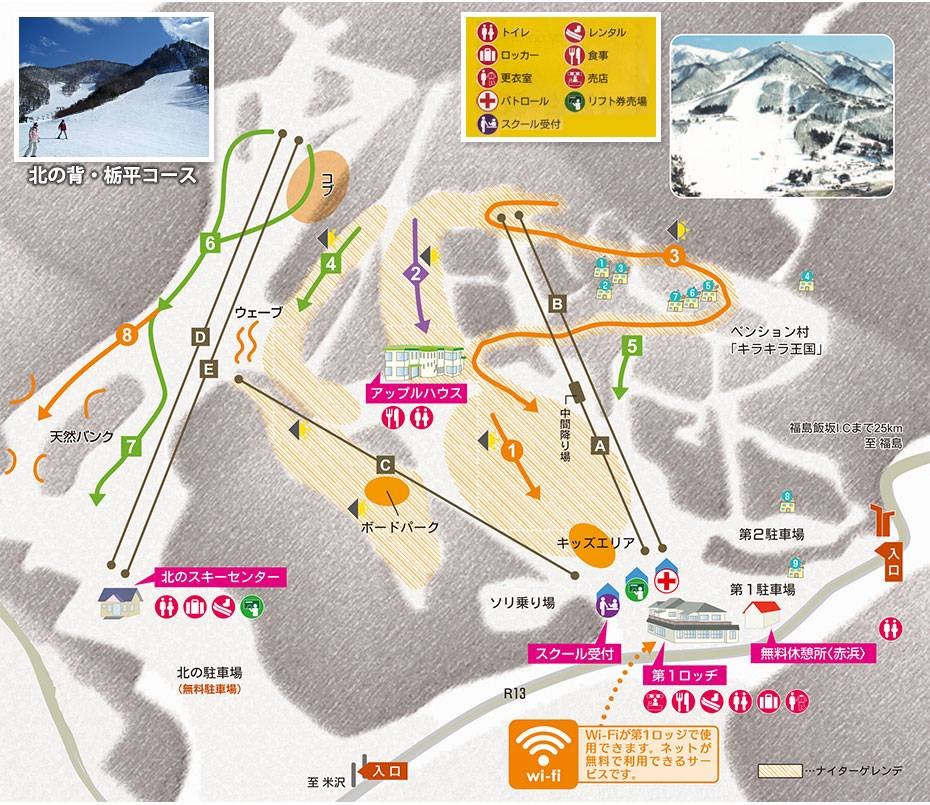
Trail Map
Accommodation
View MapIf you want maximum convenience, stay in Yonezawa City and treat the ski resort as a day trip. It’s simple, comfortable, and keeps your evenings easy. Solid, practical bases around the station area include Yonezawa Excel Hotel Tokyu, Hotel Montoview Yonezawa, and Yonezawa Washington Hotel. These are the kind of places where you can dry gear, get a good sleep, and be out the door early without any drama.
For a more memorable Tohoku-style stay, aim for an onsen town nearby and build your trip around hot water and big dinners. Onogawa Onsen is a classic choice in the wider Yonezawa area, and Kameya Mannenkaku is one of the better-known ryokan-style stays there. The vibe is quiet, traditional, and perfect for ski legs: soak, eat well, repeat. Nights are calm, not party-forward, which honestly fits the energy of a local hill day.
If you’re doing a broader Yamagata loop, you can also base farther out and treat Yonezawa as one stop among many. The upside is flexibility if you’re bouncing between Zao Onsen, smaller hills, and weather windows. The trade-off is earlier starts and a bit more driving, but that’s normal for Tohoku road trips where the best days come from following the forecast rather than planting yourself in one place.
Powder & Terrain
Yonezawa’s best skiing is all about using the hill like a scavenger hunt: take the main chair, sample the groomers for a warm-up, then start working the edges where wind and traffic don’t do as much damage. On storm days, the snow stacks up nicely in protected pockets, especially where trees and terrain rolls keep the surface smooth. The obvious groomed lines get skied quickly because there aren’t many of them, but the soft snow clings to the margins, the little cut-ins, and the tree-lined sides that most casual riders ignore. Lift names and a gate system aren’t the point here because there’s no gate network and out-of-bounds isn’t the play; stay inbounds, respect ropes, and you’ll still find plenty of quality turns if you keep moving and don’t follow the same track every run.
Getting There
The most common entry point is Tokyo, then take the Yamagata Shinkansen to Yonezawa Station. From there, a rental car is the easiest way to reach the ski resort and keep your trip flexible. Taxis can work for a single day, but having wheels makes life easier if you’re pairing multiple hills or staying at an onsen.
If you’re flying, Sendai Airport is a practical option for a Tohoku loop, with a drive of about ~2.5 hours depending on winter roads. Yamagata Airport can be closer on paper, but schedules and connections can be the deciding factor, so it’s worth choosing the airport that matches your overall route.
Winter driving tips: proper snow tires are non-negotiable, and chains are smart insurance if a storm is actively dumping. Expect icy patches in the mornings and after sunset, and give yourself a buffer on storm days because small roads can slow down quickly when plows are catching up.
Who's it for?
- First-timersOkay
- Powder huntersGood
- Non-skiersLimited
- BudgetExcellent
- LogisticsLimited
This one is for riders who like quiet mountains and don’t need a mega-resort to have a good time. If your perfect day is quick chair rides, short decision-making, and hunting soft snow in the trees beside the runs, Yonezawa is a fun stop.
Beginners and families will appreciate the mellow vibe, the manageable slope pitch, and the lack of lift-line pressure. Intermediates will get the most value, especially if they’re keen to step off the main groomers and start reading terrain. Advanced riders will enjoy it as a storm-day alternative or a “low-commitment powder day,” not as a place to chase steep, sustained, big-mountain terrain. If you need serious vertical and a full-on freeride system, you’ll want to pair this with bigger mountains in the region.
Food & Après
On-mountain food is functional and warming: think curry rice, noodles, and quick cafeteria-style meals that get you back outside fast. The better move is often a light lunch on the hill, then a proper dinner in town.
Yonezawa is famous for one thing you should absolutely lean into: Yonezawa beef. After a day in the cold, a yakiniku or sukiyaki dinner hits like a reward. You’ll find plenty of restaurants in town that specialize in it, plus solid ramen and izakaya options for a cheaper, casual night. Apres here is not a bar crawl; it’s more “hot bath, big dinner, early bed,” especially if you’re chasing morning snow.
Japow Travel Tips
- Lift hours: Expect standard daytime operations, roughly morning to late afternoon, with limited or occasional night options depending on the season.
- Avalanche / backcountry reality: This is an inbounds hill. There’s no gate network and out-of-bounds is not the program.
- Weather & snow patterns: Best in colder midwinter windows. As a lower-elevation local hill, warmer spells can change snow quality faster than bigger mountains.
- Language/cultural quirks: English is limited. Staff are used to locals first, but the vibe is friendly and patient if you’re polite and prepared.
- Anything unique: The combination of quiet slopes and a real food destination town nearby makes it a surprisingly satisfying stop.
- Nearby resorts worth pairing: Zao Onsen for a bigger resort day, plus other Yamagata local hills if you’re building a “small mountains, big snow” road trip.
Verdict: Small mountain, big Tohoku energy
Yonezawa Ski Resort isn’t trying to impress you with size, and that’s exactly why it works. You get a calm, local hill with light crowds, enough tree-lined stashes to keep things interesting, and an easy base town that turns every ski day into a food mission afterwards. For pow chasers building a Yamagata or Tohoku loop, it’s the perfect low-pressure day that still delivers proper winter turns when the storm cycle is on.