
Hagurosan
Shrine-side turns for a quick winter fix
 羽黒山
羽黒山Tiny hill, big convenience
Hagurosan is the kind of place you ski when you live in Shonai, you’ve got half a day spare, or you’re traveling through Tsuruoka and want to sneak in turns without committing to a full resort mission. It sits on the flanks of Mt Haguro, one of the Dewa Sanzan sacred mountains, and the whole vibe is quiet, local, and very “grab your gear, do a few runs, be home for dinner”.
This is not a destination powder resort, and it’s not pretending to be. The terrain is short-vertical, groomer-heavy, and built for progression: first-timers on the lower pitches, intermediates cruising, and stronger skiers making the most of a steeper section when it’s filled in. On a storm day, it’s fun in that sneaky way small hills can be fun: low crowds, fast re-runs, and a few sheltered edges that stay soft longer than you’d expect.
It’s also one of those hills where families thrive. Rentals, lessons, and a calm base area make it easy to roll in with kids or beginners. There’s no nightlife scene, no village, and no international buzz. English is limited, but you don’t need much. Point at what you want, be polite, and you’ll get looked after.
Weekdays are usually very quiet, and even weekends tend to feel mellow compared to bigger names. The main “line” you’ll see is a small rush when locals arrive mid-morning, or when a school group is doing drills. If you’re chasing solitude, this is your place. If you’re chasing big mountain scale, keep driving.
Resort Stats
- Vertical75m (385m → 310m)
- Snowfall~6m
- Terrain 40% 40% 20%
- Tree Riding
- Lift Pass¥3,000
- Lifts2 pair lifts
- Crowds
- Out of Boundsnot allowed
- Night Skiing
- Family Friendly
- Trails6
- Skiable Area~12ha
- Vibequiet, local, low-key
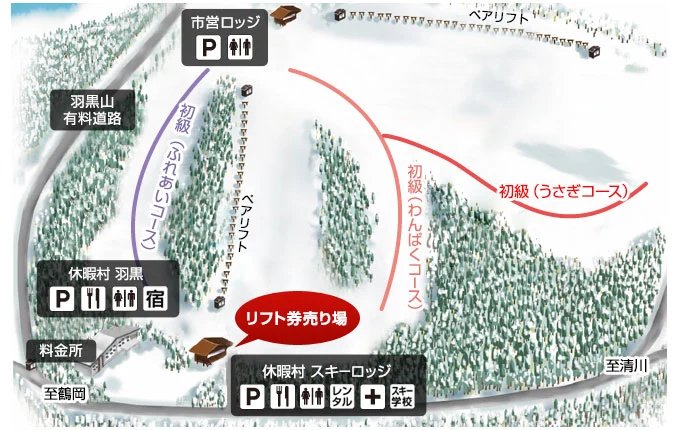
Trail Map
Accommodation
View MapThe most seamless option is Kyukamura Shonai-Haguro, right by the ski area. Think practical comfort, easy mornings, and a classic Japanese “in-house dinner then early night” rhythm. It’s perfect when you want ski convenience and a relaxed base without juggling driving in a storm. If you’re traveling with non-skiers, it also works because the surroundings are calm and scenic, and the whole Dewa Sanzan area gives you extra “winter Japan” flavor beyond just skiing.
For a more design-forward stay in Tsuruoka, Shonai Hotel Suiden Terrasse is the move. It’s not ski-in/ski-out, but it’s a great way to turn a small-hill ski day into a genuinely memorable Shonai trip. You get a polished, modern vibe, a proper breakfast, and a good reset between ski days. Pair it with an early start and you’ll be on snow before the locals have finished their first coffee.
If you want hot-springs atmosphere, go coastal or river-valley. Kameya Hotel in Yunohama Onsen is a classic choice for an onsen-focused night with sea air and that “warm water after cold turns” glow. For a more traditional onsen town feel, Tachibanaya in Atsumi Onsen is a strong pick and makes a lot of sense if you’re doing a wider Shonai loop rather than camping right next to the hill.
Powder & Terrain
Hagurosan skis best when it’s actively snowing or right after a refresh, because the vertical is short and the pitches are mostly moderate. Ride whichever pair lift is spinning fastest, then focus on sheltered edges and the sides of the main groomed lanes where wind and traffic don’t chew things up as quickly. The “advanced” terrain here is more about a short steeper face than sustained pitch, so treat it like a technical training run: work on turns, speed control, and staying light over any cut-up snow. Stashes don’t last all day, but they also don’t get mobbed, so you can keep picking off soft sections in between groomers. There’s no gate network and it’s not a resort for ducking ropes; stay inbounds, keep it respectful, and you’ll have a smooth, drama-free day.
Getting There
The closest airport is Shonai Airport. From there, the usual play is to base in Tsuruoka and drive up to the hill. In good winter conditions, the drive is straightforward, but when storms roll through Shonai, visibility and road texture can change quickly.
By train, head to Tsuruoka Station, then use bus or a car. The ski area is roughly ~50 minutes by bus from Tsuruoka Station, which is very workable for a day trip if you don’t want to drive. If you’re driving, plan on winter tires as non-negotiable, and keep chains in the car for those “it was fine in town” days that turn into full winter mode as you climb.
The main gotcha is the low elevation: the road can be wet-slippery, not just snowy. That means you’ll sometimes deal with slick surfaces even when it doesn’t look dramatic. Drive like you want to ski tomorrow too.
Who's it for?
- First-timersOkay
- Powder huntersLimited
- BudgetExcellent
If you love big storms but don’t always want the full production, Hagurosan is a solid “turns on the way” hill. It’s great for:
- Upper beginners and intermediates who want quiet slopes to level up without pressure.
- Families who want straightforward logistics and a calm base.
- Strong skiers who treat it as a technique day, fitness day, or a quick-hit snow fix.
You’ll feel limited if:
- You’re hunting sustained steep lines, long fall-line runs, or legit tree zones.
- You need modern fast lifts to rack up vertical quickly.
- You want a lively après scene or an international resort vibe.
Food & Après
On-mountain food is simple and functional: warm bowls, quick meals, and the kind of cafeteria-style comfort that keeps you moving when it’s snowing. Don’t overthink it. Eat enough, stay hydrated, and get back out there while the snow is still fresh.
In Tsuruoka, you’ve got way more interesting options. The Shonai region is known for good produce and seafood, so a post-ski meal can be legitimately excellent if you time it right. Look for local izakaya-style spots where you can graze: grilled fish, hearty winter dishes, and rice that tastes like it came from a different planet.
Après is minimal at the ski hill itself. If your idea of après is a mellow onsen soak and a proper dinner, you’re in the right place. If you want bars, live music, and a late-night scene, plan to keep your expectations low and treat this as a “sleep well, ski again” kind of trip.
Japow Travel Tips
- Lift hours: Weekdays 9:00–16:00. Saturdays 8:30–16:00. Sundays 8:30–16:00.
- Season timing: Typically late December to early March (for example, 2025-12-20 to 2026-03-01).
- Regular closures: Closed Mondays (with a few holiday exceptions).
- Avalanche / backcountry reality: This is an inbounds, small-hill setup. There’s no gate culture here, and it’s not the place to freelance into the forest.
- Weather & snow patterns: Storms can hit hard thanks to Sea of Japan systems, but the low elevation means snow quality can swing. Cold snaps are excellent. Warm pulses can turn things dense quickly.
- Language: Expect mostly Japanese signage and staff interactions. It’s friendly and easy, just not tourism-oriented.
- Snowmaking: The hill leans on natural snowfall rather than big snowmaking infrastructure, so coverage can be very season-dependent.
- What’s unique: You’re skiing in the orbit of one of Japan’s most iconic sacred mountain areas. Even if you don’t visit the shrines mid-storm, the setting has a quietly special feel.
- Nearby resorts worth pairing: If you’re building a Shonai/Yamagata road trip, consider Yudonosan for another local-flavour day, and Gassan later in the season for spring skiing.
Verdict: Small hill, smart stop
Hagurosan is not where you come to rack up big vertical or chase marquee terrain. It’s where you come to steal a calm winter day with almost no crowds, work on your skiing, and enjoy the Shonai vibe without friction. If you treat it as a convenient snow fix, then back it up with an onsen night and a proper Tsuruoka dinner, it punches well above its size.