
 湯殿山
湯殿山Small hill, big snow energy
Yudonosan is one of those under-the-radar Japanese ski areas where the day starts slow, the locals are friendly, and the snowbanks look like they belong in a mid-winter road movie. It sits on the Sea of Japan side of Yamagata near Tsuruoka, tucked into the same general zone that feeds the famous deep-snow mythology of this coastline. It is not high altitude, it is not huge, and that is the whole point. You come here for an easygoing powder fix, quick turnarounds, and a vibe that feels like a community snow day that just happens to get hammered by storms.
On most visits, it feels like a locals-first operation: school kids, families, a few keen snowboarders hunting the banked features, and the occasional powder tourist who has done their homework. English is not common, signage is mostly Japanese, and you will get further with a smile, a bit of patience, and pointing at the menu than expecting full international resort service. The upside is that everything is straightforward: park, ride, eat, repeat, then soak somewhere nearby.
Terrain-wise, it is primarily groomers with a couple of steeper pitches and some gladed edges that ski better than you would expect if you only judged it by the trail map. On storm days, the trees collect snow nicely and the low-key vibe keeps things playful rather than frantic. The hill also has a snowboard-friendly identity, with a reputation for shaped snow features when conditions and staff enthusiasm line up.
Weekdays are the sweet spot, full stop. Weekends can feel busier in the base area, but it is rarely the kind of busy that ruins your day. Families will love the simplicity and the learning-friendly layout. Advanced riders will treat it like a half-day hit, a storm-day warm-up, or a fun add-on between bigger objectives in the region. Prices around the area lean cheap to mid, especially compared to the big-name destinations, and the food scene in Tsuruoka is quietly excellent if you know where to look.
Resort Stats
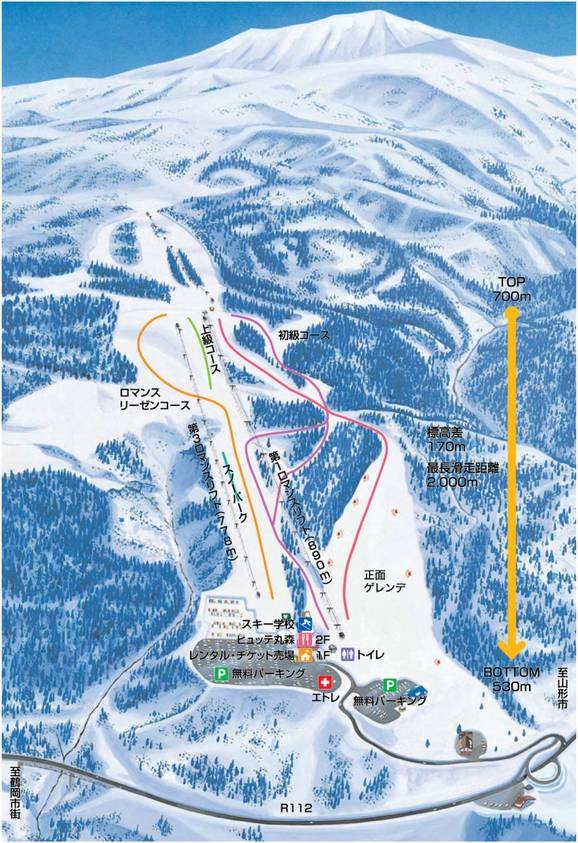
- Vertical170m (700m → 530m)
- Snowfall~10m
- Terrain 20% 60% 20%
- Tree Riding
- Lift Pass¥3,700
- Lifts2 pair chairs
- Crowds
- Out of Boundsnot allowed
- Night Skiing
- Family Friendly
- Trails4
- Skiable Area~49ha
- VibeQuiet local powder hill
Trail Map
Accommodation
View MapThe easiest base is Tsuruoka City, where you get practical hotels, plenty of food options, and an uncomplicated morning drive. For a simple, no-drama stay that keeps the logistics easy, places like Hotel Inn Tsuruoka work well for early starts and late returns. This option is all about convenience: park the car, dry your gear, eat well in town, repeat.
If you want the full Japan vibe after a cold day, go straight to the onsen coast at Yunohama Onsen. Kameya Hotel is a well-known classic in the area, and nearby options like Ikkyu Seaside Hotel keep you close to the ocean with that satisfying routine of soak, dinner, and sleep. It is a great pairing with Yudonosan because the ski day stays simple and the evening becomes the highlight.
For something more atmospheric and quiet, look toward the mountain and valley onsen zones around Tsuruoka. Atsumi Onsen is a strong choice for a traditional ryokan stay, with places like Bankokuya and Tachibanaya offering that old-school inn energy: calm rooms, proper meals, and the kind of hot spring soak that makes your legs feel brand new. If you are mixing skiing with a bit of cultural travel, you can also consider stays around Mt. Haguro such as Kyukamura Shonai-Haguro, which suits travellers who want nature, fresh air, and an earlier bedtime rather than nightlife.
Powder & Terrain
Yudonosan punches above its weight in storms because it sits in a seriously snowy part of Japan and relies on natural snow rather than artificial coverage. When it is dumping, your best rhythm is simple: ride the chairs, stay close to the fall line, and keep dipping into the trees along the edges of the marked runs where the snow stacks up and gets less traffic. The hill skis quickest off the upper lift-served zones, and the best stashes are usually the obvious ones that people overlook because they are chasing the groomers or hanging around the park features. Expect powder to get tracked in the central lanes first, then soften into soft chop and small piles that are genuinely fun to slash through once the first rush settles. Boundary-wise, treat it as in-bounds only: there is no formal gate network, and this is not the place to freestyle your way into uncontrolled terrain. If you are thinking about touring beyond the ski area, plan it as a separate objective with proper gear and conservative decisions, not as a casual duck-and-go detour.
Getting There
The closest airport is Shonai Airport, which is the cleanest way in if you can line up flights. From there, a rental car makes everything easier, especially on storm days when you want flexibility and you do not want to gamble on limited local transport. Expect roughly ~1 hour from the airport to the ski area depending on road conditions and snowfall.
By rail, the practical hub is Tsuruoka Station. From Tsuruoka, you are typically looking at ~45 minutes to the ski area by car in winter conditions. Public buses exist in the region, but service to the ski area can be limited and timing-sensitive, so it is best treated as a backup plan rather than your primary strategy.
Winter driving tips: snow tyres are non-negotiable, and carrying chains is smart if you are heading up on a heavy storm morning. This area can get intense snowfall, and the road surfaces can change quickly from wet to icy as you gain elevation. Keep an eye on local road updates and give yourself extra time. If it is nuking and visibility is poor, patience beats hero driving every time.
Who's it for?
- First-timersOkay
- Powder huntersOkay
- Non-skiersOkay
- BudgetGood
- LogisticsLimited
If you like low-stress powder days, easy navigation, and that classic Japanese local-hill atmosphere, you will have a great time here. Upper intermediates who can handle variable snow will get the most out of it because they can bounce between groomers, soft chop, and the treed edges without overthinking it. Snowboarders who enjoy shaped snow, banked hits, and a park-friendly scene will also vibe with Yudonosan when the features are built up.
If you are chasing big vertical, long sustained steeps, or a full day of advanced terrain variety, you will feel capped pretty quickly. Expert skiers and riders can still have fun, but it is more of a snack than a feast. It is also not an international resort in the usual sense: services are simple, English support is limited, and the experience is best when you lean into the local flow rather than expecting a polished destination setup.
Food & Après
On the hill, keep expectations realistic: think canteen-style comfort food that does the job, warm drinks, and quick refuels so you can get back outside. This is not a destination for slopeside fine dining, but it is absolutely fine for curry, noodles, and the usual ski-day staples.
The real move is eating in Tsuruoka and the surrounding Shonai area. If you are a ramen person, Chinese Soba Kompiraso is a name that comes up a lot, and Tsuruoka generally has a strong noodle culture. For something more memorable and less ski-bro, Al Ché-cciano is a standout if you want a proper sit-down meal that feels like a trip highlight. If you want a classic post-ski izakaya vibe near the station, Mekiki no Ginji Tsuruoka Ekimae is a solid option for seafood-leaning plates and a relaxed finish to the day.
If you pass through Tamugimata, it is worth timing lunch for soba. Soba Restaurant Nanakamadotei is a good shout for a warm, local meal that fits the mountain vibe. And if you just want easy sushi without the fuss, Gourmet Sushi-Go-Round Kantaro Tsuruoka is a fun, reliable way to refuel.
Après here is understated. Think a quick beer, a good meal, then an onsen. If you are looking for a party scene, you are in the wrong postcode.
Japow Travel Tips
- Lift hours: 8:45 to 16:00 is the typical operating window.
- Avalanche / backcountry reality: No formal gate network. Stay in-bounds unless you are deliberately ski touring with proper equipment, knowledge, and a conservative plan.
- Weather & snow patterns: Coastal Sea of Japan storms can deliver fast accumulation and big snowbanks. Snow quality can range from light to slightly denser depending on temperature, but it is consistently fun when fresh.
- Language/cultural quirks: English is limited. Be polite, follow the ropes, and treat the hill like a community space. It goes a long way here.
- Anything unique: The hill has a snowboard-friendly identity and is known for shaped snow features like banked walls and a halfpipe when conditions allow.
- Nearby resorts worth pairing: Gassan is the obvious regional powerhouse for spring skiing. If you are building a broader Shonai trip, you can mix skiing with cultural stops around the Dewa Sanzan area and food missions in Tsuruoka.
Verdict: Small hill, serious snow
Yudonosan is the kind of place that reminds you why Japan ski travel is so addictive: deep storms, simple infrastructure, and a mellow local rhythm that makes the day feel easy. It will not replace a big destination resort, but it absolutely earns its spot as a storm-day side mission, a family-friendly powder sampler, or a low-pressure hit when you want turns without the chaos.