
Echigo Yuzawa Ski Area
Japan’s Bullet-Train Powder Playground
 越後湯沢
越後湯沢Echigo Yuzawa Ski Area
8.5~12m
Snowfall
1845m
Elevation
81
Lifts
¥7,500
Price
One Station, a Ridiculous Amount of Snow
Echigo Yuzawa is not a single ski resort. It is a railway and onsen town surrounded by so many ski areas that the morning decision can feel like standing in front of a very good Japanese vending machine with too many buttons. You step off the Joetsu Shinkansen, walk past racks of sake and rice crackers, then choose a mountain according to overnight snow, wind, visibility, your crew and how ambitious everyone feels before coffee. Few Japanese ski destinations make storm chasing this easy without requiring a rental car and a carefully colour-coded spreadsheet.
The core Yuzawa Town line-up includes GALA Yuzawa, Yuzawa Kogen, Kandatsu, Iwappara, NASPA Ski Garden, Yuzawa Nakazato, Yuzawa Park, Nakazato Snow Wood, Ipponsugi, Kagura and Naeba.
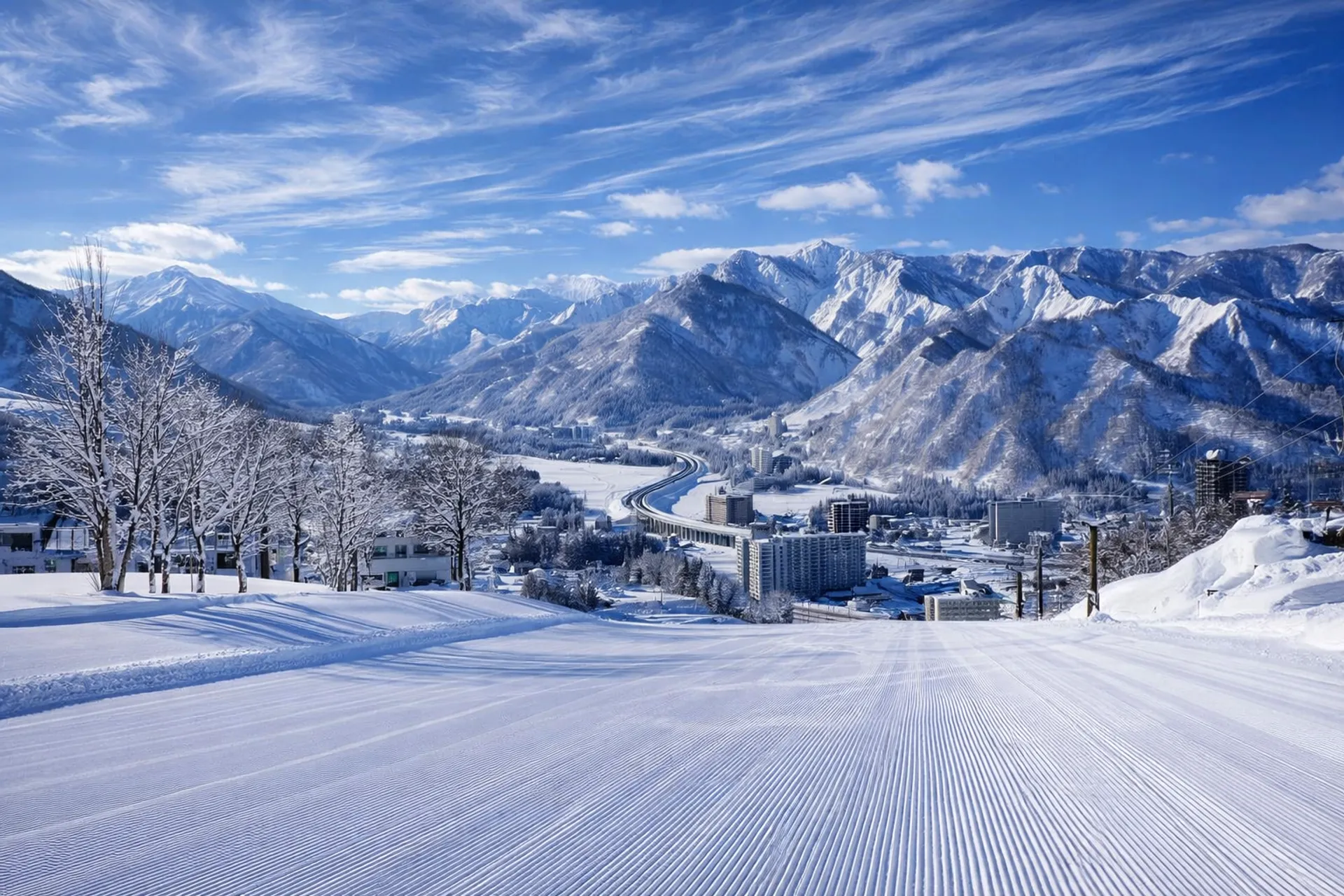
Just north in neighbouring Minamiuonuma are Ishiuchi Maruyama, Maiko, Joetsu Kokusai, Muica and Muikamachi Hakkaisan. Some are tiny learning hills, some are full-sized destination resorts, and two major groups can be explored using linked tickets: GALA, Yuzawa Kogen and Ishiuchi Maruyama through Yuzawa Snow Link, plus Kagura and Naeba through the Mt. Naeba connection.
The town itself is more practical than postcard-perfect. The elevated railway, apartment towers and busy station precinct make it feel like a working Japanese snow town rather than a carefully styled alpine village. That is part of its appeal. Hotels run shuttles, rental shops understand early starts, restaurants are clustered within walking distance, and an onsen soak is never far away. English is increasingly common at major hotels, GALA, Kagura and Naeba, but smaller pensions and local restaurants still feel reassuringly Japanese.
Yuzawa has been a major domestic ski destination for decades, yet it has become noticeably more visible to international riders in recent years. The direct train, improving English services and rising prices elsewhere in Japan have all helped. Weekdays can still feel remarkably relaxed, while weekends bring Tokyo day-trippers to GALA, Kandatsu, Iwappara and Naeba. The smart play is not to complain about the crowd. It is to use the valley properly and go somewhere else.
Resort Stats
- Vertical1225m (1845m → 358m)
- Snowfall~12m
- Terrain 30% 45% 25%
- Tree Riding
- Lift Pass¥7,500
- Lifts81 across Yuzawa Town
- Crowds
- Out of BoundsRules vary; pass may be taken
- Night Skiing
- Family Friendly
- Trails149
- Skiable AreaNot verified
- VibeOnsen town, rail-fast, varied
Trail Map
Accommodation
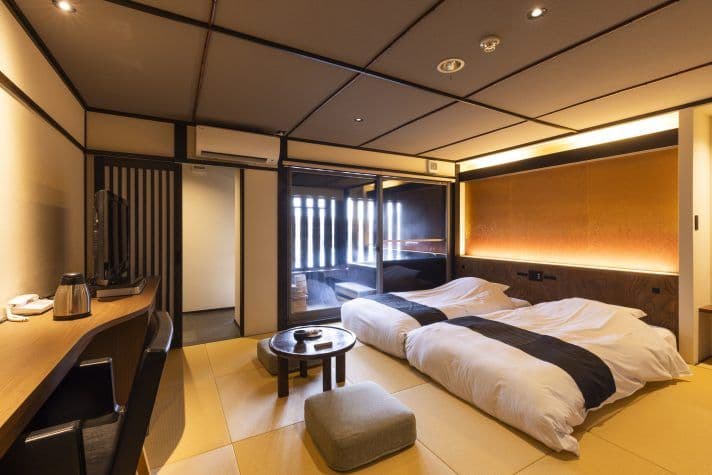
View MapStay near Echigo-Yuzawa Station for maximum flexibility: Yuzawa Grand Hotel, Shosenkaku Kagetsu, Yukinohana and Hotel Futaba put trains, shuttles, dining and onsen within easy reach. Kagura White Horse Inn suits early Kagura starts, while NASPA New Otani, Hotel Angel Grandia Echigo Nakazato and Naeba Prince Hotel offer slope-side convenience for families; Iwappara and Ishiuchi are useful for apartments, parking and longer stays. See our complete Echigo-Yuzawa accommodation guide for detailed area advice and hotel picks.


This page contains affiliate links, if you book through them, we may earn a small commission at no extra cost to you.
Powder & Terrain
Yuzawa snow arrives from the Sea of Japan with serious volume. Around 12 metres a season is enough to bury cars, build roadside snow walls and reset the mountains repeatedly through January and February. It is generally a little denser than the famously dry snow of inland Hokkaido, particularly at the low-elevation resorts close to town. That is not always a disadvantage. On deep storm days the snow has enough body to keep you above hidden terrain, and the slightly heavier base fills gullies and rough ground quickly. The trade-off is that sun, mild air or rain can change the lower mountain fast.
Kagura is the powder anchor. Its top elevation reaches 1,845 metres, and the full ski area spans the Mitsumata, Kagura and Tashiro sectors. The journey up can involve a ropeway, multiple lifts and traverses, so this is not a mountain for riders who become emotionally distressed by flat connectors. Once you reach the upper mountain, the snow is colder and the terrain becomes more interesting. The Kagura No. 1 High-Speed Lift is the early target, while Kagura Pair Lift No. 5 provides access towards the official backcountry gate when it is operating. Registration, avalanche equipment and a realistic plan are required. Beyond that gate is genuine mountain terrain, not a cheeky shortcut back to the lodge.
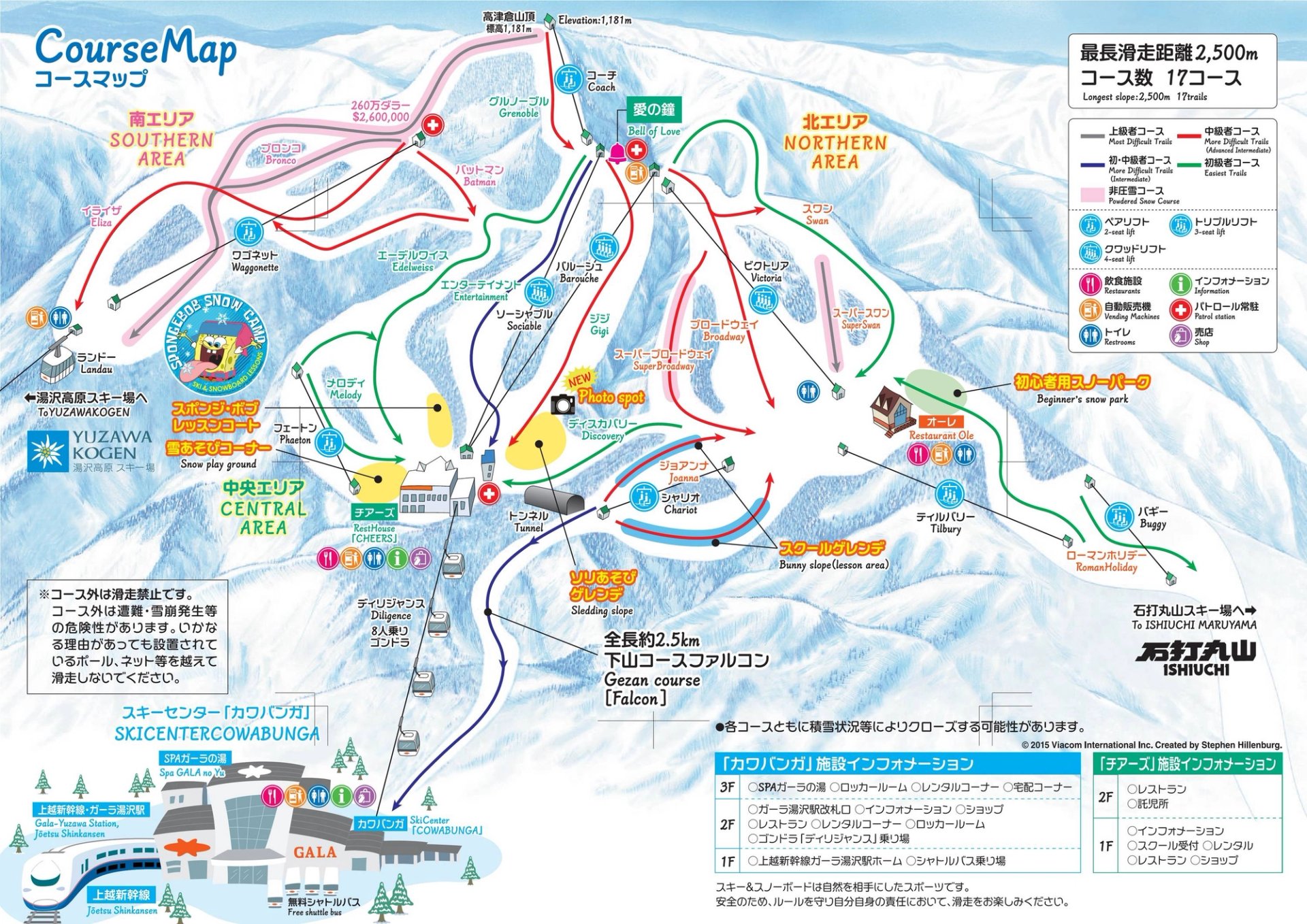
Closer to town, GALA Yuzawa, Yuzawa Kogen and Ishiuchi Maruyama form the most convenient interconnected day. GALA has efficient uplift, 823 metres of vertical and several ungroomed advanced runs, including Bronco and the memorably named 2.6 Million Dollar course in the South Area. It also catches wind, and the direct Shinkansen access means fresh snow can be thoroughly inspected by Tokyo before lunch. Crossing towards Ishiuchi produces longer fall lines, more varied terrain and better options for riders who want to roam. Yuzawa Kogen is smaller and more scenic, with an enormous ropeway and a useful mix of open slopes and sheltered edges.
Kandatsu and Maiko are two of the better alternatives when the headline resorts are getting mobbed. Kandatsu is compact, close to town and often holds soft snow well in its folds, although the lift layout encourages repetition. Its late-night operations on selected weekends are a uniquely Yuzawa way to turn one ski day into a minor endurance event. Maiko sits outside Yuzawa Town but deserves to be treated as part of the powder plan. The Nagamine side provides gondola access, longer runs and an official ungroomed zone with a 32-degree maximum pitch. Iwappara, Yuzawa Nakazato and Yuzawa Park are better for cruisers, learners and family days than serious off-piste hunting.
Crowd management is where repeat visitors earn their breakfast. On a clear Saturday after a storm, expect early queues at the GALA gondola, the Kagura ropeways and popular Naeba chairs. On a snowy weekday, the same area can feel half asleep. Check wind first, then elevation and temperature. Head high to Kagura when lower slopes are warm, use sheltered terrain when upper lifts are on hold, and keep Ishiuchi or Maiko ready when GALA fills. The secret stash in Yuzawa is often not a hidden tree line. It is choosing the less fashionable resort before everyone else realises they picked the wrong one.
Getting There
From Tokyo Station, the Joetsu Shinkansen reaches Echigo-Yuzawa in roughly 80 to 90 minutes. Some winter services continue directly to GALA Yuzawa Station, where the ski centre and gondola are attached to the railway complex. Travellers arriving through Haneda or Narita should transfer into Tokyo and take the train north. Niigata Airport looks closer on a map, but its onward connections are usually less convenient for most international arrivals.
Free or paid resort shuttles spread out from Echigo-Yuzawa Station, with the closest hills reached in under 15 minutes and Kagura around 20 to 35 minutes away depending on whether you use the Mitsumata or Tashiro base. Naeba is closer to 50 minutes. Public transport is reliable enough for a station-based trip, but check the final return bus before committing to night skiing, a long lunch or one more run on the far side of the mountain.
A rental car becomes worthwhile when you want to include Maiko, Joetsu Kokusai, Muikamachi Hakkaisan, Muica or multiple resorts during a storm cycle. Proper winter tyres are essential. Snowfall can be intense, visibility can vanish quickly, and roadside banks make intersections harder to read. Allow time to clear the car each morning and never assume a short distance means a short drive when the road has disappeared beneath fresh snow.
Parking is generally straightforward at the outlying resorts, but weekend arrivals can still back up around Kagura, GALA and Kandatsu. For Kagura, arriving early matters because the ropeway creates a natural choke point even before you reach the skiing. When conditions look exceptional, plenty of locals have already read the same forecast.
Who's it for?
- First-timersGood
- Powder huntersGood
- Non-skiersExcellent
- BudgetOkay
- Après / nightlifeOkay
- LogisticsExcellent
Echigo Yuzawa is superb for mixed groups because the area can absorb wildly different ambitions. Beginners get wide slopes at Iwappara, Yuzawa Nakazato and Yuzawa Kogen. Intermediates have an almost excessive amount of cruising at GALA, Ishiuchi, Naeba, Kagura and Joetsu Kokusai. Families benefit from short transfers, snow-play facilities, ski-in ski-out hotels and the ability to retreat to the station or an onsen without writing off the day.
Advanced riders should come with a plan. Kagura, Maiko, Ishiuchi and nearby Muikamachi Hakkaisan provide the strongest terrain, but not every resort welcomes off-piste riding and many marked black runs are short by international standards. A car and a qualified guide unlock far more. Riders seeking one enormous, consistently steep mountain may find the region fragmented. Powder chasers who enjoy reading forecasts, moving between hills and making smart calls will have much more fun.
Snowboarders should also pay attention to the trail map before blindly following the skier in front. Kagura’s connections include traverses and flat sections, while sprawling resorts such as Joetsu Kokusai can involve slow movement between sectors. It is all manageable, but carrying speed matters. Nobody wants to begin the day dreaming about untouched trees and finish it skating along a cat track while their skier mates pretend not to notice.
Food & Après
Echigo Yuzawa eats far better than its concrete station-town appearance suggests. Niigata is rice and sake country, so start with hegi soba at Nakanoya or Echigo Tokamachi Kojimaya, then look for local pork, hotpot, sashimi and Koshihikari rice at the town’s izakayas. Yuzawa Kamakura and Hifumi are good dinner targets, while Ninjintei is known for substantial tonkatsu that makes complete sense after a cold day. Kaiten Sushi Honjin inside the station is dangerously convenient when everyone is too tired to make decisions.
Restaurants around the station become busy on winter weekends, particularly between 18:00 and 20:00. Book ahead when possible or eat slightly earlier than your instincts suggest. Smaller izakayas may have handwritten menus and limited English, but translation apps generally bridge the gap. This is a good place to be curious rather than hunting for familiar Western food every night.
Après here is more sake, bath and dinner than dancing in ski boots. Ponshukan inside Echigo-Yuzawa Station lets you sample a huge spread of Niigata sake without wandering into a blizzard, and the surrounding station complex has shops, snacks and casual restaurants. There are bars and lively izakayas around town, but this is not Hirafu. Most evenings end with steamed glasses, pink faces and someone quietly admitting that tomorrow’s first lift may be negotiable.
Japow Travel Tips
- Lift hours: Most daytime lifts run from around 8:00 or 8:30 until 16:00 or 16:30. Ropeways and upper lifts may open later after heavy snow, avalanche control or strong wind.
- Night skiing: Iwappara, Ishiuchi, Naeba and selected other resorts offer evening sessions. Kandatsu can continue until 2:00 am on designated nights.
- Backcountry: Kagura has formal gate access from the upper mountain, but it requires registration, avalanche equipment and competent decision-making. Resort boundaries elsewhere are not invitations.
- Off-piste rules: Policies vary considerably. Terrain tolerated at one resort may be closed at the next, and ignoring ropes can lead to warnings or losing your lift pass.
- Weather: Lower resorts can receive wet snow or rain during warm systems. Kagura’s elevation is the safer call when the freezing level rises.
- Wind: GALA, Kagura and the larger ropeways can be affected by wind. Keep a sheltered, lower mountain ready rather than building the entire day around one lift.
- Language: Major resorts and hotels handle English reasonably well. Smaller hills, pensions and restaurants may rely on translation apps and cheerful improvisation.
- Cash and bookings: Cards are widely accepted at major facilities, but smaller restaurants, guesthouses and ticket counters may still prefer cash. Weekend restaurant bookings are worthwhile.
- Nearby resorts: Add Ishiuchi Maruyama and Maiko first. Joetsu Kokusai offers scale, while Muikamachi Hakkaisan brings steeper terrain and a more serious feel.
- Spring skiing: Kagura’s high elevation and long season make it the region’s strongest option once the lower resorts begin closing or turning properly slushy.
Verdict: The Smart Powder Chaser’s Base Camp
Echigo Yuzawa wins through choice. It is not Japan’s prettiest ski village, and no single mountain dominates the conversation, but the region lets you chase elevation, shelter, terrain and smaller crowds without rebuilding your trip every morning. Ride Kagura when the snow is cold, move to Ishiuchi or Maiko when the obvious hills fill, save Iwappara or Nakazato for a mellow crew day, then return to town for onsen, soba and sake. For riders who value flexibility as much as hype, Yuzawa is one of Honshu’s most useful powder bases.