
Mt. T
Sky-God Powder Mecca
 エムティー
エムティーChurch of the Ropeway
Step off the ropeway at Mt. T on a powder morning and you'll understand why everyone still calls it by its old name, Tenjindaira, out of habit. Tanigawadake's peaks stack up ahead like they're guarding something. Snow falls fine enough to vanish before it lands on your jacket, and the whole valley goes quiet in that specific way that makes strangers start speaking in whispers.
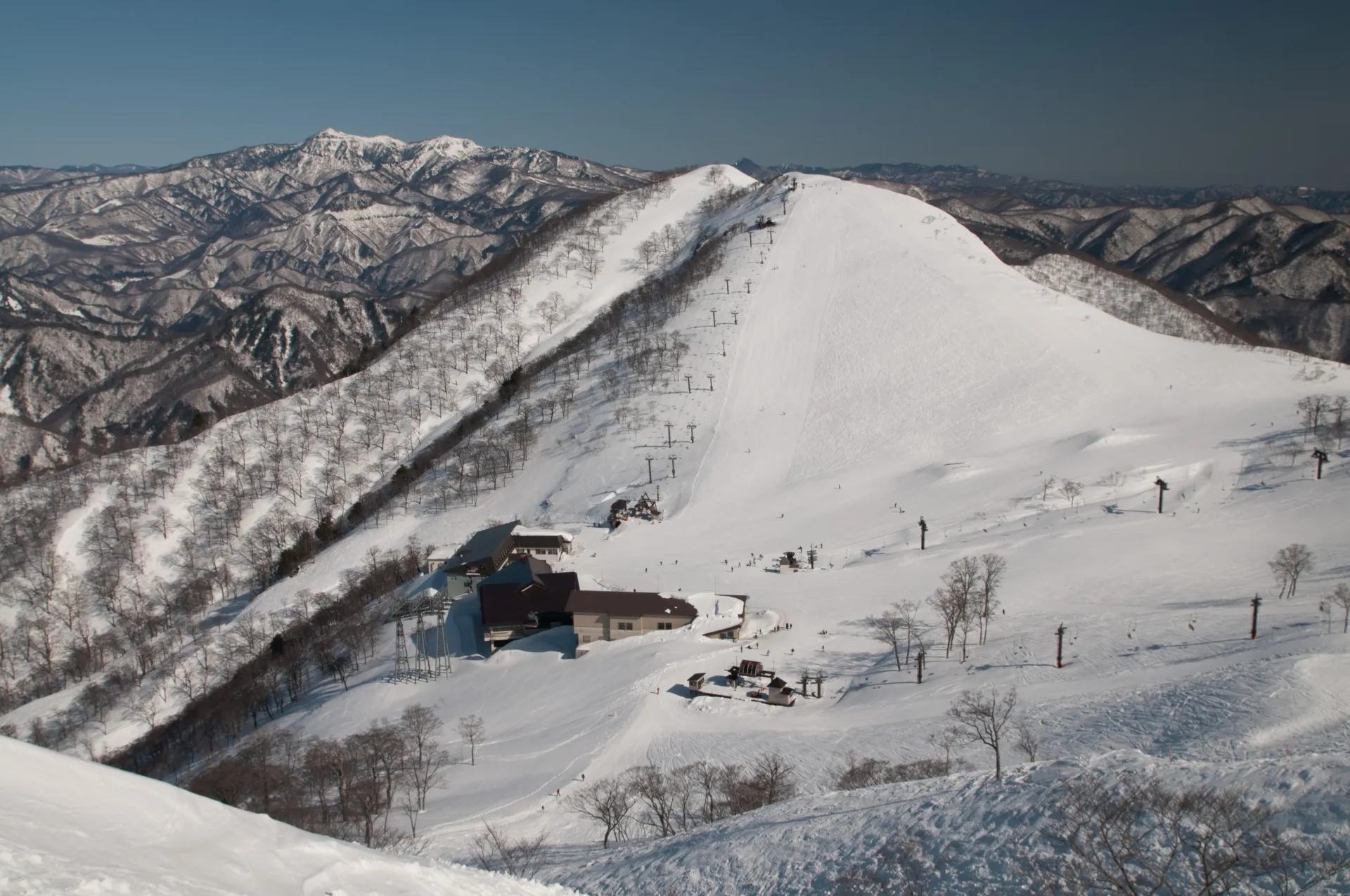
The history here is unglamorous, and that's the point. For decades this was a Gunma secret: minimal grooming, zero pretension, terrain that rewarded skill over style. Word eventually got out anyway, bottomless storms, tree lines that refill mid-run, vertical you don't expect to find this far from the big Honshu names. Hoshino Resorts took over in late 2024 and had the sense to polish a few edges without touching the soul underneath.
The vibe is a rare mix of remote and reachable. You're deep enough in the mountains to feel it, close enough to Minakami to still find a hot meal and a proper bed. Weekdays can feel like the whole place is rented out to just you, and even busy weekends never turn into the queue-and-shuffle of the bigger names. Nobody's here for a selfie between runs.
The culture matches the terrain, laid-back on the surface, quietly serious underneath. Riders swap weather notes over vending machine coffee at the base, boarders check beacon batteries before the ropeway doors close, and a knowing look passes around whenever cloud starts rolling in off the Sea of Japan, the kind that means it's about to properly dump.
Resort Stats
Estimated cumulative fresh snowfall at major on-mountain ski areas; actual totals vary substantially by resort, elevation, measurement location, and season.
- Vertical750m (1500m → 750m)
- Snowfall~15m
- Terrain 30% 40% 30%
- Tree Riding
- Lift Pass¥9,000
- Lifts1 ropeway + 3 pairs
- Crowds
- Out of BoundsCautious / ski patrol watches
- Night Skiing
- Family Friendly
- Trails10
- Skiable Area~50ha
- VibeHardcore, local, wild
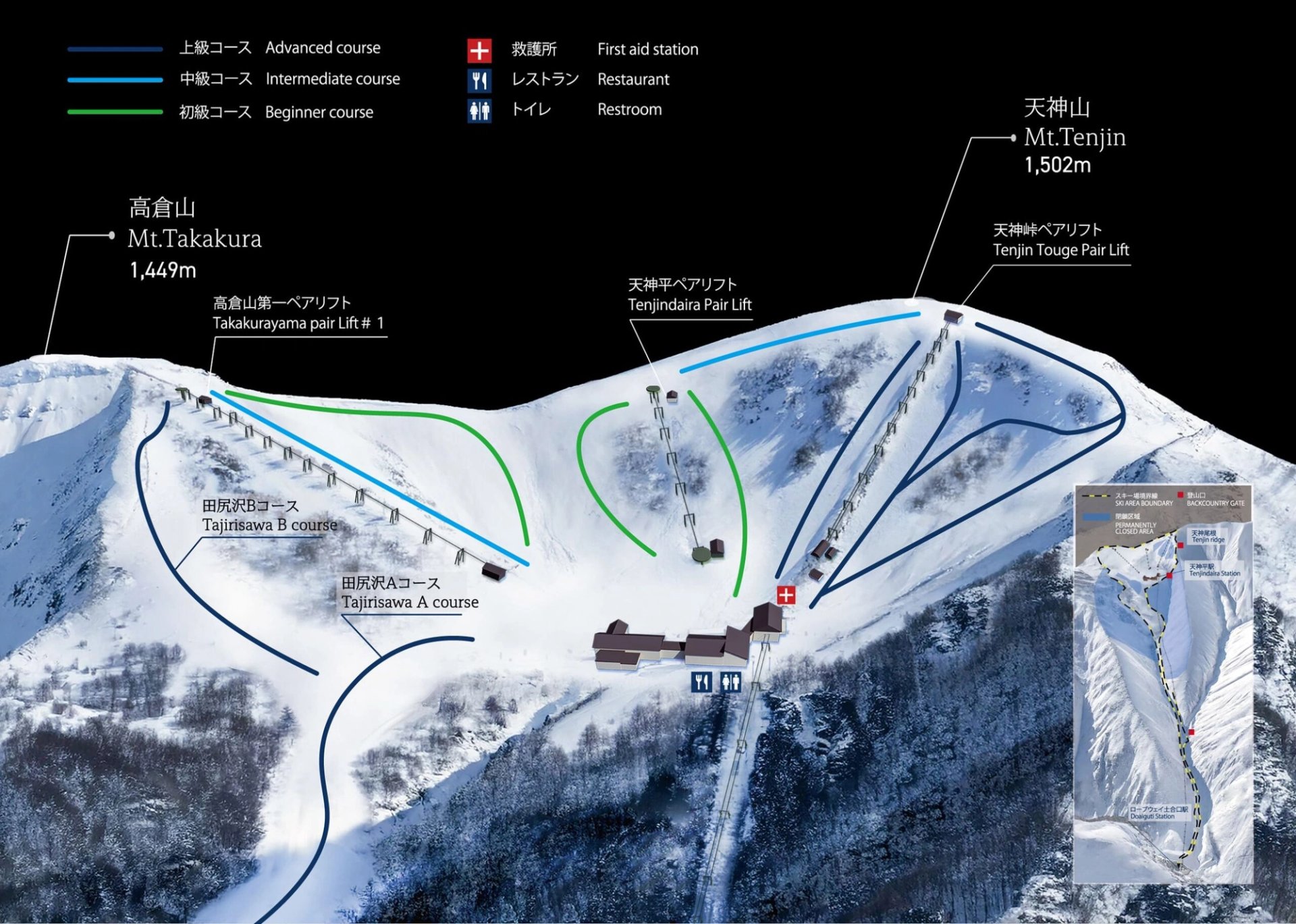
Trail Map
Accommodation
View MapOn-mountain lodging doesn't really exist beyond day facilities, so you're staying down in Minakami or the surrounding valley. That's no hardship, it opens up everything from budget pensions to riverside onsen luxury.
Budget-conscious travellers land in simple pensions or business hotels around Minakami, clean, functional, and usually run by an owner happy to talk you through the day's forecast over breakfast.
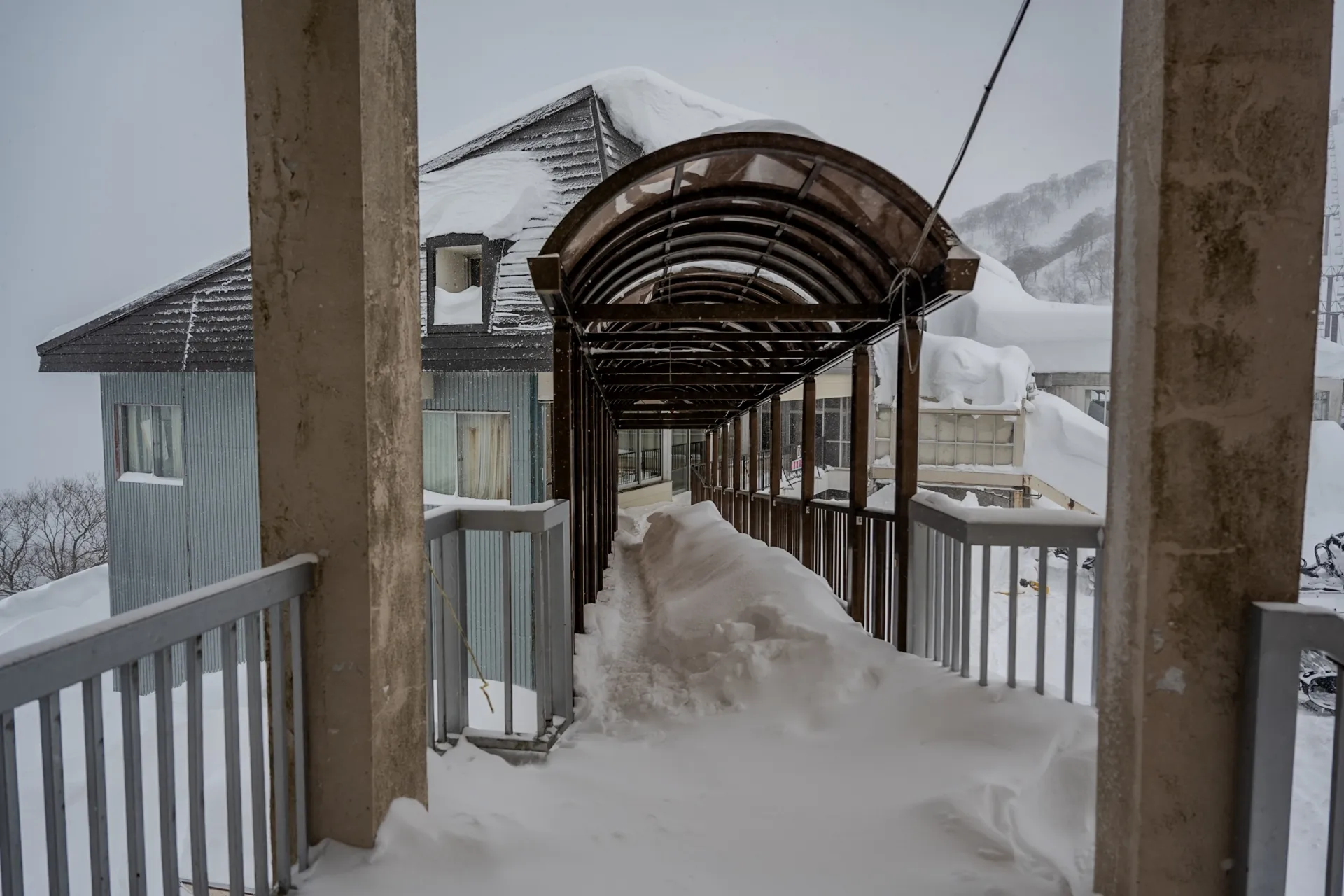
Mid-range stays mean ryokans with meals included, dinner built from mountain vegetables, river fish and steaming rice, capped off with an onsen soak while the snow keeps falling outside. If you want a taste of luxury without Niseko-level prices, a few riverside properties offer private outdoor baths with mountain views for a fair rate.
Doai Station, Japan's famously deep underground platform, sits just down the road with a couple of quirky guesthouses attached. Staying here puts you close to the ropeway and gives you a dose of rural Japan you won't find in the bigger resort towns.
Powder & Terrain
Elevation and exposure are Mt. T's whole argument. The upper ridge tops out near 1,500m, high for Honshu, catching cold northwest storms straight off the Sea of Japan before anything downstream gets a look in. Snow lands dry and deep enough to hiss under your board and pool in your boots the second you stop moving.
The ropeway does the heavy lifting, delivering you from base to alpine zone in well under ten minutes. Step off into open bowls, steep fall-lines and treed gullies. The main slope offers a groomed line for warming up the legs, but most people here are eyeing the sides, short traverses that open into glades and gullies holding stashes long after the last flake fell.
Off the top, advanced riders can drop toward Tajirisawa, a 4km run that starts steep, funnels into a natural halfpipe of trees, and spits you out at the bottom still grinning. Takakurayama's side runs more sheltered when the weather turns, tighter trees for when the wind picks up. Both zones look compact on the map but ski enormous, thanks to pitch and snow quality doing most of the work.

Backcountry access here is no joke. Gates, when open, lead into genuinely high-consequence alpine terrain, with Tanigawadake's ridges tempting anyone with a touring setup and the training to use it. This is proper avalanche country and ski patrol watches it closely. Read our backcountry and sidecountry guide before you think about ducking a rope, or better, book time with a local through our guide to hiring a guide in Japan.
The lift network stays basic: the ropeway plus a handful of fixed-grip pairs. Nobody's bragging about lift speed, but with minimal lines you're rarely waiting more than a few minutes. It feels closer to earned turns than resort churn, which suits the place exactly.
Local tip: On a storm day, head for the trees skier's left of the main slope, they fill fast and block the wind. On the first bluebird morning after a big dump, beeline for Tajirisawa, it's as good as Japan gets.
Getting There
Reaching Mt. T from Tokyo is more straightforward than the remote reputation suggests.
By train, take the Joetsu Shinkansen to Jomo-Kogen, around 75 minutes, then a local bus or taxi covers the final 30 minutes to the ropeway. By car, it's roughly two hours on the Kan-etsu Expressway to Minakami IC, then 14km of mountain road.
Winter driving here gets serious. Snow tyres or chains are essential, and after a big storm even locals slow right down. The ropeway's multi-level parking is a small mercy, keeping cars snow-free and ready for the drive home.
If you're staying multiple days, a rental car opens up the whole Minakami area, Okutone through to White Valley, letting you chase whichever spot is holding the best snow that morning.
Who's it for?
- First-timersOkay
- Powder huntersExcellent
- Non-skiersLimited
- BudgetGood
- LogisticsLimited
If your idea of a great day starts with a beacon check and ends with legs that can barely make it up the onsen steps, Mt. T is built for you. Advanced and strong intermediate riders get the most out of it, there's enough groomed terrain to recover between pow runs, but this isn't a mountain for endless cruiser mileage.
Beginner terrain exists, technically, but it's thin. First-timers will have a better time at nearby Okutone or Minakami Kogen, both a short drive away. Families with a mix of abilities can still make it work, the setting alone is worth the trip and the base is compact enough to regroup easily, but the real reason to come here is the steep, ungroomed stuff off the ropeway.
Food & Après
The base lodge cafeteria keeps it simple: miso ramen, curry, tonkatsu, food built to refuel a cold day rather than impress anyone. Prices are fair for the setting and portions generous enough to carry you through the afternoon.
Evenings belong to Minakami. Izakayas serve grilled yakitori and locally brewed sake, soba shops use spring water straight off the mountain, and a few modern cafés pour surprisingly good espresso. Nightlife stays low-key, hot sake and quiet conversation rather than anything loud, which suits a crowd planning an early ropeway the next morning.
Japow Travel Tips
- Lift hours: 8:30am to 4pm, with the last ropeway down around 4:20pm.
- Lift price: Expect roughly ¥9,000 for a standard adult day pass, rising to around ¥14,000 for peak dates. Mt. T runs tiered pricing rather than one flat rate, so check the official site before you go.
- Avalanche reality: The surrounding peaks are serious. Only venture beyond the ropes with gear, training and a partner, our avalanche safety gear guide is a good place to start.
- Snow window: Late December through early March for the most reliable powder, April can still hold good days up high.
- Language: Limited English. A handful of basic phrases will get you through most days.
Worth pairing with Mt. T
Takaragawa Onsen is the obvious detour, an outdoor bath surrounded by snow that's worth the trip on its own, and it sits close enough to Minakami to fold into any stay without adding a travel day.
Verdict: Earn It, Then Believe It
Mt. T isn't the flashiest name in Japan, and that's precisely its strength. It's pure: a high alpine ropeway straight to the goods, snow that keeps stacking, and enough terrain to keep strong riders grinning for days. Skiing here feels like skiing used to, more mountain, less infrastructure, which is a rare thing to still find on a powder resort list. Make the trip once and it has a habit of becoming an annual pilgrimage.