
Ishiuchi Maruyama
Night-glow groomers and storm-day cruisers
 石打丸山
Ishiuchi Maruyama
8.4~11m
Snowfall
921m
Elevation
11
Lifts
¥8,500
Price
Snow Country's grand dame, still out past dark
Ishiuchi Maruyama has been running since the late 1940s, and it skis like a resort that has spent decades working out exactly what Tokyo skiers want. Wide fall-line groomers, three separate base areas, a modern lift up the middle and a night program big enough that the mountain glows over the Uonuma valley like a stadium after the final siren. Come here for a weekend and you will meet three generations of the same family on the same chair, each of them convinced they carve best.
The centrepiece is the Sunrise Express, a hybrid lift that mixes heated 10-person gondola cabins with six-seat chairs on the same line. Beginners and non-skiers ride inside, everyone else hops on a chair, and both get from the central base to mid-mountain in a hurry. Above that, a web of express chairs fans out across a big, rolling mountain, with a longest descent of around 4 kilometres. A link from the north side runs across to Gala Yuzawa, and Yuzawa Kogen joins them on a shared ticket, so one hill quickly becomes a three-resort network.
The catch is that this is a groomer resort at heart, at fairly low altitude. The top sits at about 920 metres, so the snow is plentiful but often heavier than higher resorts like Kagura, and a warm spell can soften the lower runs quickly. There are a couple of official tree-run zones, but no gates and no sidecountry scene. It is also a big Tokyo weekend draw, so Saturdays are busy.
This review will help you decide whether Ishiuchi fits your trip. If you like long carving runs, night laps under the lights and a resort that works well for mixed-ability groups, it is one of the best bases in the Yuzawa area. If deep trees and backcountry are the main event, use it as one stop on a wider loop.
Resort Stats
Estimated cumulative fresh snowfall at major on-mountain ski areas; actual totals vary substantially by resort, elevation, measurement location, and season.
- Vertical665m (921m → 256m)
- Snowfall~11m
- Terrain 35% 45% 20%
- Tree Riding
- Lift Pass¥8,500
- Lifts1 chondola, 3 quad, 7 pair
- Crowds
- Out of Boundsnot allowed
- Night Skiing
- Family Friendly
- Trails24
- Skiable Area~150ha
- Vibeclassic Snow Country energy
Trail Map
Accommodation
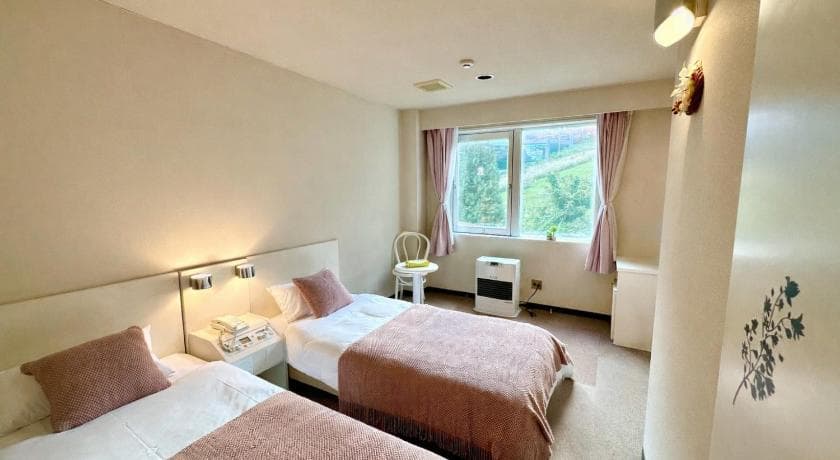
View MapThe Ishiuchi and Hatsukaishi base areas are lined with pensions and small family-run lodges. Rooms are simple, often tatami-style, and breakfasts are generous. Many owners have hosted Tokyo skiers for decades, and staying here means you can walk to the lifts in the morning without needing a car or bus. Expect Japanese-first service, so a few basic phrases will help.
Yuzawa town, 10 to 15 minutes away, has the widest choice. Hotel Futaba and Shosenkaku Kagetsu are classic onsen hotels with big baths and multi-course dinners. NASPA New Otani is a family-friendly resort hotel on its own slopes. Around Echigo-Yuzawa station there are business hotels and apartment-style rentals that work well for groups planning to visit several resorts.
Nightlife across the valley is low-key, more izakaya and onsen than bars, which suits the early starts and night-skiing sessions here. Still weighing up bases? Our guide to the best places to stay in Yuzawa lays them out side by side.


This page contains affiliate links, if you book through them, we may earn a small commission at no extra cost to you.
Ski homes for sale near Echigo-Yuzawa
Powder & Terrain
Ishiuchi's terrain spreads across three base areas. The Chuo (central) base is the main entrance and home to the Sunrise Express. Hatsukaishi has its own lifts and a quieter, more local feel, and the toughest marked run on the mountain, Devil Down, waits for challengers off the north entrance. The Kanko side has the express quads that run to the upper slopes, plus the main terrain park. Each area has its own character, and moving between them is part of the fun of a full day here.
Most of the runs are wide, consistent fall-line groomers, ideal for carving and long cruising laps. The Sunrise Line, the longest single run at 1.35 kilometres, is a gentle cruiser that also stays lit at night. Stronger riders should head for the steeper pitches off the summit lift, and for runs such as Giant, which leaves about half the slope ungroomed, so you can mix powder and corduroy on the same run after a fresh fall.
Off-piste is more organised than the old reputation suggests. Ishiuchi has two tree-run areas, one near the summit and one at mid-mountain, plus several ungroomed zones. They are marked with tape, open only until 15:00, require a helmet and are closed by patrol when conditions are poor. Leaving the marked area will cost you your lift pass. It is not a freeride destination, but after a storm these zones offer a satisfying taste of trees without leaving the resort.
Crowds follow a pattern. The Chuo base and the Sunrise Express are busiest in the morning, especially on weekends. Starting from Hatsukaishi or the Kanko side helps you avoid the rush, and the link to Gala Yuzawa can spread the crowd when it opens. Weekdays are much quieter, and the groomers stay in good shape well into the afternoon.
Night skiing is a major strength. Up to nine runs are lit, with a longest night descent of about 3 kilometres, and the program runs daily from late December to late February, then on selected Fridays and Saturdays into March. Cold, clear nights deliver firm, fast carving, while storm nights bring fresh snow and almost empty lifts. If you are based in Yuzawa, plan at least one evening here.
Getting There
From Tokyo, take the Joetsu Shinkansen to Echigo-Yuzawa, around 75 minutes on the fastest trains. During the season the resort runs a daily shuttle bus from the station, and taxis queue at the station. Either way the ride is short.
Driving, use Shiozawa-Ishiuchi IC or Yuzawa IC on the Kan-Etsu Expressway. The resort is a few minutes from either. Snow tyres are essential, and chains are a good backup in heavy storms. Parking is free on weekdays and paid on weekends and holidays, and the car parks nearest the Chuo base fill first.
Because Ishiuchi sits low and most of its lifts are sheltered, it often keeps running on windy days when higher resorts close their top lifts. That makes it a useful fallback when a storm shuts down the upper mountain elsewhere. For a full weekend plan from the city, see our Tokyo long weekend powder escape loop.
Who's it for?
- First-timersGood
- Powder huntersOkay
- Non-skiersOkay
- BudgetOkay
- Après / nightlifeLimited
- LogisticsExcellent
Ishiuchi suits intermediates who want to build confidence on long, consistent runs, carvers who love wide groomers and families who need a resort with plenty of options. The gondola cabins on the Sunrise Express make it easy for beginners and non-skiers to reach mid-mountain, and the park is solid for freestyle riders, with a city-run halfpipe alongside. It ranks well in our list of the best Japan ski resorts for intermediate skiers.
Advanced riders will enjoy the steeper runs, the half-groomed slopes and the tree zones after a storm, but if trees, gates and backcountry are your priority you will run out of terrain. Pair Ishiuchi with a day or two at Kagura, or cross the mountains to Mt. T in Minakami, for a more freeride-focused week.
Food & Après
On the mountain, the restaurants serve hearty Niigata ski food: curry, tonkatsu, ramen and udon. The main lodges get crowded at noon, so eat early or late, or try the smaller restaurants on the Hatsukaishi and Kanko sides. The Veranda, the resort's viewing terrace and cafe, has big views over the Uonuma plain.
Down in the valley, look for hegi soba, a local buckwheat noodle made with seaweed, and anything made with Uonuma Koshihikari rice, which many Japanese consider the best rice in the country. Local sake, including Hakkaisan, is everywhere. Après is low-key: a soak, a meal at an izakaya and an early night before the next day's carving.
Japow Travel Tips
- Hours: Day skiing runs from 8:30 to 17:00. Night skiing runs from 16:00 to 20:00 on lit runs.
- Season: The season runs from mid-December to early April, with night skiing daily from late December to late February.
- Trees and off-piste: The two tree-run areas and the ungroomed zones close at 15:00 and require a helmet. Outside these, off-piste is closed and boundaries are enforced.
- Park: The main park runs along the Kanko second express, with a beginner park and a halfpipe nearby.
- Weather: Sea of Japan storms bring frequent snow. The low altitude means it can be heavy, but grooming is a real strength.
- Language: Trail maps and main signage are bilingual. Many pensions are Japanese-speaking only.
Nearby resorts worth pairing
Gala Yuzawa and Yuzawa Kogen are linked to Ishiuchi Maruyama on a shared ticket. Kagura is the best nearby option for higher, drier snow and backcountry gates. Kandatsu and Maiko are easy day trips for something different, and Naeba brings big-resort facilities.
Verdict: The after-dark carving capital
Ishiuchi Maruyama is not a powder secret, and it does not try to be. It is a big, well-run resort with long groomers, a modern lift up the middle, a couple of tree zones for storm days and one of the best night-skiing programs in Japan. Fold it into a Yuzawa trip and you get reliable carving by day, laps under the lights by night and an easy hop to Gala Yuzawa or Kagura when you want something different.