
Kiso Fukushima
Kiso Valley’s quiet fall-line fix
 木曽福島
木曽福島Quiet turns, big breathing room
Kiso Fukushima is one of those resorts that feels like it’s still doing things the local way. It sits above the Kiso Valley, away from the mega-hubs, and the vibe is calm: families, ski clubs, a few strong locals who know exactly where the snow collects, and not a lot of “influencer energy”. If you like rolling up, clicking in, and getting straight to business, it’s a good day out.
The skiing is simple in the best sense. You’ve got legit vertical for a small-to-mid operation, plenty of fall-line groomers that don’t force you into endless traverses, and just enough steeper terrain to keep advanced legs honest when the snow firms up. On a storm day, visibility can go flat up high, but the lower mountain and the edges can still ski well if you stay in the trees and manage your pace.
This is not an international destination resort. English support is limited, signage is mostly Japanese, and you should expect to sort your own logistics with a bit of patience and a translation app. The upside is affordability and space: weekday riding is often wide open, and even weekends feel civilized compared to the bigger names.
Families do well here. The layout is straightforward, the pistes are friendly, and it’s easy to regroup. Food is more functional than fancy on-mountain, but the real win is that you can base yourself in Kiso-Fukushima town and lean into the Kiso Valley rhythm: good sleep, early start, mellow evenings, and a proper soak nearby when the legs start talking back.
Resort Stats
- Vertical704m (1904m → 1200m)
- Snowfall~8m
- Terrain 45% 45% 10%
- Tree Riding
- Lift Pass¥5,200
- Lifts1 quad, 1 triple, 2 pair
- Crowds
- Out of Boundsnot allowed
- Night Skiing
- Family Friendly
- Trails8
- Skiable Area~60ha
- Vibelocal, quiet, fall-line focused
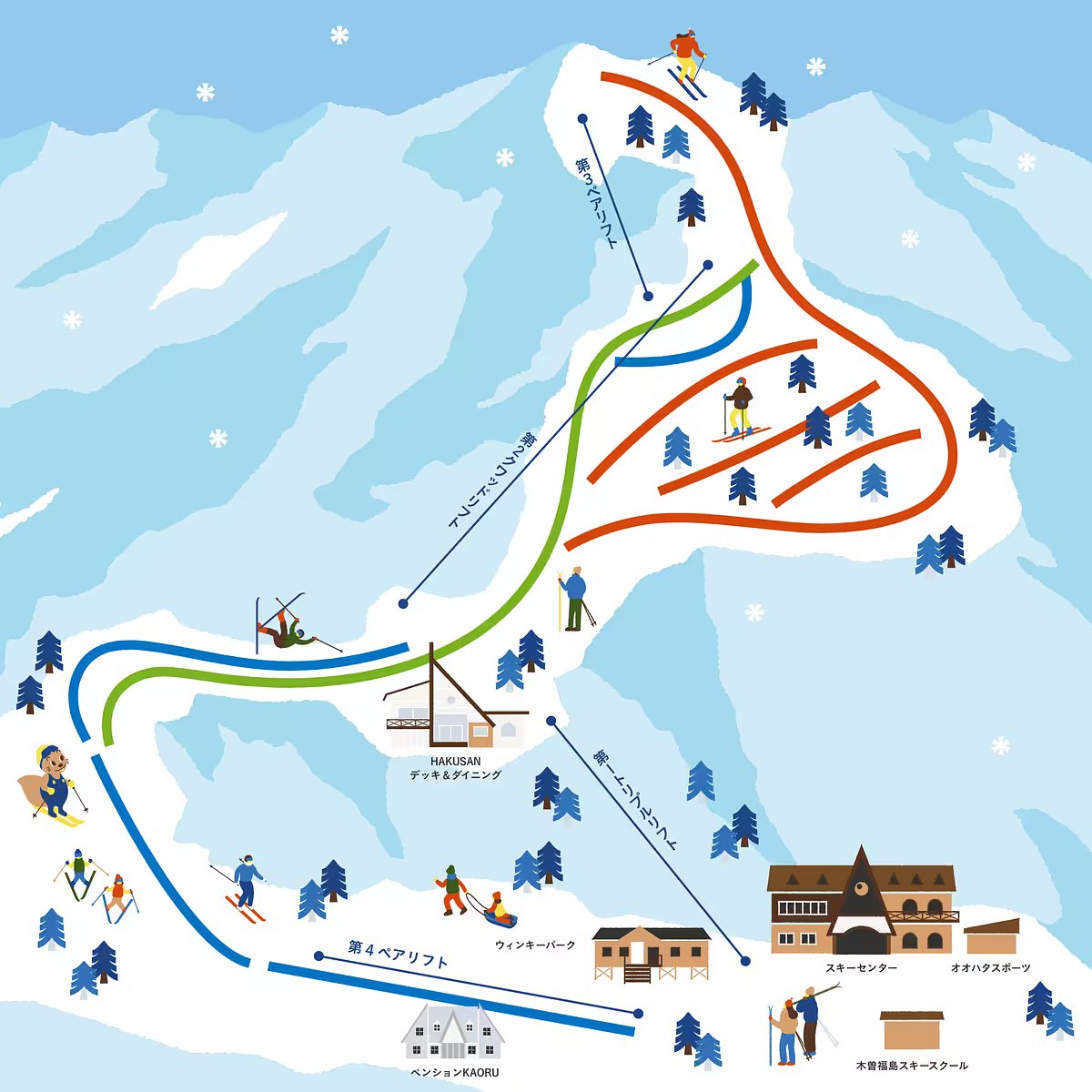
Trail Map
Accommodation
View MapThe clean move is staying in Kiso-Fukushima town. It’s low-key, practical, and you’ll get that classic mountain-town routine without paying for a resort village you don’t need. Ryokan Sarashinaya is a solid “proper Japan” base: simple comfort, local hospitality, and the kind of quiet that makes dawn patrol feel easy.
If you want the onsen-first experience, look at the Mt. Ontake area and nearby hot-spring stays that make recovery the main event. Yamamizu-ki URARA Tsutaya is the sort of place where you lean into the soak, eat well, and wake up ready to ski again without pretending you’re going out after dinner. Nukumori no Yado Koma no Yu is another good name to know if you’re chasing that warm-bath, snow-outside-the-window vibe.
For something a bit more “mountain hotel” and less traditional inn, Kiso Komagatake Kogen Mori no Hotel is a comfortable option when you want an easy base and a straightforward morning routine. If you’re traveling with a crew that prefers modern convenience over tatami charm, Hotel Kiso Onsen Kogane no Yu sits in that middle lane: simple, functional, and built around the idea that the day ends in hot water.
Powder & Terrain
Kiso Fukushima isn’t chasing a big-mountain identity, so treat it like a smart, efficient hill with a few tricks. Storm snow tends to stack best along the edges and in the lower sheltered zones when the upper mountain goes grey and flat, and the mountain skis best if you work the lift-served fall lines early, then migrate to the sides once the main pistes get scraped. The No.2 Quad is usually the workhorse for vertical and repeatability, while the steeper pitches (including the Challenge zone when it’s open and in good shape) are where stronger skiers can find something a bit more serious. Tree riding exists, but it’s more “pick your way through” and less “open a gate and send it”, keep it controlled, respect closures, and assume patrol wants you inside the ropes.
Getting There
Closest big gateway is usually Nagoya (Chubu area), with a clean rail line up the valley and an easy road approach if you’re driving. The common rhythm is train to Kiso-Fukushima Station, then taxi or local transport up to the resort. Driving from Nagoya is typically ~2 hours in winter conditions; from Matsumoto it’s often ~1.5 hours depending on the route and weather. From Tokyo, you’re looking at a longer travel day with transfers and it’s generally not the most efficient base unless you’re doing a wider Nagano loop.
Winter driving is classic inland Nagano: temperatures swing, roads can glaze, and storms can tighten up fast once you start climbing. Proper winter tires are non-negotiable. Carry chains if your rental policy or route makes it sensible, and don’t assume the last few kilometers to the resort will be casual if it’s been snowing overnight.
Who's it for?
- First-timersGood
- Powder huntersGood
- Non-skiersLimited
- BudgetGood
- LogisticsOkay
If you like quiet hills with honest vertical, you’ll have a good time. It’s ideal for upper intermediates who want to stack confident turns on groomers, plus advanced skiers who don’t need cliffs and gate maps to feel alive. It’s also a strong “plan B” mountain when bigger resorts are cooked by crowds or visibility.
You might feel limited if your whole trip is built around deep tree zones, in-bounds freeride lanes, or lift-accessed sidecountry. Snowboarders should also double-check policies before you commit, because this hill leans traditional and can run ski-first in a way that surprises people used to Hakuba’s anything-goes vibe.
Food & Après
On-mountain food is generally straightforward: curry, noodles, the usual warming-up options, and a place to get out of the wind. The better play is eating in town before or after you ski. Kiso Valley does hearty, unfussy meals well, and you’ll find plenty of spots serving soba and set meals that feel earned after a full day on your edges.
Apres here is more “onsen and early night” than bar scene. If your idea of a good finish is a quiet beer with your crew, a hot bath, and a solid sleep, you’ll love it. If you need DJs and neon, you’re in the wrong valley.
Japow Travel Tips
- Lift hours: Expect a standard day, typically around 8:30 to 16:30. If you’re chasing the best surface, start early and enjoy how much space you get compared to the bigger mountains.
- Avalanche / backcountry reality: This is not a “gate-map and patrol-managed freeride” resort. Treat all closed areas as closed, don’t duck ropes, and don’t assume there’s an accepted slackcountry culture. If you want touring, plan it separately and do it properly with the right experience and kit.
- Weather & snow patterns: Kiso Valley storms can deliver very good snow, but visibility can flatten on the upper mountain. On grey days, prioritize sheltered lines and treed edges, keep the speed in check, and use the lower mountain to stay oriented.
- Language and culture: English is limited. Be patient, be polite, and you’ll get the friendly local treatment. The upside of a Japanese-first resort is that it runs smoothly once you align with the flow.
- What makes it unique: Old-school calm, real vertical for the scale, and a layout that lets you ski fall-line terrain without endless traverses. It’s the kind of place where you can stack a big day quietly, then disappear into the valley for dinner and a soak.
- Nearby resorts worth pairing: If you’re building a Chubu or inland Nagano loop, keep it tight and purposeful. Ontake 2240 is the obvious partner for a higher-elevation feel and a more “mountain” day when conditions line up. Mia Ski Resort is a smart quiet-day option when you want fewer people and a simple storm routine. Yabuhara Kogen fits well for a mellow, local-groomer day with a different aspect and vibe. If you want a bigger change of pace and more resort infrastructure, a day at Takasu Snow Park can add variety, especially if your crew wants more manicured facilities and a broader on-mountain scene.
Verdict: The quiet Kiso Valley workhorse
Kiso Fukushima is a practical skier’s resort with enough vertical to matter, enough variety to keep you engaged, and crowds that rarely mess with your rhythm. It won’t replace the big-name destinations for deep tree zones or freeride structure, but as a calm, affordable, fall-line mountain with legit winter snow, it’s a seriously good card to have in your pocket for a Nagano or Chubu road trip.