

Shiga Kogen vs Myoko Kogen
Alpine Mileage or Deep-Snow Town Energy?
Shiga Kogen and Myoko Kogen are both serious Japan ski trips, but they feel wildly different once your boots are on. Shiga is the big, cold, high-altitude mountain circuit: linked ski areas, long traverses, wide views, and a ski-first rhythm that starts early and ends with dinner back at the hotel. Myoko is the stormy old-school snow town: steamy onsen streets, tree-lined runs, a bit more chaos, and a stronger sense that another refill could land overnight.
If Shiga feels like spreading a huge piste map across the table and plotting a full-day mission, Myoko feels like waking up, peeking outside, seeing the cars buried again, and changing the plan on the fly. Neither is wrong. One is cleaner and more expansive. The other is rowdier around the edges and more addictive when the storms line up.
The quick verdicts
- First-timers to Japan: Myoko Kogen. Akakura gives you an actual onsen-town base with restaurants, inns and a more intuitive village feel than Shiga’s spread-out resort zones.
- Family with young kids: Shiga Kogen. The central Shiga zones are especially family-friendly, and there are multilingual lesson options around the resort.
- Family with older kids or teens: Shiga Kogen. More terrain to roam, more lift-linked exploration, and far less chance they get bored after day two.
- Mates trip: Myoko Kogen. Akakura has the better walk-to-dinner, walk-to-bar, one-more-beer setup.
- Budget trip: Myoko Kogen. More pensions, family-run lodges and simpler local eating make it the easier place to keep the damage under control. This is an inference based on official accommodation and dining listings.
- Luxe trip: Shiga Kogen. Okushiga and the Prince/Yakebi side give Shiga the stronger polished-hotel end of the market.
- Powder reliability: Myoko Kogen. Myoko is famous for very deep snowfall, while Shiga’s edge is colder, drier snow preservation rather than sheer volume.
- Big mountain terrain and variety: Shiga Kogen. Eighteen ski areas and broad interlinked coverage is a hard thing to argue with.
- Culture and Japan-ness: Myoko Kogen. Akakura’s hot-spring history and town feel land harder than Shiga’s hotel-cluster vibe.
- Short trip and easy logistics: Shiga Kogen. Nagano-to-bus access is simple, and once you are there, a lot of the exploring can happen on snow rather than by shuttle.
The Resorts
Explore each full review for a deeper look at what each resort has to offer.
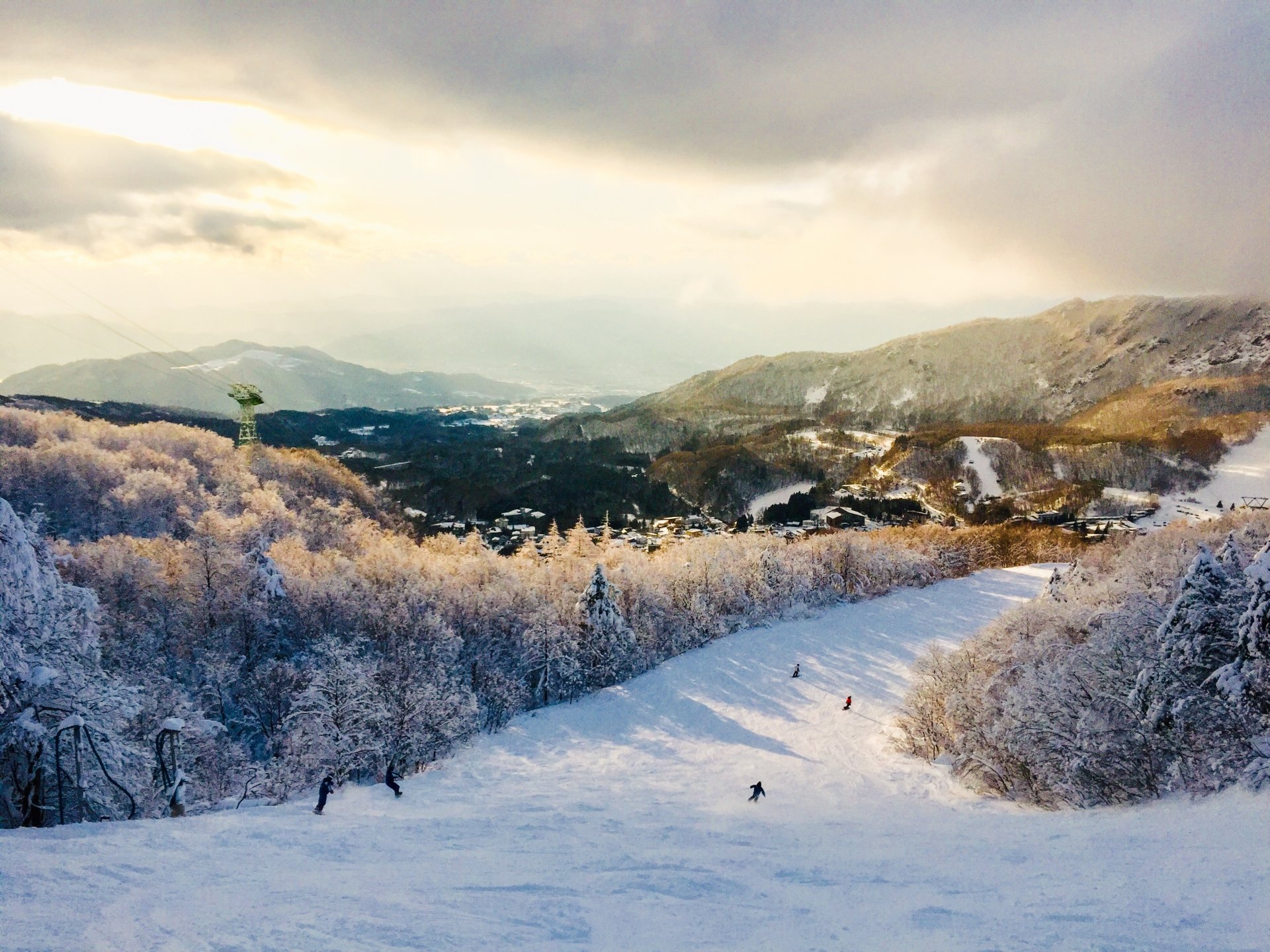
Shiga Kogen
Japan’s high-alpine giant with quietly reliable pow
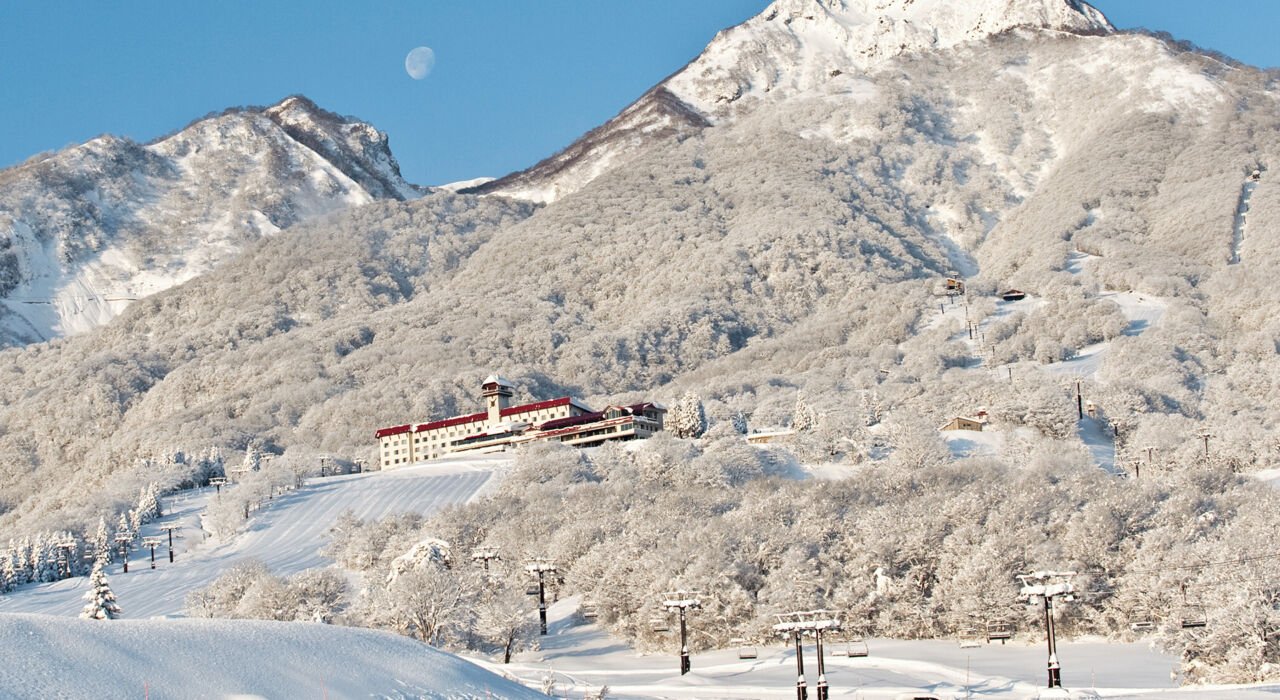
Myoko Kogen
Honshu’s Powder Canvas & Onsen Hideaway
Resort Comparison
Vibe check
Shiga Kogen feels like a ski domain, not a ski town. You pick your zone carefully, you think about which side of the map you want tomorrow, and your evenings are usually quieter. There is something properly alpine about it too: high, cold, open, and scenic, with the national park setting giving it a more hushed, less built-up feel than a lot of Japan resorts.
Myoko feels more lived-in. Akakura Onsen has that classic Japan winter mix of narrow streets, old hotels, little restaurants, steam rising off bathhouses, and skiers clomping around in boots looking for dinner. It is not glossy in the way some international resorts are, but that is a big chunk of the appeal. It feels like a snow town first and a resort second.
Snow and weather
Estimated cumulative fresh snowfall at major on-mountain ski areas; actual totals vary substantially by resort, elevation, measurement location, and season.
Myoko’s calling card is obvious: big storms and a lot of snow. The area is widely known for around 14 metres of snowfall a season, and that translates to proper reset days, deep side hits, and mornings where you stop pretending this will be a groomer day. The trade-off is that Myoko snow can be heavier, visibility can get messy, and the weather sometimes turns the whole hill into a white room.
Shiga Kogen usually wins on cold, dry quality. With terrain rising to 2,307 metres, it is one of Japan’s highest ski areas, and that altitude helps it hold snow well and stretch the season. The snowfall totals are not usually the headline here in the same way they are at Myoko, but the snow quality, preservation, and crisp midwinter feel are a big part of why people get hooked.
Where you stay
Where you stay matters more in Shiga than a lot of people expect. It is not one neat village. It is a collection of zones, and your trip changes depending on whether you stay around Ichinose, Yakebitaiyama, Okushiga, or lower down near the busier access points. Pick well and it feels smooth. Pick badly and you spend half the trip doing little bits of transport admin.
Myoko is easier to read. Most foreign visitors base themselves around Akakura Onsen, which is close to the station by taxi and gives you the strongest mix of dining, lodging, and atmosphere. You can go quieter in Ikenotaira, go more slope-focused near Suginohara, or go full rustic in Seki, but Akakura is the one that makes the most sense for most people.
Terrain and tree skiing
Shiga Kogen wins the terrain variety argument. It has big cruising zones, family-friendly central sections, long gondola-served runs on the Yakebi and Okushiga side, and enough linked terrain that a day can feel like a proper journey instead of repeat laps on the same chair. It suits skiers and riders who enjoy covering ground and sampling different pockets of the mountain rather than parking up in one favorite zone all day.
Myoko bites back harder if you care about tree skiing, sidecountry flavour and that deeper, more storm-driven style of riding. Akakura Onsen and Akakura Kanko link together, Suginohara brings long fall-line cruising, and the broader Myoko area includes cult powder spots like Seki. Shiga is the bigger ski week. Myoko is the more tempting powder week.
Crowds and lift flow
Shiga Kogen’s size helps it breathe. Even when there are people around, there is simply more map to spread out across, and the linked nature of much of the resort means you can keep moving instead of getting boxed into one crowded base area. The catch is that lifts across different sectors do not all shut at the same time, so you need to pay attention or your casual explore can turn into a mild end-of-day mission.
Myoko often feels quieter, especially once you get away from the obvious Akakura lifts, but it is still a smaller network with more old-school infrastructure and more dependence on where the snow has landed best. On a powder morning, the good zones get targeted quickly, and if you want to ski multiple resorts in one trip, buses and transfers become part of the game.
Cost and value
Myoko is usually the easier value play. There is a broader mix of family-run hotels, pensions, guesthouses, self-contained stays and straightforward local restaurants, especially around Akakura and Ikenotaira. That does not mean every bed in Myoko is cheap, but it is the kind of place where you can still build a good ski trip without every choice feeling like a premium add-on. This is an inference based on official accommodation and dining listings.
Shiga can be great value if you are happy with older hotel stock and a quieter mountain routine, but the polished end of the resort pushes upward fast. Okushiga has high-end accommodation, and the Prince side adds that big-resort convenience that is nice to have but rarely comes free. It is not a money pit by default, but it is less naturally forgiving than Myoko.
Food and nightlife
This one is Myoko, comfortably. Akakura has enough restaurants and bars that evenings feel like part of the trip rather than the dead space between ski days, and Akakura Onsen is also the only Myoko resort with night skiing. It is still Japan ski-town nightlife, not a full-send mega-resort circus, but there is more pulse to it.
Shiga is quieter and more hotel-based after dark. There are restaurants and bars spread around the area, especially on the better-serviced hotel side, but it does not have a strong central evening strip pulling everyone together. For some people that is a downside. For others it is perfect: ski, bath, dinner, bed, repeat.
Logistics
Shiga Kogen is straightforward to reach from Nagano. There are direct buses from Nagano Station into the resort area, and once you are there, a lot of the mountain moving can happen either on skis or via resort shuttles under the all-mountain setup. For people who like a clean rail-and-bus transfer and then want to stay in ski mode, that works nicely.
Myoko is very reachable too, especially from Tokyo, but it is less seamless once you start getting ambitious. The area is a cluster of separate resorts rather than one single-pass, single-flow setup, and winter buses connect the resort areas. If you base in Akakura and keep the plan simple, it is easy enough. If you try to sample everything, it gets more fiddly.
The X-factor
The ski atlas vs the storm-town
This pairing really comes down to how you like your ski days to unfold. Shiga Kogen is for the person who loves map scale, altitude, and the satisfaction of skiing across a huge connected domain. It is a resort for planners, roamers, and mileage goblins. You look at the trail map over breakfast and start building a day like you are moving pieces around a board.
Myoko is for the person who would rather chase feel than coverage. You base in a proper snow town, eat well, soak in onsen water with your legs half wrecked, and pick tomorrow’s hill based on where the storm hit hardest. I love that about Myoko. It feels less polished, more weather-led, and a bit more gloriously loose around the edges.
The tiebreaker
Pick Shiga Kogen if you want scale, altitude, linked terrain and a quieter ski-first trip with more mileage and less village noise.
Pick Myoko Kogen if you want deeper storm skiing, better tree flavour, stronger town atmosphere and nights that involve more than just another hotel buffet.
FAQ
Is Shiga Kogen or Myoko Kogen better for powder?
Myoko Kogen is the safer pick if your whole holiday revolves around storm snow and deep days. Shiga Kogen still gets excellent snow, but its edge is more about cold, dry quality and preservation at altitude than raw snowfall volume.
Which is better for families?
Shiga Kogen is usually the better all-round family call, especially with younger kids, because the central zones are more family-friendly and the resort has lesson options in multiple languages. Myoko can still work well, but it feels a bit more weather-driven and less neatly set up for a broad family brief.
Which resort area feels more Japanese?
Myoko Kogen, especially around Akakura Onsen, has the stronger old-school ski-town character. Shiga Kogen has beautiful nature and nearby onsen towns, but Myoko gives you more of that everyday Japan winter-town feel right where you are staying.
Which is easier to get to?
Shiga Kogen is very tidy from Nagano Station thanks to direct buses into the resort area. Myoko is also easy from Tokyo by shinkansen connection, but internal resort-hopping is less elegant because the ski areas are separate and linked by winter bus services rather than one seamless network.
Which is better for advanced skiers and snowboarders?
Shiga Kogen is better for overall variety and covering terrain, while Myoko is more tempting if you want tree lines, sidecountry flavour and storm-day fun. Advanced riders who want the broadest menu usually lean Shiga; advanced riders who want the tastiest powder lines usually lean Myoko.
When is the best time to go?
For Myoko, the heart of winter is the sweet spot if you are chasing maximum storm energy. Shiga Kogen has a broader timing window thanks to its altitude and long season, so it stays appealing earlier and later than many resorts.
Is Shiga Kogen or Myoko Kogen better for a short trip?
Shiga Kogen makes more sense if you want one transfer from Nagano and then plenty of terrain under one broad resort umbrella. Myoko works for a short trip too, but it is strongest when you commit to one base, usually Akakura, instead of trying to bounce between every resort in the area.