

Best Ski Resorts in Japan
Japan has hundreds of ski areas, which sounds brilliant until you actually have to choose one.
There are enormous interconnected ski zones, tiny one-lift powder traps, polished international resorts, old onsen towns and mountains where the official trail map seems to be more of a loose suggestion. Some get buried in snow. Others have the better terrain. A few somehow manage both.
The best ski resort in Japan therefore depends on what you came for. Niseko United remains the easiest all-round recommendation. Rusutsu is arguably better if powder and tree skiing matter more than nightlife. Hakuba Valley has the strongest big-mountain terrain. Nozawa Onsen wins the village battle. And if your idea of a good morning involves disappearing into deep snow before breakfast, Myoko Kogen, Kiroro and Lotte Arai have strong arguments of their own.
This is our pick of the best ski resorts in Japan, based on the skiing first, but also the stuff that determines whether a week-long ski trip is actually any good.
Resort locations
The quick answer
- Niseko United: Best overall
- Rusutsu: Best for powder and tree skiing
- Hakuba Valley: Best for terrain
- Furano: Best all-round Hokkaido alternative
- Nozawa Onsen: Best ski town
- Myoko Kogen: Best for deep Honshu powder
- Shiga Kogen: Best for intermediates and long ski days
- Kiroro: Best for reliable snowfall
- Lotte Arai: Best for lift-accessed freeride terrain
- Zao Onsen: Best for atmosphere
- Appi Kogen: Best for groomers and a polished Tohoku resort
 English ski schoolVillage hang-outsNight skiingFreeride / Trees (guided)Onsen
Best overall
There is a reason Niseko United became Japan's international ski heavyweight.
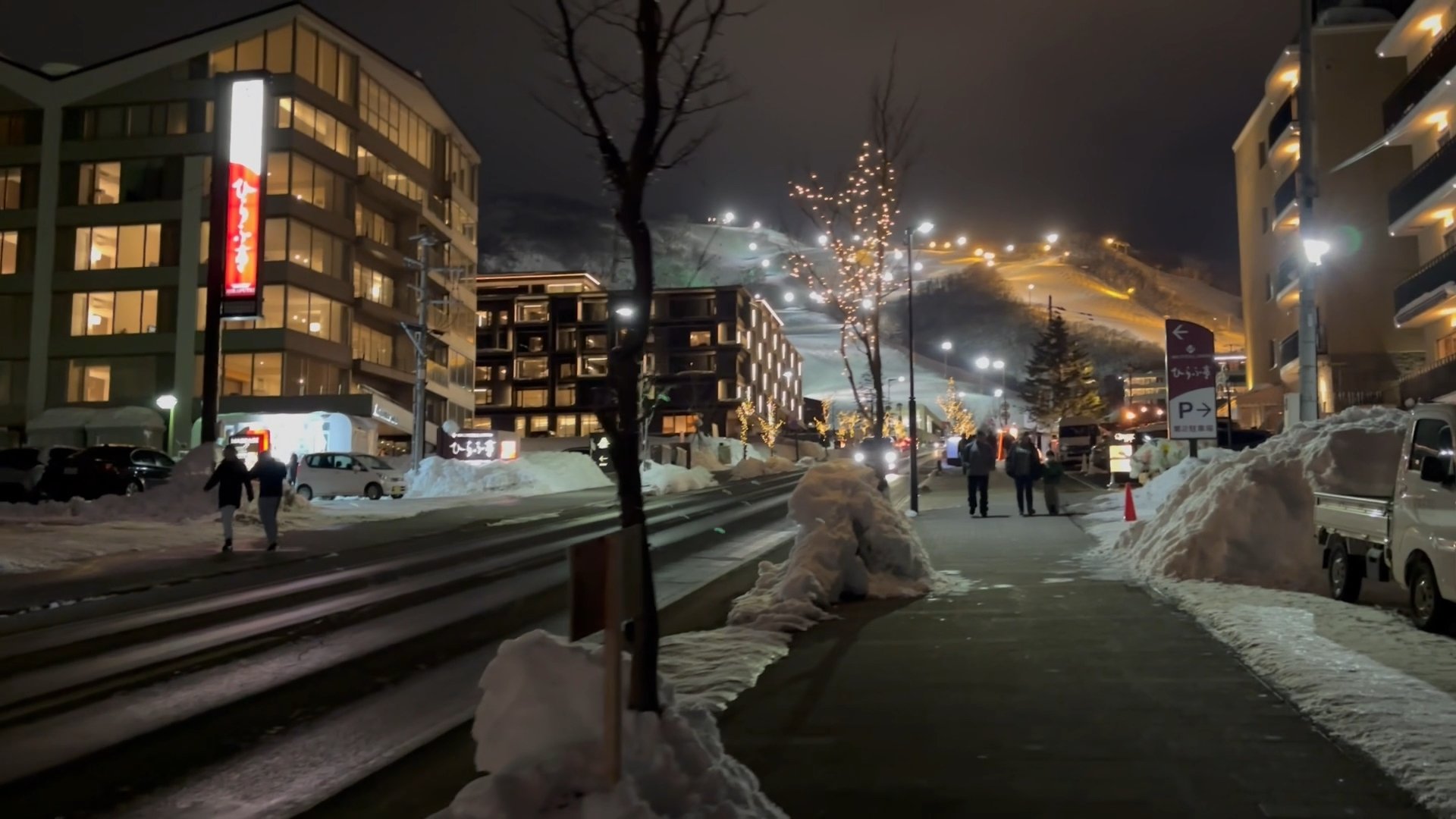
Four ski areas wrap around Mt Annupuri, giving you Grand Hirafu, Hanazono, Niseko Village and Annupuri under the Niseko United umbrella. The mountain has plenty for beginners and intermediates, excellent trees, a controlled gate system into deeper terrain and the sort of regular Hokkaido snowfall that can make yesterday's tracks completely irrelevant by breakfast.
It is also easily the simplest major Japanese resort for an international ski holiday. English is everywhere, accommodation ranges from hostels to ridiculous penthouses, ski schools are plentiful, restaurants are good and you can manage the trip without a car.
The catch is that everybody else worked this out too.
Niseko United is expensive by Japanese standards and powder gets tracked quickly around the obvious lifts. Hirafu can feel more international ski town than small-town Japan, particularly in peak season.
But judge the whole package rather than one lift queue and Niseko United is still hard to beat. Reliable snow, good terrain, huge accommodation choice, night skiing and easy logistics make it the safest recommendation for someone asking simply, "Where should I ski in Japan?"
Japow verdict: Still the benchmark. Not because it wins every category, but because it barely loses any.
~17mSnowfall
30/40/30%Terrain split
Tree riding
 Freeride / Trees (guided)Storm MagnetSki-in / Ski-outOnsen
Best for powder and tree skiing
If Niseko United is the famous one, Rusutsu is the resort powder skiers often come home talking about.
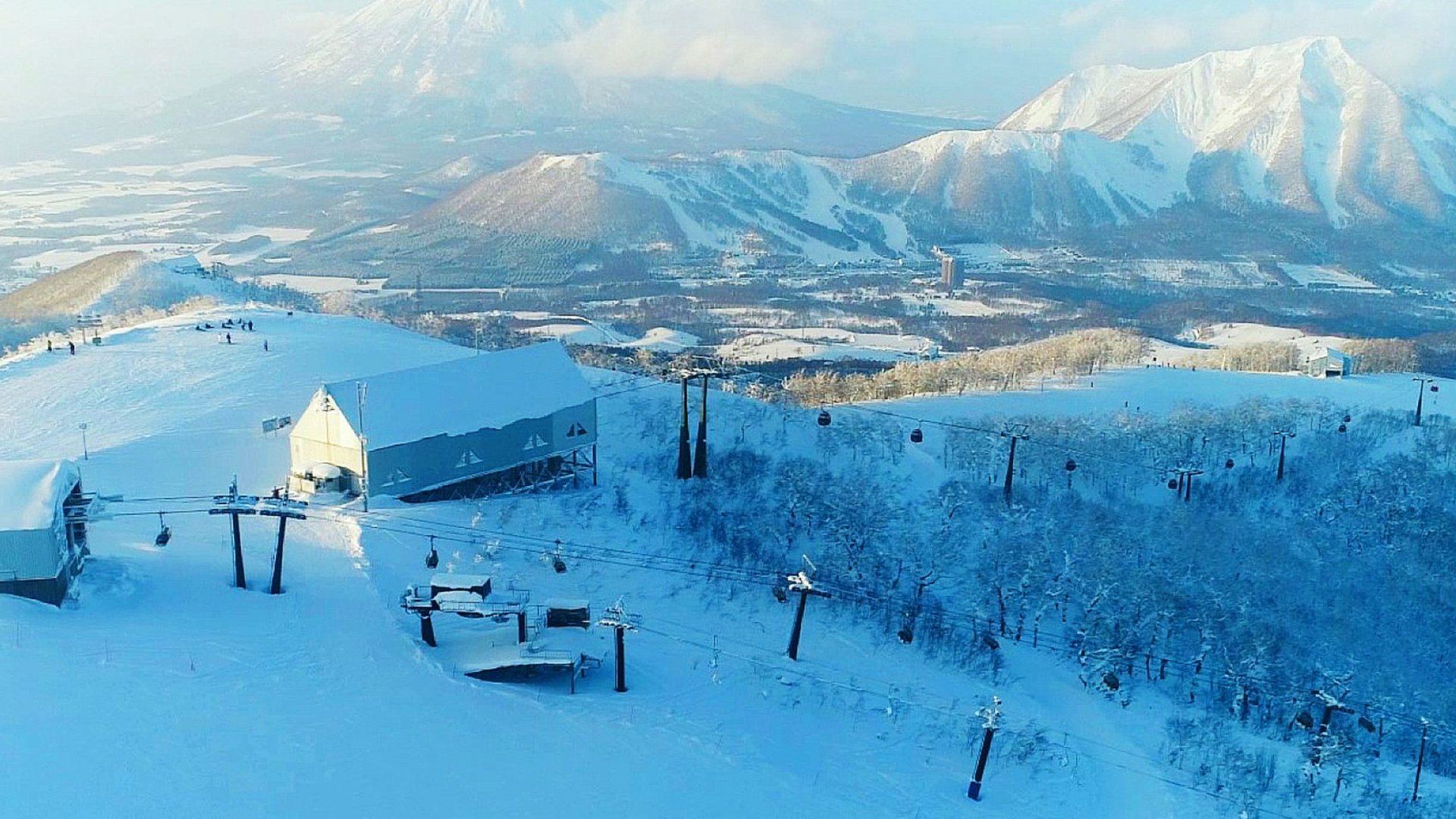
The ski area spreads across West Mountain, East Mountain and Mt Isola, with 37 runs served by four gondolas and a substantial lift network. More importantly, there is a lot of beautifully spaced tree terrain between them.
Rusutsu gets the same broad Hokkaido storm pattern that makes nearby Niseko United famous, but its layout spreads skiers across multiple mountains. Fresh snow lasts longer, lift queues are generally less frantic and bouncing through the trees on Isola after an overnight reset is about as Japow as Japow gets. Community reports consistently favour Rusutsu when powder quality and lower crowd pressure are prioritised over village life.
There is a trade-off. Rusutsu is a resort, not much of a ski town. Stay on mountain and your restaurants, bars and entertainment are largely wrapped around the hotel complex.
If you want streets full of bars and restaurants, Niseko United wins. If you mostly want to wake up and chase snow through birch trees until your legs stop cooperating, Rusutsu has a very strong claim to number one.
Japow verdict: Niseko United without quite so much Niseko United.
~14mSnowfall
30/40/30%Terrain split
Tree riding
 Freeride / Trees (guided)English ski schoolVillage hang-outsOnsenBackcountry (guided)
Best for terrain
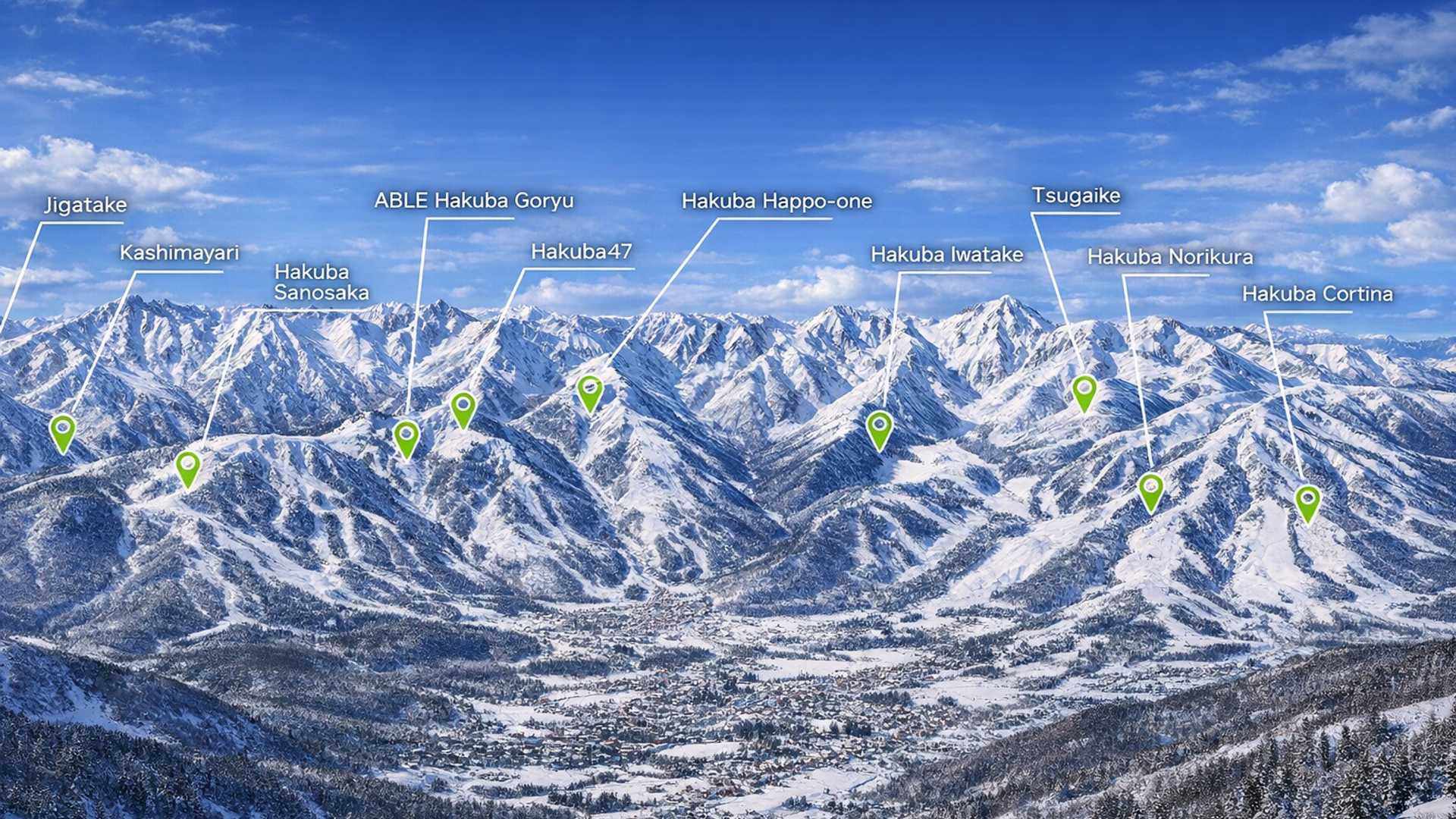
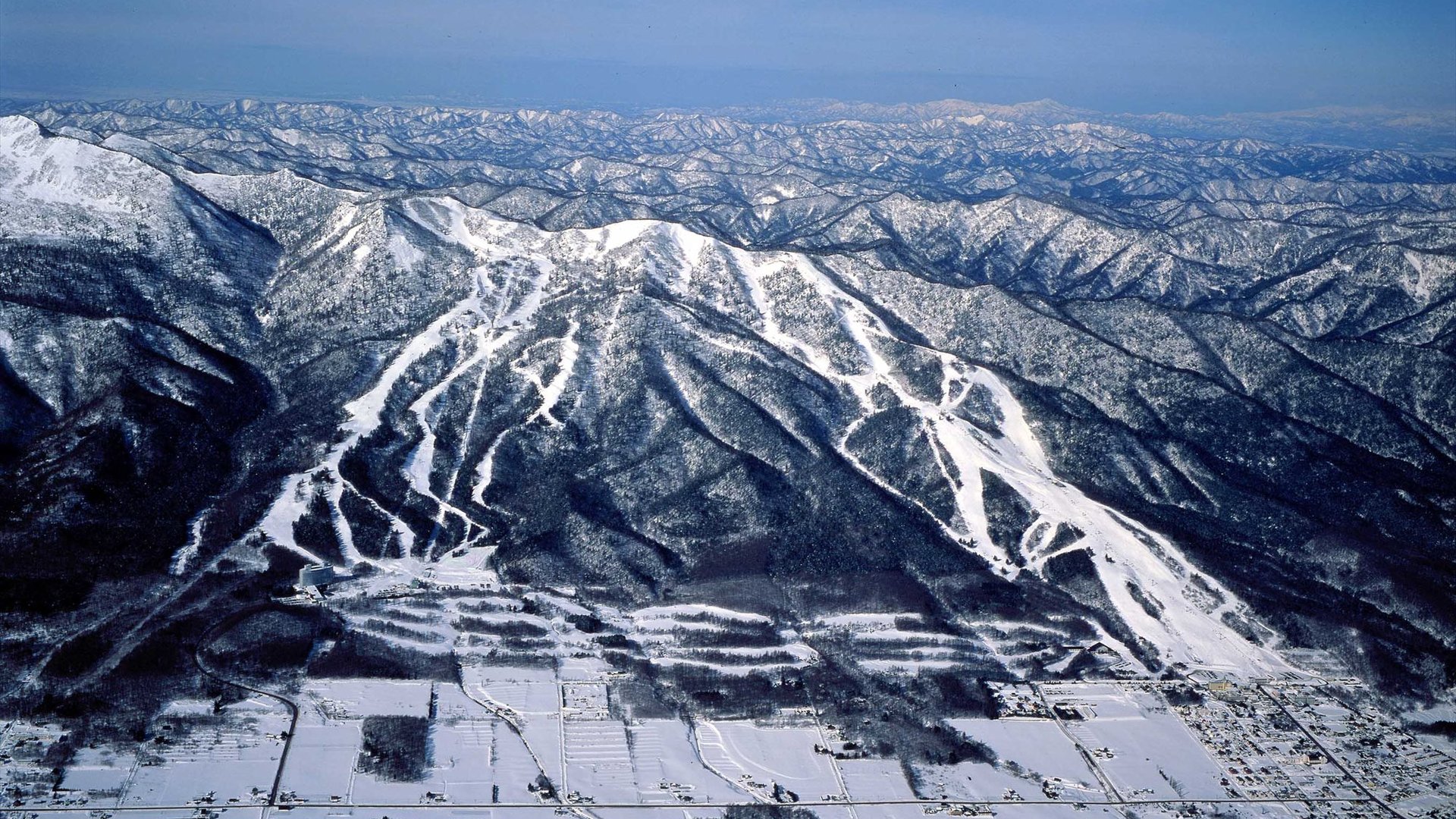
Hakuba Valley is where you go when Japan's famous powder isn't enough and you also want proper mountains.
The valley contains ten ski areas beneath the Northern Japan Alps. They are not one giant lift-connected resort, but a shared pass and shuttle system make it possible to move between mountains such as Happo One, Hakuba 47, Goryu, Tsugaike Kogen, Cortina and Norikura.
That inconvenience comes with a reward: variety.
Happo One alone has more than 1,000 metres of vertical and long alpine runs. Goryu and 47 offer a strong mix of pistes and steeper terrain. Tsugaike Kogen has huge beginner and intermediate areas. Cortina and Norikura come alive on powder days. The alpine scenery is also on another level compared with much of Hokkaido.
Hakuba Valley's weakness is consistency. Honshu weather can throw bigger swings at you than Hokkaido, and moving around the valley takes more effort. It is also firmly on the international ski map, so secret powder isn't exactly secret.
Still, for advanced skiers and snowboarders who care about mountain terrain as much as snowfall totals, Hakuba Valley is hard to top.
Japow verdict: The best mountains on this list. Bring strong legs and a willingness to move around.
~11mSnowfall
30/40/30%Terrain split
Tree riding
 Village hang-outsEnglish ski schoolOnsenFreeride / Trees (guided)
Best all-round Hokkaido alternative
Furano sits in a lovely middle ground.
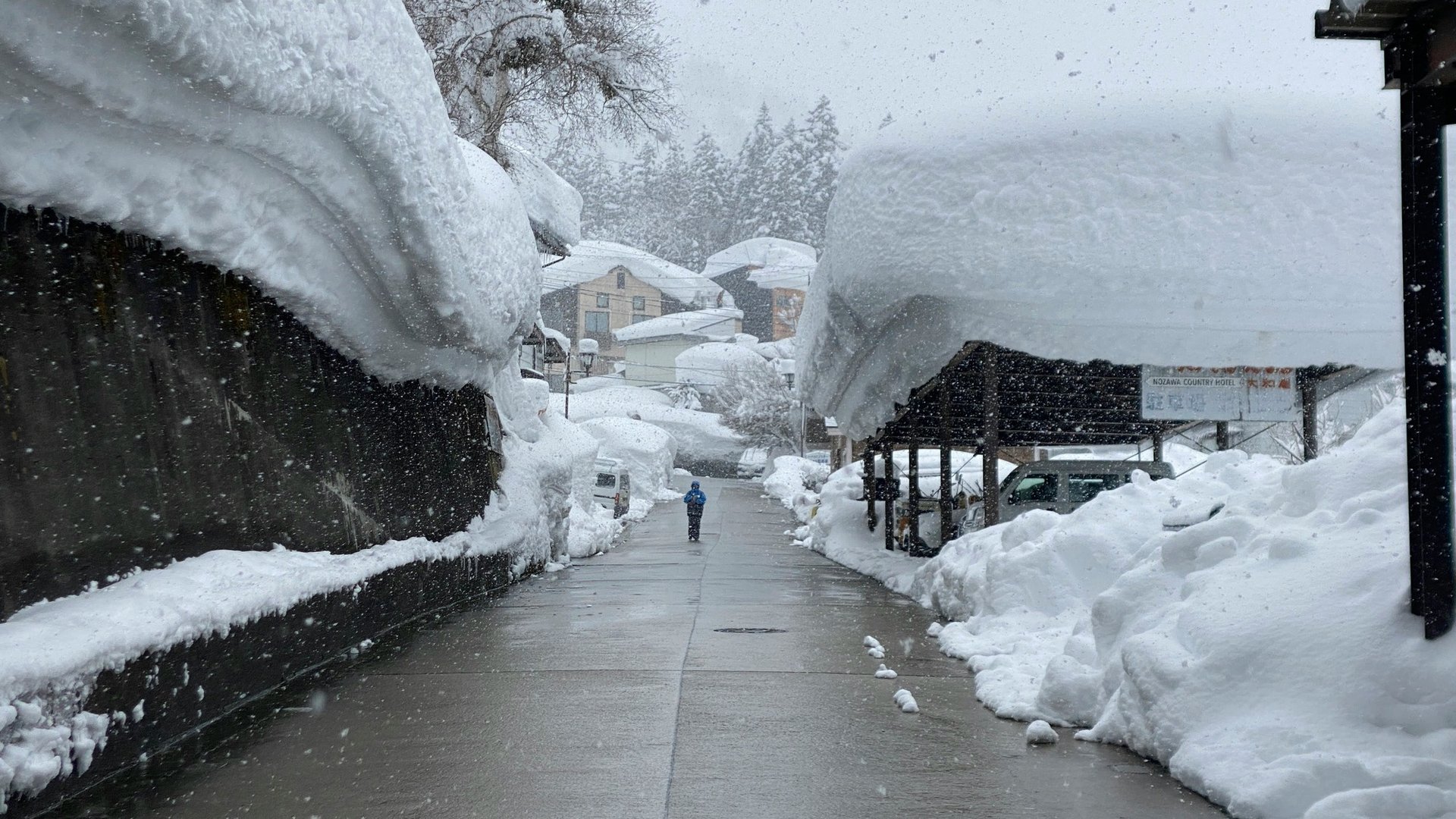
It gets the cold, dry snow you come to Hokkaido for, but without quite the intensity, crowds or development of Niseko United. The mountain has two connected zones, Furano and Kitanomine, with an 839-metre vertical, long groomed runs, powder areas and enough beginner and intermediate terrain to keep mixed-ability groups happy.
The real advantage is what sits below it.
Furano is an actual Japanese town rather than a purpose-built ski village. You get supermarkets, izakaya, ramen shops, bars and plenty of accommodation, while still being only minutes from the lifts. That makes a week here feel more rounded than staying inside a self-contained resort complex.
Advanced riders should know the limitation. Furano has good off-piste skiing, but it isn't as naturally playful as Rusutsu or as mountainous as Hakuba Valley. Some serious terrain requires more effort.
For families, couples and intermediate skiers who want excellent snow without living inside the Niseko United bubble, though, Furano gets a lot right.
Japow verdict: One of Japan's easiest resorts to recommend to almost anybody.
~9mSnowfall
40/40/20%Terrain split
Tree riding
 OnsenVillage hang-outsEnglish ski schoolFreeride / Trees (guided)Night skiing
Best ski town
There are better powder mountains than Nozawa Onsen.
There are not many better places to have a ski holiday.
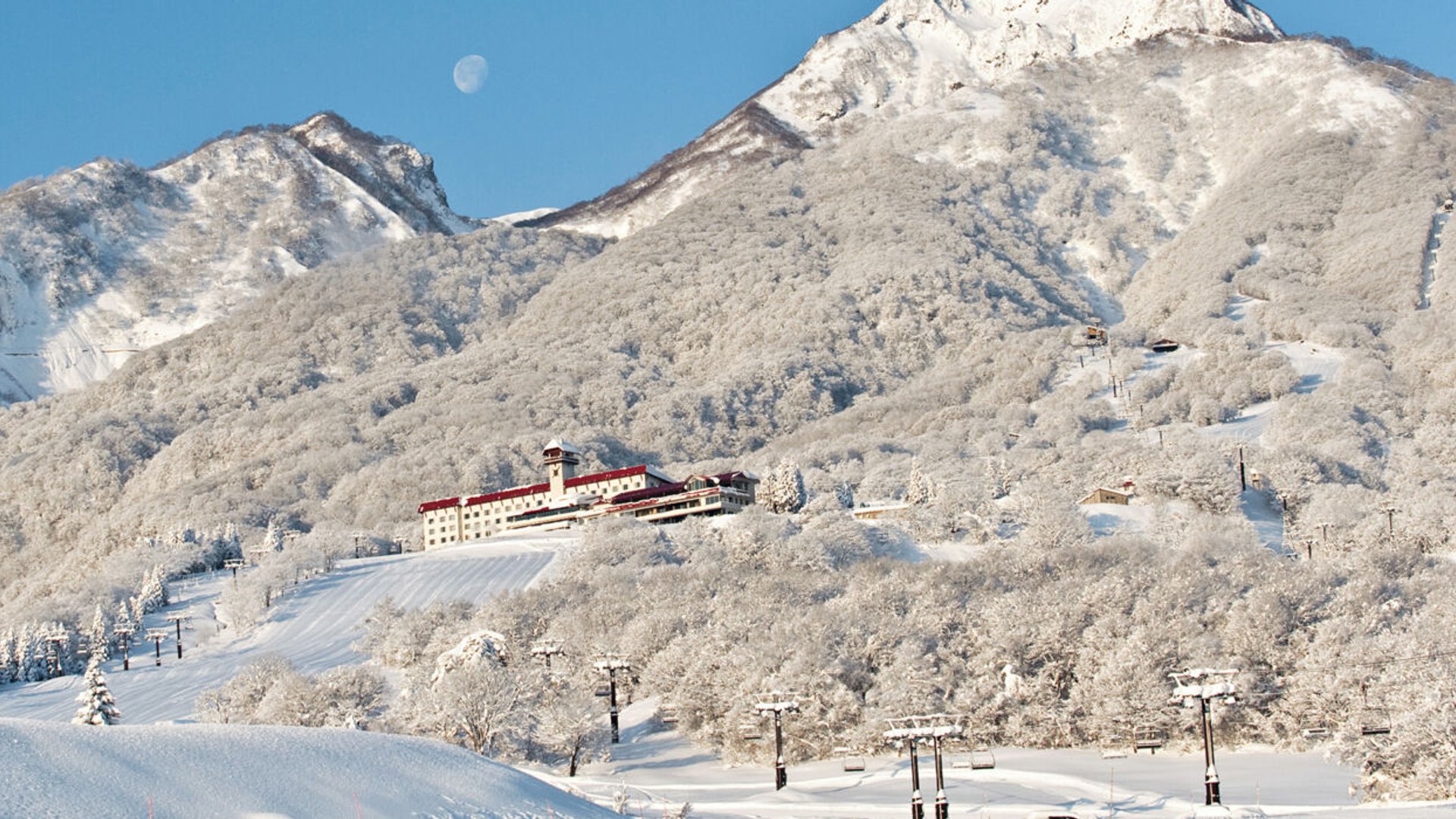
A substantial ski area rises directly above a centuries-old hot spring village, giving you long runs, good powder terrain and a proper mountain, then narrow streets, steaming public baths, restaurants and bars when you come down. The resort reaches high on Mt Kenashi and includes long top-to-bottom skiing, while the village maintains 13 public onsen.
That combination is the magic.
You can ski all day, walk back through the village in your boots, soak in an onsen that appears to have been heated somewhere near the Earth's core, then disappear into a tiny restaurant for dinner.
Nozawa Onsen has become significantly more international and busy, so don't arrive expecting an undiscovered Japanese village. But unlike some ski destinations that could theoretically be transplanted to another country, Nozawa Onsen still feels inseparable from Japan.
Japow verdict: If you want the ski trip and the Japan trip to happen in the same place, start here.
~11mSnowfall
40/30/30%Terrain split
Tree riding
 Storm MagnetOnsenFreeride / Trees (guided)Village hang-outs
Best for deep Honshu powder
First, the important bit: Myoko Kogen isn't one ski resort.
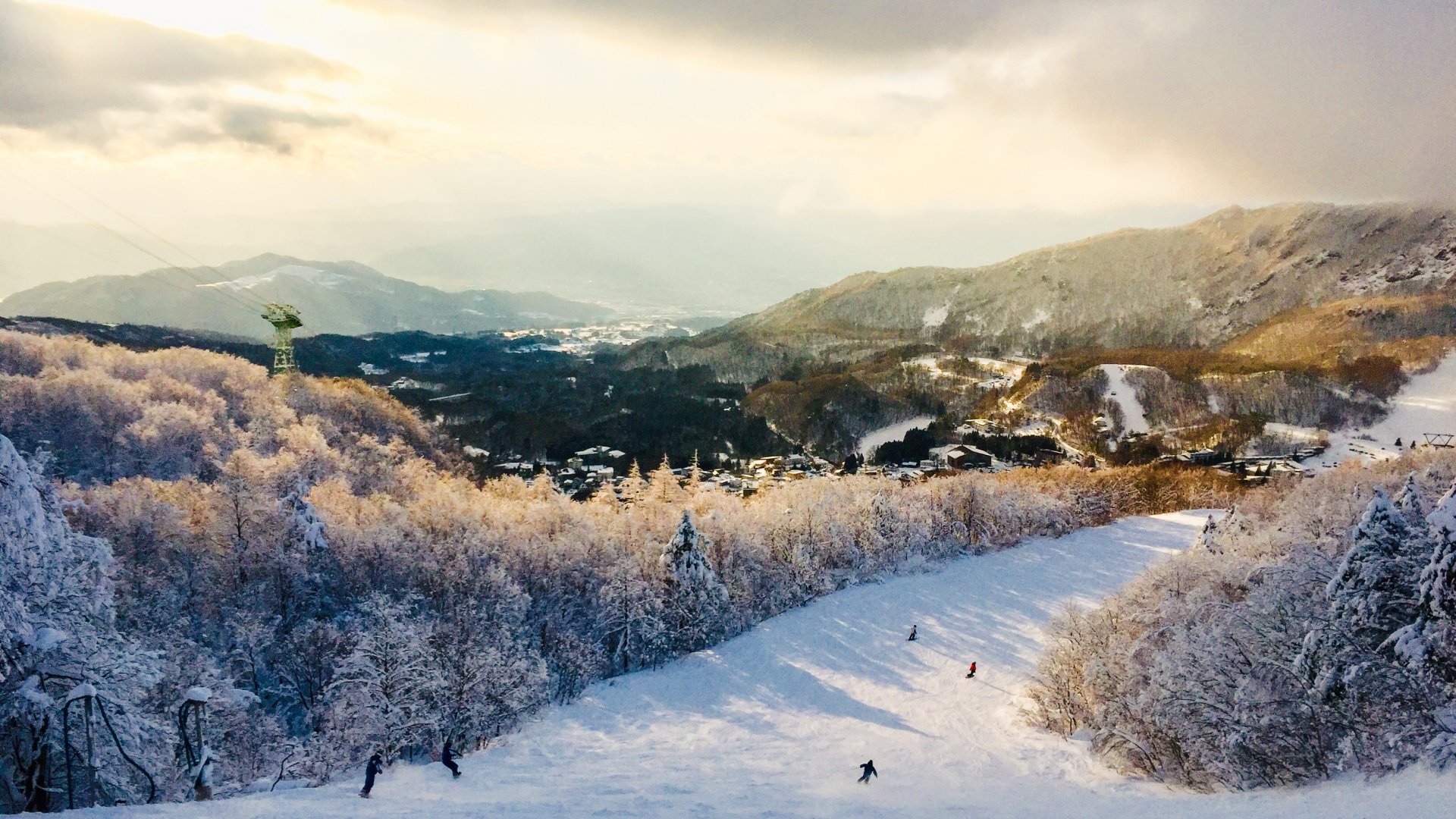
It is a collection of ski areas around Mt Myoko, including Akakura Onsen, Akakura Kanko, Suginohara and Ikenotaira Onsen, with smaller powder options nearby. That means your experience changes considerably depending on where you stay and whether you have a car.
It also means there is a lot to explore.
Akakura Onsen gives you the most convenient village base. Akakura Kanko adds steeper terrain and a 760-metre vertical. Suginohara stretches the legs with more than 1,100 metres of vertical and an 8.5 km longest run.
Then there is the snow. Myoko Kogen sits squarely in Niigata snow country and can get properly buried when the Sea of Japan machine turns on.
It isn't as polished as Niseko United or as straightforward as a single self-contained resort, and that is partly the appeal. Hire a car and Myoko Kogen becomes an excellent powder base with access to several mountains rather than somewhere you ski the same lifts for six days.
Japow verdict: Deep snow, onsens and enough nearby ski areas to turn a holiday into a powder hunt.
~13mSnowfall
40/40/20%Terrain split
Tree riding
 English ski schoolOnsenNight skiing
Best for intermediates and long ski days
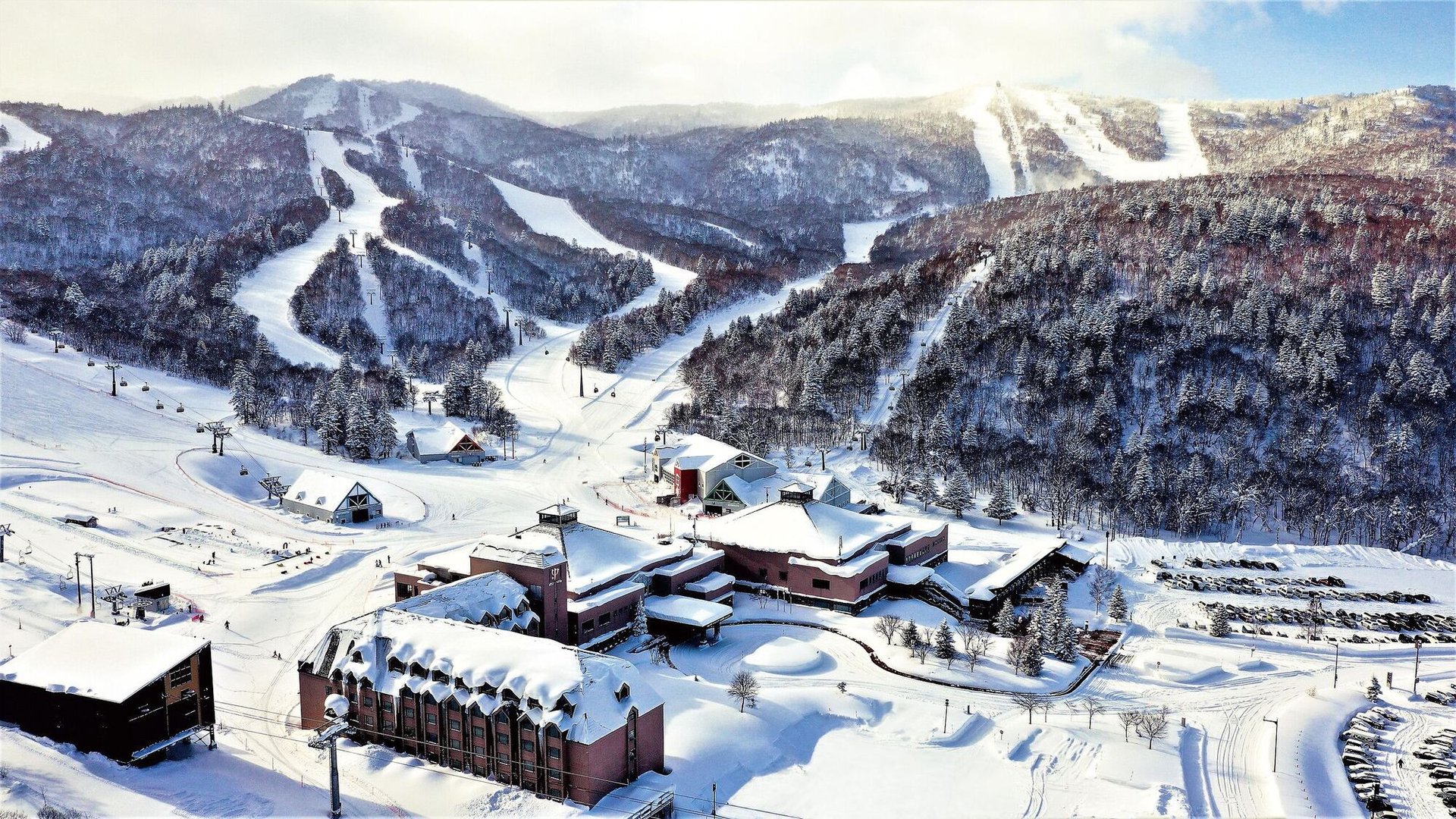
Shiga Kogen is enormous.
Its 18 ski areas stretch from about 1,325 metres to 2,307 metres, with the main central areas connected on skis and the more distant sectors linked by shuttle. One common pass covers the whole system.
For skiers who love exploring groomed terrain, it is brilliant. You can spend days travelling from one corner of the resort to another without feeling like you are doing laps of the same mountain. The elevation also helps snow preservation and gives Shiga Kogen one of Japan's longest operating seasons.
The downside is that Shiga Kogen doesn't have one obvious village centre. Accommodation is scattered between ski areas, nightlife is subdued and choosing where to stay matters more than the trail map initially suggests.
Powder hunters may also find some of the terrain management more conservative than at freeride-focused resorts.
But for intermediates, families and anyone who believes a ski holiday should involve an unreasonable number of kilometres before lunch, Shiga Kogen is superb.
Japow verdict: Japan's great piste safari.
~10mSnowfall
30/40/30%Terrain split
Tree riding
 Storm MagnetFreeride / Trees (guided)Ski-in / Ski-outOnsen
Best for reliable snowfall
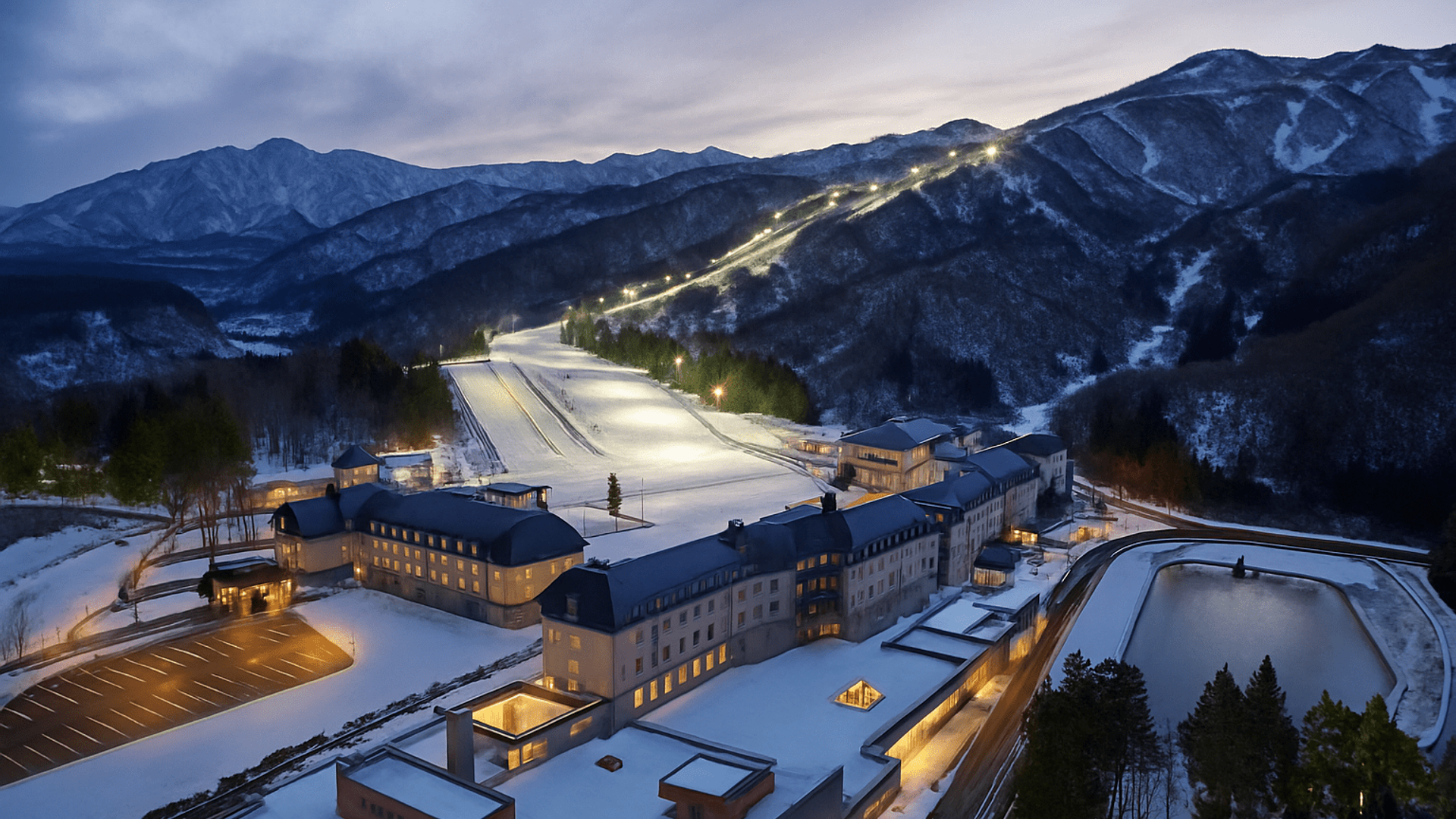
Kiroro is the place you start checking when the forecast looks ugly everywhere else.
Its location near the Sea of Japan puts it in prime position for repeated Hokkaido snowfall, and official reporting for the 2025-26 season recorded total summit snowfall approaching 20 metres.
The ski area itself is relatively compact compared with Niseko United or Hakuba Valley, but there is excellent snow, quality off-piste terrain and controlled access beyond the normal pistes. It also avoids some of the density of Niseko United while remaining reasonably accessible from Sapporo and Otaru.
Kiroro's weakness is the holiday around the skiing. There isn't a proper town at the base, and staying on mountain tends towards the expensive end of the scale. Strong winds and storm conditions can also affect the upper mountain on exactly the days everyone is staring excitedly at the snowfall total.
But when snow quality is the deciding factor, Kiroro deserves to be very high on the shortlist.
Japow verdict: When Hokkaido gets snow, Kiroro often gets more.
~21mSnowfall
30/35/35%Terrain split
Tree riding
 Freeride / Trees (guided)Storm MagnetSki-in / Ski-outBackcountry (guided)
Best for lift-accessed freeride terrain
Lotte Arai doesn't really behave like a normal Japanese ski resort.
Instead of squeezing everyone onto groomed trails with a few powder stashes around the edges, much of the mountain is designated freeride terrain. Eight freeride zones cover a huge proportion of the ski area, creating a playground of bowls, trees and natural snow between marked pistes.
Then Niigata supplies the ammunition.
Lotte Arai reports enormous annual snowfall, and when the mountain opens after a storm the combination of deep snow, substantial vertical and freeride access can produce some spectacular days.
There are two catches.
First, avalanche control and weather can delay freeride openings, so a giant overnight dump doesn't automatically mean an instant powder frenzy. Second, the base is a polished resort complex rather than a Japanese ski town.
Experienced skiers and snowboarders who prioritise terrain will forgive both fairly quickly.
Japow verdict: One of Japan's best places to point your skis at a patch of untouched snow and discover where it goes.
~18mSnowfall
25/45/30%Terrain split
Tree riding
 OnsenVillage hang-outsNight skiing
Best for atmosphere
Zao Onsen gets onto this list because skiing in Japan should occasionally feel completely bonkers.
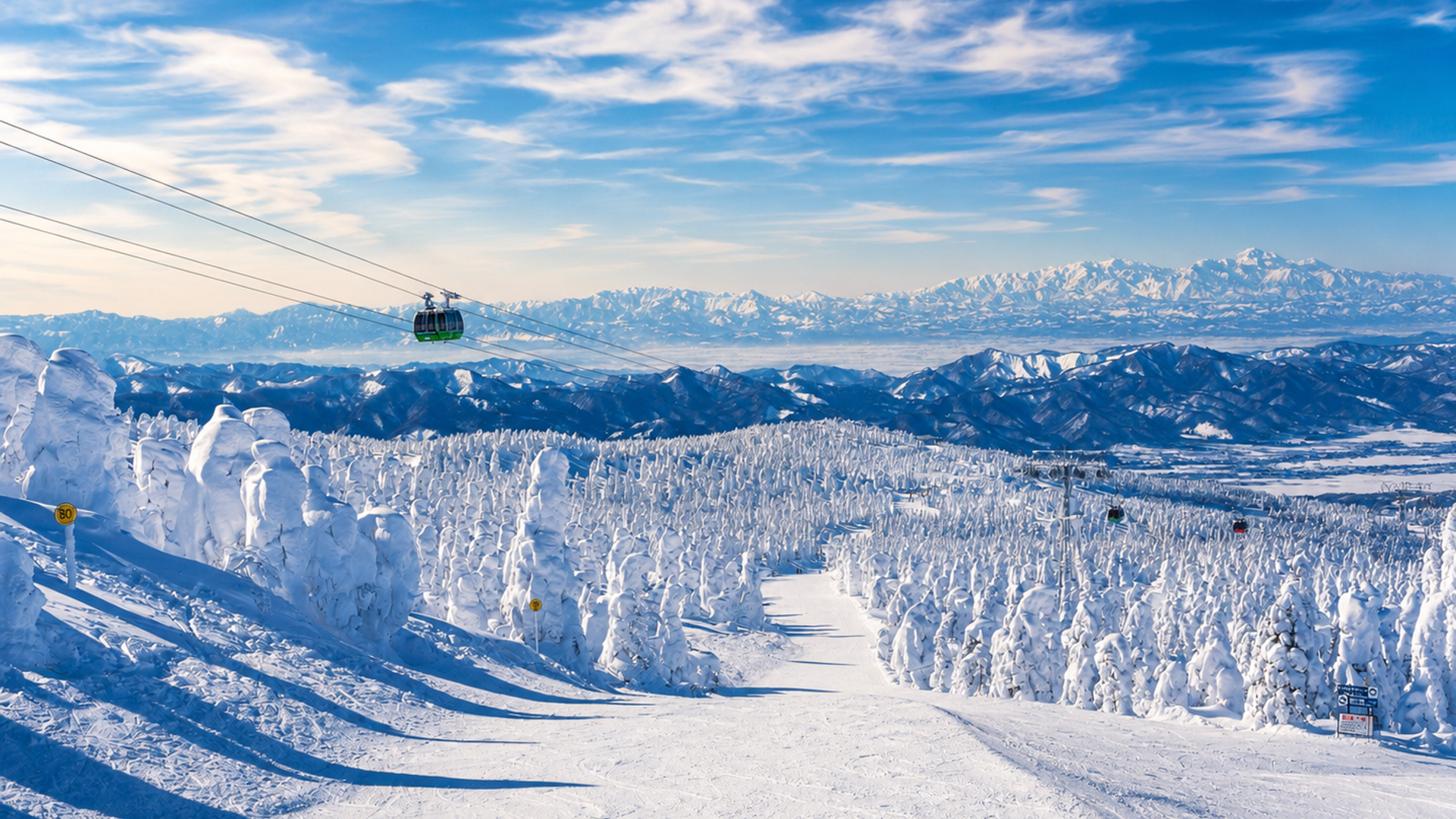
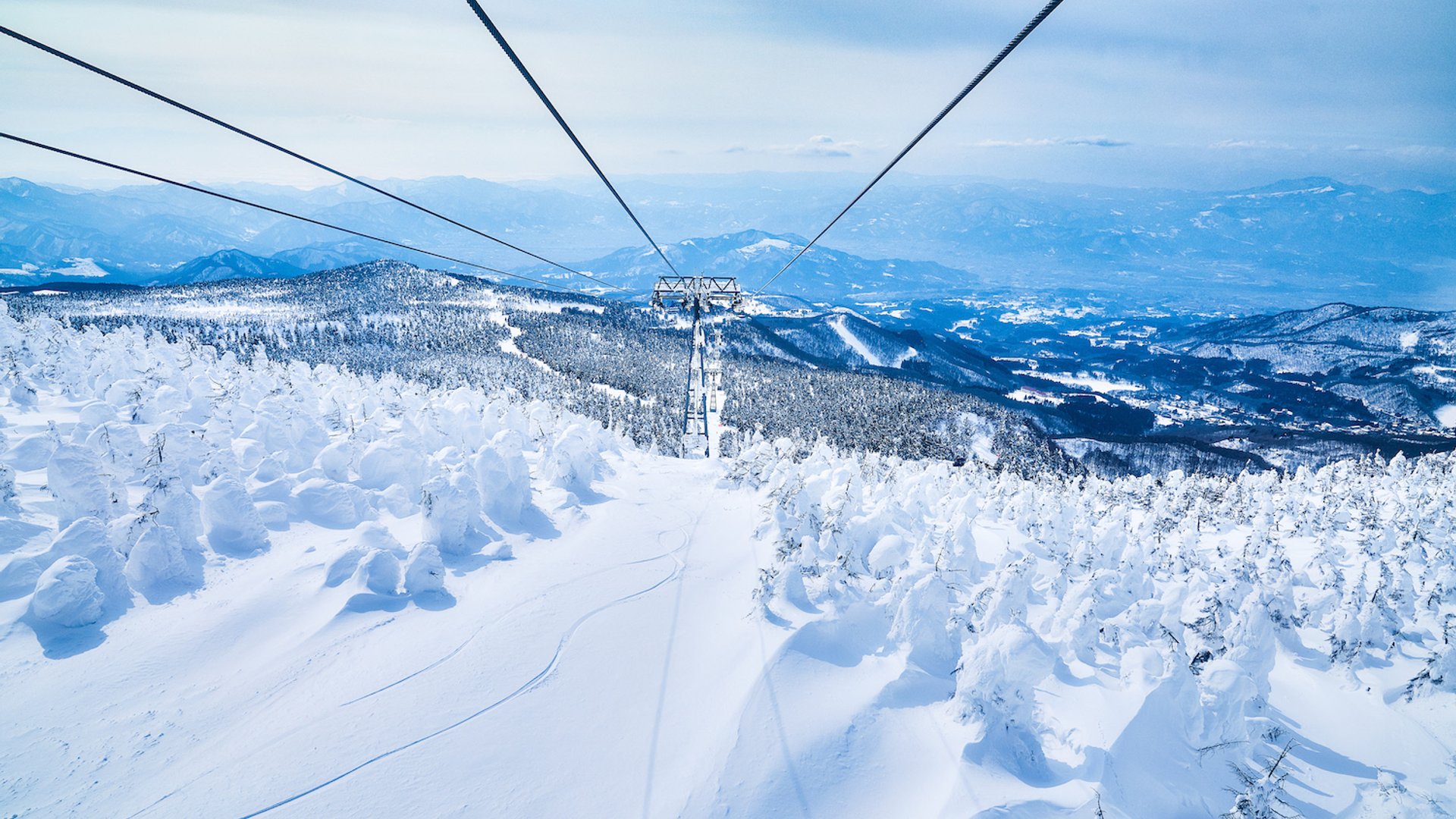
Its sprawling ski area climbs from a traditional hot spring town into forests that, in midwinter, become coated in wind-driven snow and ice. The result is Zao's famous juhyo, the huge frozen "snow monsters" covering the upper mountain. You can actually ski through them before following a run roughly 10 km back towards the village.
The ski area has plenty of beginner and intermediate terrain plus steeper sections, but the lift layout is old-school and occasionally confusing. You don't come here because somebody produced the world's most efficient ski-resort master plan.
You come because nowhere else feels quite like it.
Finish the day back in Zao's sulphuric hot springs and it becomes one of those ski destinations where the mountain is only half the story.
Japow verdict: Weird, wonderful and unmistakably Japan.
~12mSnowfall
40/40/20%Terrain split
Tree riding
 Ski-in / Ski-outEnglish ski schoolOnsenFreeride / Trees (guided)Night skiing
Best for groomers and polished Tohoku skiing
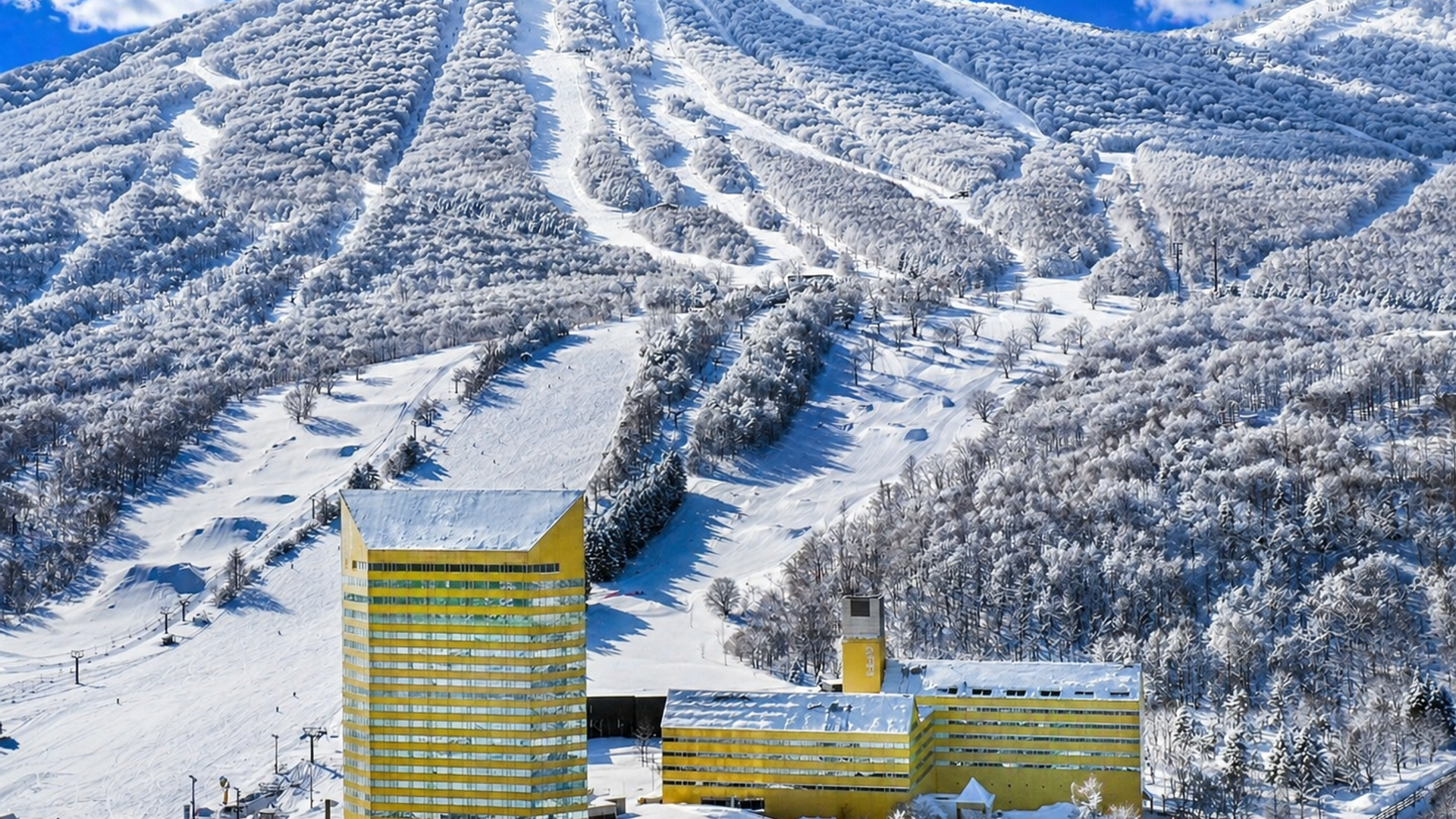
Appi Kogen is what happens when Japan decides groomers should be taken very seriously.
The Tohoku resort has more than 20 slopes and around 43 km of skiable terrain, with many long runs extending for more than 2 km. Grooming is a major part of the Appi Kogen experience, but five designated tree-run zones and guided powder options mean it is no longer just a corduroy specialist.
The base is polished, convenient and heavily resort-oriented. There is quality accommodation, ski-in ski-out convenience and good family infrastructure, but little of the village atmosphere found at Nozawa Onsen or Myoko Kogen.
That makes Appi Kogen particularly good for families, intermediates and mixed groups who want Japanese snow without making the logistics unnecessarily difficult.
It also works nicely as the comfortable anchor for a longer Tohoku trip, especially if deeper powder missions to places like Hachimantai Resort or Geto Kogen are part of the plan.
Japow verdict: Fast lifts, long runs and fewer international crowds than Japan's headline resorts.
~8mSnowfall
30/40/30%Terrain split
Tree riding
What about Hakkoda, Asahidake and Geto Kogen?
Powder hunters are probably already preparing angry emails.
Yes, Hakkoda can be extraordinary. Asahidake gets some of the lightest snow in Japan. Geto Kogen can receive absurd amounts of it. They are absolutely worth skiing.
But this is a list of the best ski resorts for a Japan ski trip, not simply the deepest places to stand while snow continues falling on your head.
Hakkoda revolves around a ropeway and unmanaged mountain routes, with the operator explicitly warning that some routes are unpatrolled and should not be entered alone. Geto Kogen is a fantastic specialist powder stop with extensive tree-run terrain, but it has a much smaller destination-resort ecosystem. Asahidake is closer again to lift-accessed backcountry than a conventional week-long ski resort.
For experienced riders building a storm-chasing road trip, all three become much more interesting. For somebody choosing one place for their main Japan ski holiday, the resorts above are more complete.
Hokkaido or Honshu?
This is probably the bigger decision than choosing individual resorts. Neither is "better". They are different versions of the same excellent problem.
If you are still weighing cold Hokkaido powder against Honshu's mountain towns, culture and Tokyo access, start with our full Hokkaido vs Honshu guide.
So, what is the best ski resort in Japan?
For most first-time visitors, Niseko United remains the best overall ski resort in Japan. It combines excellent snow with enough terrain, accommodation, restaurants, lessons and transport to make the whole trip easy.
For experienced powder skiers, we'd take Rusutsu very seriously. For terrain, Hakuba Valley wins. For the best Japanese ski-town experience, Nozawa Onsen is the standout. And if snow accumulation is the only language you speak, Kiroro, Myoko Kogen and Lotte Arai deserve your attention.
The important thing is not to chase somebody else's definition of the best resort.
Japan has mountains where you can ski waist-deep powder through birch trees, mountains where you can clock up enormous groomed kilometres, and villages where your post-ski routine involves stripping naked and lowering yourself into volcanic water hot enough to reconsider several life choices.
Choose the version of Japan you actually want.