
 神室
神室Pocket-sized Tohoku powder playground
Kamuro is one of those local hills you’d never accidentally “end up at” unless you’re already sniffing around the Mogami region for uncrowded snow. It’s small, friendly, and refreshingly no-frills: one main lift, a handful of courses, and a vibe that feels like the whole mountain is run by people who actually ski. If you’re used to destination resorts with shiny base villages and a dozen cafés, this is the opposite in the best way.
What you get is simple: short-to-mid-length groomers that catch snow well, a couple of steeper shots for a quick burn, and just enough tree-lined terrain to make a storm morning feel like you found a secret stash. On a good day, the snow here rides surprisingly light for such a modest elevation, and because hardly anyone travels for Kamuro, you’re not fighting for first chair or sweating the singles line.
Who it’s for? Upper intermediates and advanced riders who like a quiet hill and can entertain themselves with micro-missions: hit the fall line, duck into the trees where it’s permitted, pop back to the lift, repeat until your legs tap out. It also works brilliantly as a half-day or “rest day” ski when you’re road-tripping Tohoku and want turns without the circus. Families and beginners do well here too, because it’s mellow, manageable, and doesn’t feel intimidating.
Affordability is part of the charm. Lift tickets are sensible, the whole place runs on local rhythm, and you’re not paying destination markups for food or parking. English is limited, but the experience is straightforward: buy a ticket, ride the lift, follow the ropes, and be polite. Weekdays can feel like a private hill. Weekends bring a few more locals, but “busy” here is still a light crowd by Japan standards.
Resort Stats
- Vertical156m (479m → 323m)
- Snowfall~8m
- Terrain 10% 60% 30%
- Tree Riding
- Lift Pass¥3,300
- Lifts1 pair lift
- Crowds
- Out of Boundsnot allowed
- Night Skiing
- Family Friendly
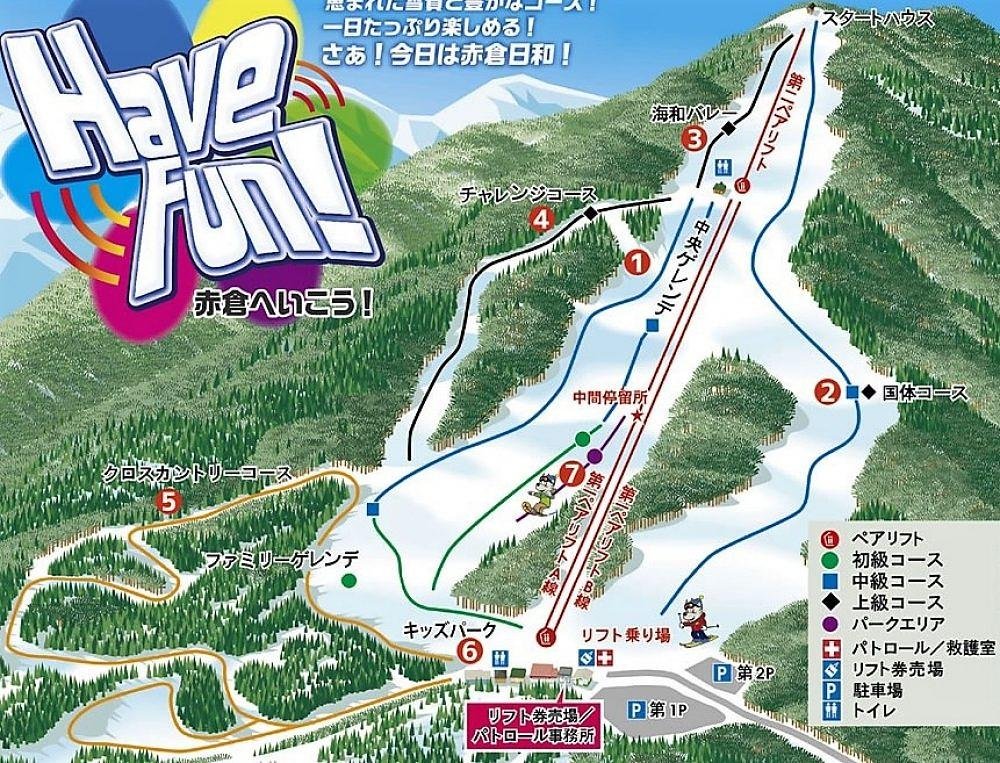
- Trails4
- Skiable Area~20ha
- Vibequiet, local, storm-friendly
Trail Map
Accommodation
View MapKamuro isn’t a base-village resort, so think “sleep nearby, drive in.” The easiest practical hub is Shinjo, a small city with straightforward business-hotel comfort, reliable winter services, and enough dining to keep you happy. If you’re the kind of traveler who likes hot showers, easy parking, and an uncomplicated early start, a business hotel near Shinjo Station is the move. A commonly used option is New Grand Hotel in Shinjo, which keeps things simple and puts you close to transport and food.
If you’d rather lean into the quieter side of Tohoku, look for small inns and minshuku-style stays in the Mogami region where the nights are calm and the mornings feel properly wintery. These places tend to be warm, homey, and practical: hearty breakfasts, drying rooms that actually work, and hosts who’ve seen every kind of snow day. The trade-off is nightlife, which is basically a convenience store run and an early night.
For the full Japan experience, aim your stay toward an onsen area within driving distance and make Kamuro your daytime mission. The general rhythm is perfect: ski a few hours, get your turns, then soak until you’re boneless. If you’re traveling with friends, this is where Kamuro shines as a “ski then soak” day that doesn’t need a big mountain to feel like a proper adventure. Just keep expectations realistic: you’re here for atmosphere, recovery, and simple winter living, not ski-in ski-out glamour.
Powder & Terrain
Kamuro skis best when it’s actively snowing or right after a reset, because the hill’s compact size means the good snow gets found fast if there are any keen locals around. The single lift is the whole game: ride it efficiently, ski direct lines back down, and use the trees along the edges to keep the snow softer and less tracked. The groomers are your highway and your return route, but the real fun is sniffing out the off-to-the-side pockets that stay protected from wind and traffic. Expect a mix of mellow-to-moderate pitches plus a couple of steeper sections that feel surprisingly legit for the vertical. Boundary rules are typically conservative at small Japanese hills like this, so treat rope lines as hard lines: keep your freelancing to in-bounds tree lines and edges where it’s clearly permitted, and save true backcountry ambitions for mountains with an established gate culture and clear protocols.
Getting There
Kamuro is a car makes life easier resort. The cleanest public-transport approach is to get yourself into the region via rail, then switch to a rental car or taxi. A common path is Tokyo to Shinjo on the Yamagata Shinkansen, then onward by road. From Shinjo to the ski area is roughly ~40 minutes by car, depending on conditions.
If you prefer flying, the most convenient airports for the broader region are typically Yamagata or Sendai, then you’re into a rental car and winter highway driving. Either way, once you’re in the Mogami area, the last stretch is local roads, and storms can make that final approach slow. Winter tires are non-negotiable, and carrying chains is smart if you’re not used to rural Japan in mid-winter.
The main gotcha is how quickly weather can change. A mild-looking forecast in town can turn into steady snowfall up near the hill, and that’s exactly why Kamuro can be such a fun call. Give yourself buffer time, drive patiently, and don’t try to “make up time” on snowy corners. If you’re road-tripping, this is classic Tohoku: plan simple, stay flexible, and let the storm dictate the day.
Who's it for?
- First-timersLimited
- Powder huntersOkay
- BudgetExcellent
If you love big vertical, endless lift options, and a full day of exploring different faces, Kamuro will feel small fast. This is not the place you build your entire Japan trip around.
If, however, you’re a pow chaser who values quiet mountains, quick-hit storm turns, and a mellow local scene, Kamuro is a very fun card to have in your pocket. Upper intermediates will have a great day cruising the groomers and dipping into the easier tree lines. Advanced riders will get their kicks by skiing the steeper pitches clean, hunting the soft snow that hides in plain sight, and turning a small hill into a mini playground.
It’s also a strong choice for mixed groups: the mountain is simple to navigate, it’s hard to get lost, and regrouping is easy. Families with kids can do stress-free runs, and stronger riders can peel off for little side hits without vanishing for an hour. If you’re road-tripping Tohoku and want a low-commitment day that still scratches the snow itch, this place fits perfectly.
Food & Après
On-mountain food is typically basic and functional at a hill like this: warm meals, quick snacks, and the kind of cafeteria comfort that tastes better when you’re snow-dusted and hungry. Plan for simple, hot refuel options during the day, and don’t expect a big spread of cafés or international menus.
The better play is to eat properly in Shinjo or nearby towns after skiing. The Mogami region is built for hearty winter meals, and you’ll find plenty of low-key local spots that do noodles, rice bowls, and set meals that hit the spot after a cold day outside. If you’re chasing a true apres scene with bars and late nights, this isn’t that kind of area. The win here is a casual dinner, maybe a drink with your crew, and then getting horizontal early so you’re fresh for the next day.
If you’re pairing Kamuro with an onsen stay, apres becomes the soak. Bring a mellow mindset, enjoy the quiet, and treat the evening like recovery time rather than party time. Your legs will thank you.
Japow Travel Tips
- Lift hours: Day skiing is typically 9:00–16:00. Night skiing can run 17:00–21:00 on select days when scheduled.
- Avalanche / backcountry reality: This is not a gate-system resort. Treat rope lines as closed, keep your tree missions in clearly in-bounds areas, and save touring for mountains with established access protocols.
- Weather & snow patterns: Inland Tohoku storms can deliver steady snowfall and cold temps. When wind picks up, stick to sheltered edges and lower-angle lines where the snow stays soft and visibility is manageable.
- Language/cultural quirks: Expect minimal English. Keep it simple, be polite, and follow signage and ropes without debate. Local hills run smoothly when visitors respect the rules.
- Anything unique to this resort: The charm is the simplicity: one lift, a compact hill, and a very “locals first” atmosphere that can feel like your own private snow day if you time it right.
- Nearby resorts worth pairing: Kamuro works best as part of a Tohoku loop. Pair it with larger Yamagata destinations like Zao Onsen or spring-focused missions like Gassan, depending on your timing and snow goals.
Verdict: Small Hill, Big Smiles
Kamuro is the kind of place you ski when you want turns without the noise: a quiet local mountain where storms feel personal, the lift line is basically a rumor, and you can squeeze real joy out of a compact footprint. It won’t wow you with scale, but it absolutely delivers that “how is this so empty?” feeling that pow chasers live for.