
Muikamachi Hakkaisan
Ropeway steeps with Uonuma calm
 八海山
八海山Muikamachi Hakkaisan
8.4~10m
Snowfall
1175m
Elevation
4
Lifts
¥5,700
Price
Ropeway to the steep stuff
Muikamachi Hakkaisan is the kind of Niigata resort that doesn’t scream for attention, then casually serves you one of the better sustained top-to-bottom runs in the region. It’s built around a proper ropeway, and the whole day has that old-school, get-on-with-it feel: ride up, drop into real pitch, repeat until your legs negotiate a ceasefire.
This is not a destination village resort. There’s no neon main street, no big après scene, and you’re not coming here for shopping or a party. You come for steep lines, a bit of wild snow character, and the satisfaction of skiing something that feels more like a mountain than a theme park.
It suits confident intermediates who want to level up and advanced riders who like ungroomed snow, moguls, and proper gradients. Beginners can ski here, but they’ll spend a lot of time managing terrain rather than cruising it. Families can still have a good day if the plan is relaxed and the group is realistic, because the lower mountain is friendlier and the vibe is calm.
Crowds are usually light to moderate midweek, with weekends bringing the classic Niigata pop. English is not a big part of the experience; you’ll get by with basic ski-resort signage and friendly nonverbal communication, but don’t expect a full international setup. Overall spend around the area feels mid: you can keep it simple and local without your wallet crying, especially compared to the bigger marquee names.
Resort Stats
Estimated cumulative fresh snowfall at major on-mountain ski areas; actual totals vary substantially by resort, elevation, measurement location, and season.
- Vertical820m (1175m → 355m)
- Snowfall~10m
- Terrain 14% 49% 37%
- Tree Riding
- Lift Pass¥5,700
- Lifts1 ropeway, 3 pair lifts
- Crowds
- Out of Boundsnot allowed
- Night Skiing
- Family Friendly
- Trails15
- Skiable Area~55ha
- Vibequiet base, serious skiing
Trail Map
Accommodation
View MapThe easiest way to do Hakkaisan is to stay in the Minamiuonuma and Muikamachi area and treat the resort like your local hill for a few days. For a high-comfort base with proper Japanese hospitality, ryugon is the standout: a polished ryokan experience with the kind of atmosphere that makes early nights feel like a win rather than a compromise.
If you want something that’s practical, onsen-forward, and built for ski days, look at Hotel Sakadojo and Syunsai no Sho Sakadojo in the wider area. They suit the rhythm here: big breakfast, go ski, soak, eat well, repeat. You’re not paying for a party location, you’re paying for recovery and smooth mornings.
For a more traditional vibe, smaller onsen stays like Irohatei and other Muikamachi Onsen area ryokan-style options keep the trip grounded and local. The main practicality note: there isn’t a ski-in ski-out village at the base that you’d choose for a full holiday, so plan on short drives and lean into the onsen-and-dinner routine.
Powder & Terrain
Hakkaisan’s snow is classic Niigata: storms roll in off the Sea of Japan and refill quickly, and when temperatures cooperate you get that dry, grippy feel that makes steep terrain skiable rather than survival mode. The upper mountain can ski chalky and confidence-inspiring even a day or two after a storm, while the lower sections can get heavier faster in warmer patterns. Pick your days and it feels like a cheat code; pick the wrong weather window and you’ll be working for every turn.
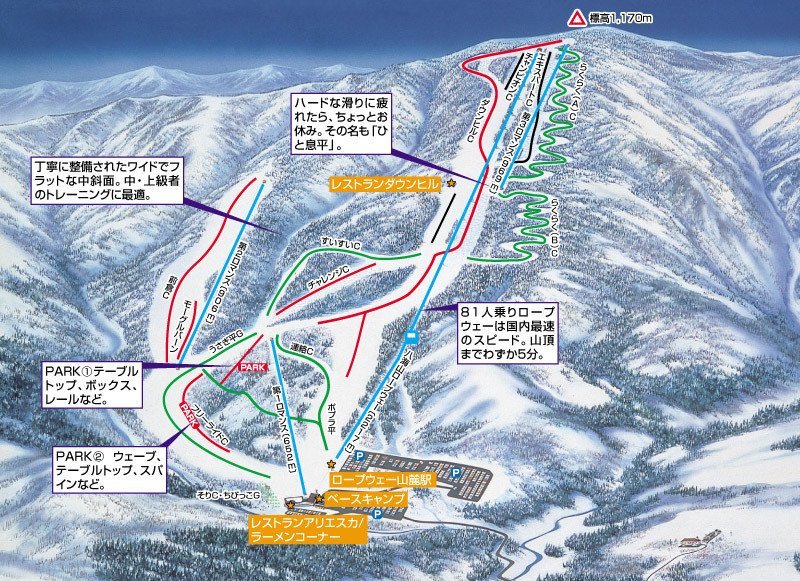
The ropeway is the heartbeat. It gets you high without a slow lift ladder, and it sets up a straightforward rhythm: top station, commit to the fall line, and enjoy the kind of sustained descent that’s rarer than it should be in many Japanese resorts. A chunk of the upper mountain is intentionally left ungroomed, which means you’re often skiing soft bumps, packed powder, and storm-day texture rather than perfect corduroy.
Terrain-wise, this is more about pitch and vertical than it is about sprawling variety. The advanced side shines because the gradients are honest and the lines connect cleanly. Strong intermediates will find plenty to ski, but they should be prepared to manage steeper rollovers and variable surfaces, especially once the day tracks out and the mountain turns into a mix of soft piles, chop, and bumped-up entries.
Tree riding exists, but it’s not a wide-open glades playground. Think pockets and edges, plus practical shelter when the weather is doing its Niigata thing and visibility drops. The best approach is to use trees as a tool: duck in when the wind is up, pop out when it clears, and keep your speed under control because this hill has real consequences when you get lazy.
Backcountry and sidecountry need a clear-headed approach here. Out of bounds is not the program, and patrol taking a dim view of boundary-pushing is part of the deal. If you’re touring around Mt. Hakkaisan proper, treat it as a serious objective, not a casual add-on. If what you want is a resort that formally supports gate-style lift-accessed off-piste, pair Hakkaisan with another area that’s set up for that kind of day.
Getting There
Closest major airport is Niigata Airport, but most visitors still come via Tokyo because the train access is so clean. The most common path is Joetsu Shinkansen from Tokyo to Urasa Station (or Echigo-Yuzawa depending on where you’re staying), then a taxi or bus connection to the resort. From Urasa, expect roughly ~25 minutes by road to the ski area in normal winter conditions.
Driving is straightforward if you’re comfortable with Japan winter roads: expressways do most of the heavy lifting, then you’re on local routes into Minamiuonuma. The gotcha is storms: Niigata dumps can turn an easy drive into slow motion, so proper winter tires are non-negotiable and carrying chains is smart insurance. Parking is generally easy, but give yourself margin on big snow mornings.
Who's it for?
- First-timersLimited
- Powder huntersGood
- Non-skiersLimited
- BudgetOkay
- LogisticsLimited
If you like steep fall lines, ungroomed texture, and the satisfying burn of real vertical, this place will make you grin. It’s a strong pick for advanced skiers and boarders who want a quieter Niigata day with legit terrain, and for confident intermediates who want to graduate from gentle groomers into something that feels like a mountain.
If your crew needs endless beginner cruisers, a big terrain park scene, or a lively village with bars and late nights, you’ll feel limited fast. And if you only enjoy perfectly groomed highways all day, you’ll have more fun elsewhere because Hakkaisan’s best personality comes out when the snow is left natural.
Food & Après
On-mountain food is what you’d expect from a no-nonsense Niigata resort: solid fuel, warm noodles, curry-rice style comfort, and quick bites between ropeway rides. It does the job, but the better eating is off the hill.
Down in town, Niigata classics are the move. Hunt down hegi soba, lean into Uonuma rice dishes, and if you’re even mildly curious about sake, this is the right part of Japan to be curious in. Après is more about a calm meal and a soak than loud bars. Think early dinner, good local drinks, and getting to bed with legs that still work.
Japow Travel Tips
- Lift hours: Daytime operation is the standard pattern here, with ropeway timing effectively setting the pace. Plan to be there early if you want first chair energy and clean snow.
- Avalanche and backcountry reality: This is steep terrain in a high-snow region. Inside the resort, ski it like a pro: manage speed, keep spacing in steeper zones, and respect closures. Outside the managed area is not the casual option here.
- Weather and snow patterns: When Niigata storms hit, visibility can go flat and wind can reshape surfaces quickly. Tree cover becomes your friend, and having a storm-day plan matters more than at wide-open resorts.
- Language and vibe: Expect a mostly Japanese domestic scene. Staff are generally helpful, but don’t assume fluent English. Simple phrases and a respectful approach go a long way.
- Anything unique: The ropeway-centric layout makes this place feel efficient and purposeful, and the upper mountain being left ungroomed gives it a more natural, demanding character than many mid-sized resorts.
- Nearby resorts worth pairing: If you’re building a Niigata week, Hakkaisan pairs beautifully with Kagura for bigger high-alpine terrain and long ski days, Ishiuchi Maruyama for a more modern resort feel with fun trees and variety, GALA Yuzawa for convenience and quick-hit skiing right off the shinkansen, and Naeba when you want wide groomers and a more self-contained resort base. Treat Hakkaisan as the steep-day anchor that keeps the trip honest.
Verdict: Ropeway-powered, steep-day satisfaction
Muikamachi Hakkaisan is a quiet hitter: not flashy, not sprawling, and not trying to be your whole holiday in one place. But if you want legit vertical, natural-snow texture, and that rare feeling of skiing a sustained line rather than stitching together short pitches, it delivers. Build the trip around onsen stays, early starts, and storm timing, and you’ll get a Niigata experience that feels properly earned.