
Piyashiri
The Cold End of Hokkaido
 ピヤシリ
ピヤシリSmall hill, serious cold
If Niseko United is the loud end of Hokkaido, Piyashiri is the cousin who disappears into the trees for three hours and comes back grinning. It sits on the shoulder above Nayoro, roughly two hours north of Asahikawa, and nobody ends up here by accident. The drive north swaps convenience stores and neon for snow-loaded barns and silent forest, and by the time the base lodge appears you are properly into deep winter country.
The cold is the main event. Nayoro regularly drops towards minus 30, cold enough that ice crystals hang in the air and throw sun pillars above the hill, which is exactly where the hotel at the base gets its name. That kind of cold does something to the snow. It falls dry, it stays dry, and it does not turn to concrete the moment the sun puts in an appearance.
The operation is cheerfully unpretentious. Three pair lifts do all the work, slow enough that you will have time to reconsider some life choices on the way up, and the base lodge is a straightforward mix of cafe, rental counter and warm-up room. English is thin on the ground and the menus are almost entirely Japanese, so you point, you smile, and you end up with miso ramen or katsu curry. Nobody minds.
Prices are the other pleasant shock. A day on the hill costs less than a decent dinner in a name resort, and a night in town barely registers. Weekdays are close to empty, with runs where you will not see another person for minutes at a time. Weekends bring local families and school groups in matching bibs, and a lift queue here means three people ahead of you.
Resort Stats
- Vertical480m (670m → 190m)
- Snowfall~6m
- Terrain 31% 31% 38%
- Tree Riding
- Lift Pass¥4,300
- Lifts3 double chairs
- Crowds
- Out of BoundsPatrol cautious
- Night Skiing
- Family Friendly
- Trails9
- Skiable Area~40ha
- VibeQuiet, affordable, authentic
Trail Map
Accommodation
View MapWhere to sleep
Nayoro Onsen Sunpillar sits at the base, about a minute from the lifts, and it is the obvious pick if you want to roll out of bed and onto the snow. Rooms come in Western and tatami varieties, but the onsen is the real draw, especially the walk back out with your hair steaming. Worth a quick read of the onsen etiquette basics if it is your first time in a Japanese bath.
Nayoro town is eight kilometres down the road and covers the practical options. Hotel Mystays Nayoro is the reliable one, mostly Western rooms with ensuites, a handful of tatami rooms and a tidy breakfast. Around it sit small business hotels and family-run places that trade amenities for genuinely low rates.
Staying in town buys you dinner options and an izakaya evening. It does not buy you nightlife. Nayoro goes to bed early so it can ski early, and frankly so should you.
Powder & Terrain
Four tree areas and nobody in them
Piyashiri gets around six metres a season, modest by Hokkaido standards, and it matters less than you would think. The cold does the heavy lifting. This is light, dry snow that sits where it lands and stays rideable for days after a storm, largely because there is nobody here to ski it off.
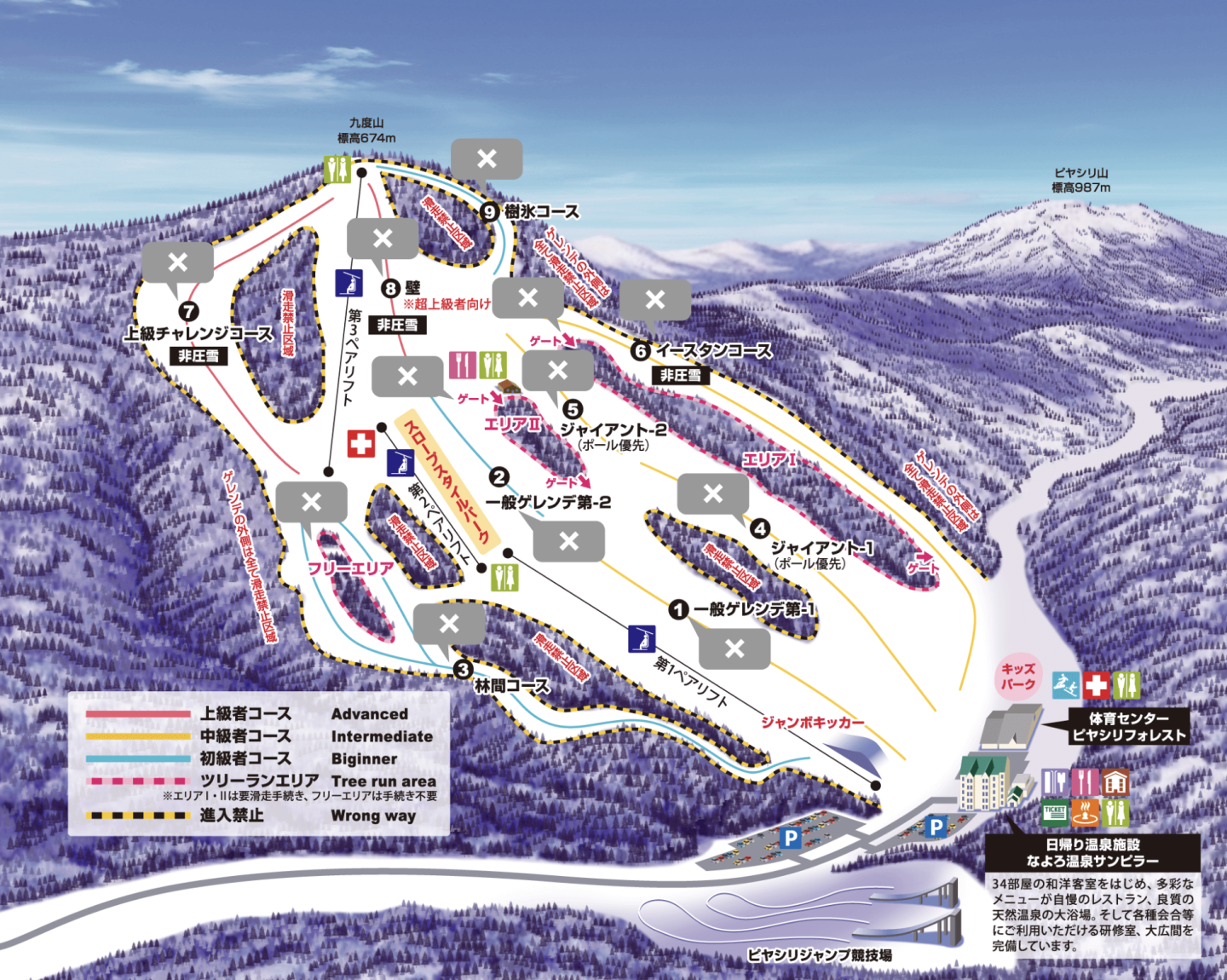
The tree skiing is the headline, and it is properly sanctioned rather than something you sneak. The resort runs four marked tree run areas with posted rules, not a nudge-and-wink boundary policy. Tree Run Area I is the big one at roughly 1400 metres, the longest in northern Hokkaido. The Tree Run Free Area is the gentle entry point if you have never linked turns through timber, and Area III is the newest and the meanest, advanced riders only, pitching up to around 33 degrees. Check the posted rules and the daily status before you drop in, because these areas do close when conditions turn. It is one of the more accessible tree skiing setups in the country, and it is the main reason to make the drive.
The groomed side is smaller but more varied than a nine-run trail count suggests. Beginners get long gentle pitches from mid-mountain, and there is a sane progression from wide cruisers into rolling intermediate terrain. Advanced riders will spend most of the day in the trees, because that is plainly where the resort has put its energy.
Lift strategy is not complicated when there are only three chairs. The pace is slow, which works in your favour: it spreads people thin and keeps good snow around well past lunch. On storm days drop into the lower mountain trees for shelter from the wind, and save the upper areas for when the visibility lifts.
The crowd factor is close to zero. After a solid overnight refill you can still be finding fresh lines mid-afternoon, which is a luxury that has quietly disappeared from the better-known resorts.
Getting There
Getting up there
Asahikawa Airport is the sensible way in, then 90 to 120 minutes north by road. Winter driving in this part of Hokkaido is not a formality. Expect ice, snow drifting across open farmland and visibility that can vanish without much warning, so take a winter-ready rental on proper snow tyres and give yourself more time than the map suggests.
By rail, Nisshin Station on the Soya Line is under five kilometres from the base, with a short taxi to finish the job. Local buses exist but thin out in winter, so a car is worth it if you want to chase snow between hills. If you are weighing up trains against driving for the wider trip, the transport guide covers the trade-offs.
Parking is free, plentiful and never full.
Who's it for?
- First-timersOkay
- Powder huntersGood
- Non-skiersLimited
- BudgetGood
- Après / nightlifeLimited
- LogisticsLimited
Who should bother
Piyashiri suits riders who rate snow quality and solitude above vertical and nightlife. If your ideal day is quiet tree laps followed by a long soak, this is your hill.
Upper intermediates get the most out of it. The tree areas are approachable, the pitches are forgiving and there is a genuine path from groomer to glade. Advanced riders will enjoy Area III and the room to poke about, though they will start repeating themselves after a couple of days.
Look elsewhere if you want big alpine bowls, long sustained fall lines or a terrain park, because none of those exist here. Families do well on the quiet beginner terrain, and budget travellers can ski all day, eat properly and still have yen left over. It is a hill that rewards the sort of traveller who reads the hidden gem list rather than the brochure.
Food & Après
Eating well, apres barely
On the hill, the base lodge does the classics competently: ramen, curry rice and katsu that tastes considerably better at minus 15 than it has any right to. Prices are low enough that a second lunch is a legitimate tactic rather than a confession.
Dinner is better in town. Nayoro has small izakayas turning out grilled skewers, sashimi and bubbling hotpot, plus family-run ramen shops where the broth has had decades of attention. None of it is fancy and all of it is warm.
Apres in the western sense does not really happen. There are no bars with live music and no crowd spilling onto the street. Apres is the onsen, a beer from a vending machine and watching the snow come down under the lights.
Japow Travel Tips
Things worth knowing
- Lift hours: 09:00 to 16:30.
- Night skiing: Thursdays and Fridays only, 16:30 to 20:30, running from around mid December to late February.
- Tree run areas: four marked areas with posted usage rules. Check the status board at the base before you ride them.
- Cold: this is one of the chilliest corners of Japan and it regularly hits minus 30. Bring more layers than you think you need, and a face covering.
- Language: Japanese by default. A translation app earns its keep here.
- Nearby: Nayoro town handles food and lodging, and the ski jump hill sits just across the way.
Worth pairing with
Piyashiri works best as one stop on a northern Hokkaido loop rather than a week on its own. Two or three days is about right before the terrain starts repeating itself, and the northern Hokkaido powder route strings the sensible options together.
Heading back towards Asahikawa, Pippu is an easy roadside stop and Kamui Ski Links has more vertical and a longer season, which makes it a good half day on a travel day.
Push east instead and you are into Daisetsuzan, where Asahidake and Kurodake swap lifts and grooming for volcanic terrain, ropeway access and some of the most dependable snow in the country. Neither is a resort in the usual sense, and both reward decent gear and a cautious head. Furano is the obvious anchor if you want one bigger mountain in the mix.
Verdict: cold, quiet and quietly brilliant
Piyashiri is not competing on stats and it should not be judged on them. What it has is genuinely cold snow, four sanctioned tree areas that would be picked clean by 10am anywhere else, and lift queues that barely qualify as queues. Give it two or three days inside a wider northern Hokkaido trip and it may well be the part you talk about afterwards. Turn up expecting a destination resort and you will miss the point entirely.