
Pippu
Fresh tracks, no fuss
 ぴっぷ
ぴっぷEasy powder, zero posture
Pippu makes a lot more sense once you drop any expectation of destination-resort theatre. It's a small local mountain a short run from Asahikawa, simple to navigate, friendly to families, and quietly better on snow quality than a first look at the numbers suggests. The resort's own pitch is broad northern Hokkaido slopes across nine courses with a view over the Kamikawa Basin toward Daisetsuzan, and for once the marketing undersells the place rather than the other way round.
What actually makes it work is the total lack of fuss. You're close enough to Asahikawa for an easy day trip, the layout is simple enough to figure out in one lap, and the whole place is built around good value and repeat laps rather than resort spectacle. That's a genuinely different feel from the bigger names an hour or two down the road. Fewer people means the cold, dry inland snow sticks around longer once it falls, which is the real reason locals keep coming back.
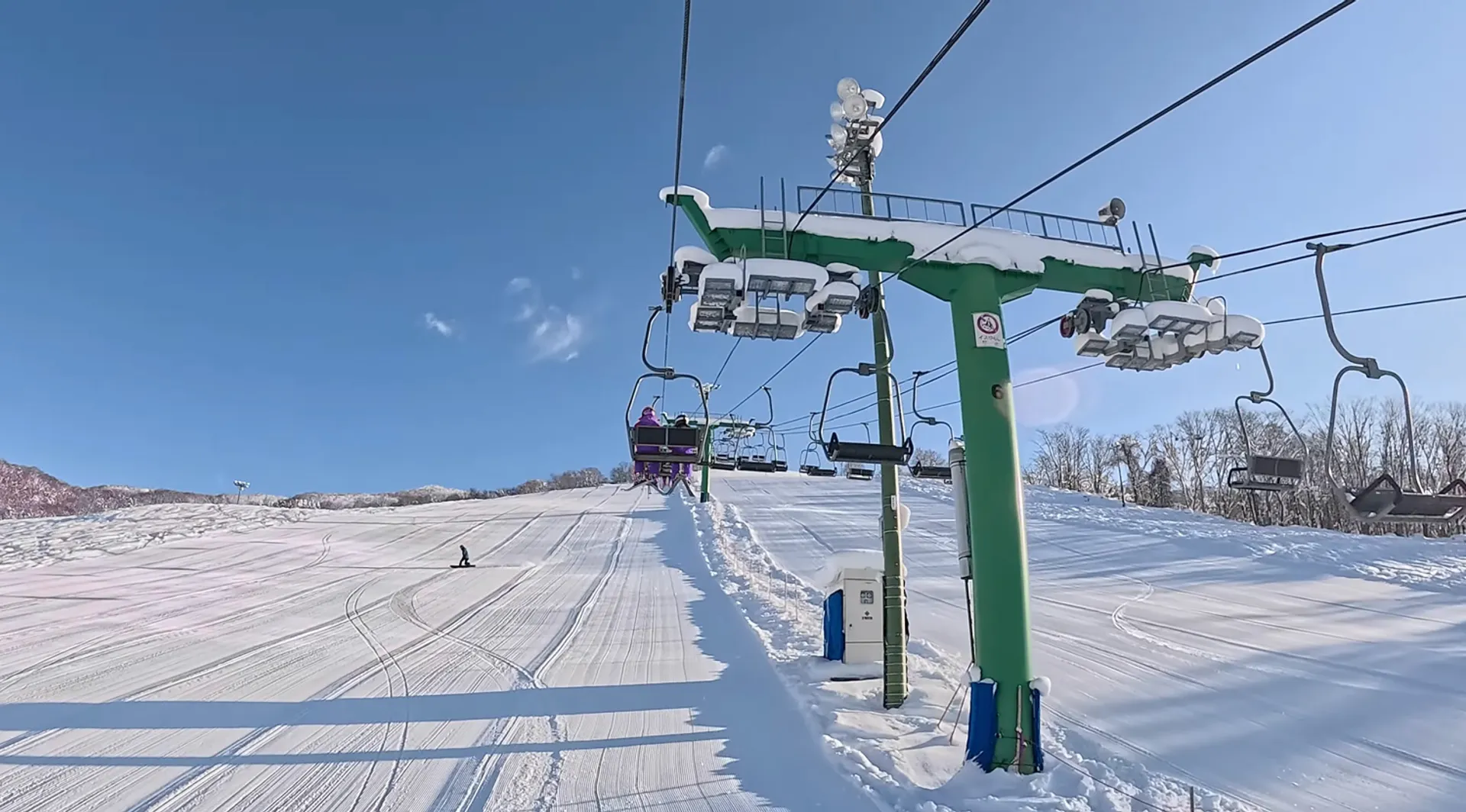
It isn't only a beginner bump either. There's enough scale here to feel worthwhile: a genuinely long main run and a solid reputation for the quality of its inland Hokkaido snow. Families and intermediates already get plenty out of that alone. Stronger skiers and snowboarders get the quieter draw, soft, low-pressure laps with a fraction of the competition you'd find at the region's headline resorts. Pippu was never trying to be the main event. It's the kind of hill that earns its repeat visits by simply not getting in your way.
Resort Stats
- Vertical340m (580m → 240m)
- Snowfall~8m
- Terrain 30% 50% 20%
- Tree Riding
- Lift Pass¥3,800
- Lifts1 quad, 2 pair, 1 rope tow
- Crowds
- Out of Boundspatrol may take pass
- Night Skiing
- Family Friendly
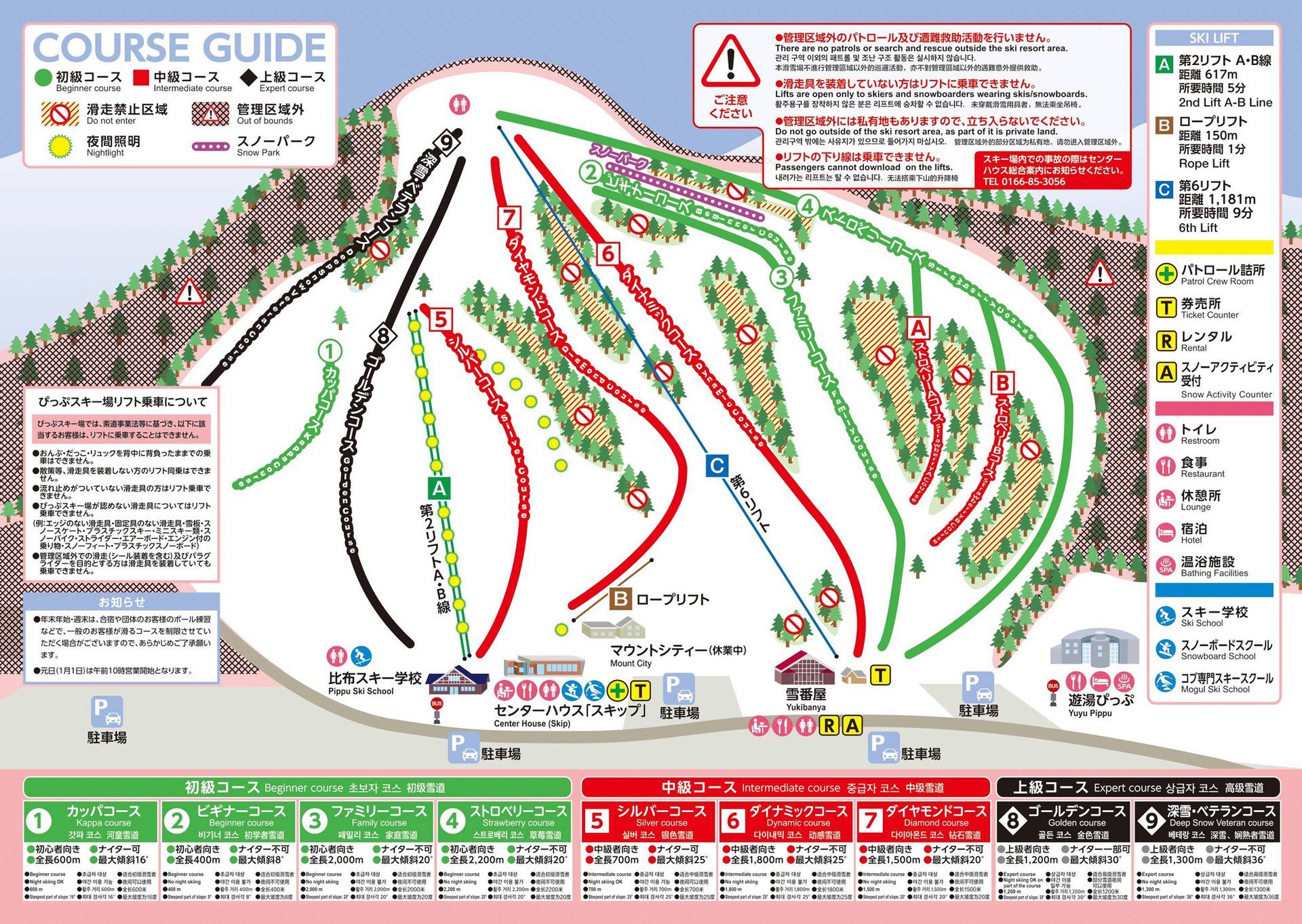
- Trails9
- Skiable Area~50ha
- Vibelow-key locals, easygoing
Trail Map
Accommodation
View MapSleeping right at the base means a handful of small, family-run pensions with tatami floors and an early bedtime built into the culture, ideal if the plan is first chair and a soak rather than a big night out. Owners here tend to know exactly which route beats the school bus queue to the lift.
The more common move is basing in Asahikawa, 30 to 40 minutes away in normal conditions, where business hotels near the JR station handle the practical side well: dependable breakfasts, coin laundry, easy parking. It also puts a proper ramen or izakaya scene within walking distance for the evening, something the base area simply doesn't offer.
If a soak matters as much as the skiing, look at the onsen stays scattered through Kamikawa and the edges of Asahikawa. Big baths, quiet streets, and that loose-limbed feeling before pointing the car back to the hill next morning. Nightlife across this whole area runs early and low-key by design, this is a good-meal-and-bed itinerary, not a late one.
Powder & Terrain
The terrain is simple and compact, weighted toward beginners and intermediates, and that simplicity is most of the appeal. Runs are easy to lap, the pitches are mellow without ever feeling flat, and the whole layout suits families, learners and anyone chasing a low-pressure day. When fresh snow lands, those friendly fall lines turn genuinely fun, and the cold inland Hokkaido climate does a lot of the work keeping conditions light and dry rather than heavy or wind-scoured.
This isn't the hill for huge vertical, serious off-piste or a long list of expert lines, and it never pretends otherwise. What you get instead is quiet groomers, a few soft-snow laps most storm mornings, and the kind of relaxed skiing that feels easy, affordable and better than the trail map lets on.
Getting There
Fly into Asahikawa Airport (AKJ) and you're roughly 45 to 60 minutes away by rental car depending on conditions. New Chitose (CTS) to Pippu runs closer to 2.5 to 3 hours via the expressway network when the weather is cooperating. Winter driving is manageable if you respect Hokkaido's rules of the road: proper snow tires are non-negotiable, build extra time into a storm-cycle plan, and expect polished, slippery corners early and late in the day. Public transit works too, train into Asahikawa and a regional bus or taxi the rest of the way, but a car buys much better timing for storm chasing and catching a night session.
Watch for plow berms across the smaller turnouts after a heavy dump, and don't assume every backroad is cleared before first chair. Fuel up in Asahikawa, rural stations out this way can open late on the coldest mornings.
Who's it for?
- First-timersOkay
- Powder huntersOkay
- Non-skiersOkay
- BudgetGood
- Après / nightlifeLimited
- LogisticsLimited
This hill rewards patience over ambition. An intermediate cruising the main groomers day after day will keep finding new confidence in the mellow pitches, and a family with mixed ages gets a genuinely low-stress zone to spread out in without anyone getting stranded on terrain too hard or too boring. Stronger riders shouldn't expect a challenge to write home about, but the side-of-run pockets after a fresh dump offer enough to keep things interesting for a session.
Where it comes up short is obvious: no gate network, no real off-piste, nothing resembling big vertical. Anyone building a trip around those things should look elsewhere and save Pippu for a lighter day, the storm-visibility backup, the recovery morning, or the easy add-on to a longer Hokkaido loop rather than the main event.
Food & Après
On the mountain, the cafeteria handles the classics well: ramen, curry rice, katsu, and quick trays that hit the spot between laps. Down in Asahikawa, seek out shoyu ramen, the city's own specialty, or settle into an izakaya for grilled skewers and winter vegetables. Apres here is casual by nature, a hot soak, a good bowl, maybe a convenience-store treat for dessert. Save the big nights out for the bigger city further south. Pippu is built for the glide and the grin, not the after-party.
Japow Travel Tips
- Lift hours: typically morning into mid-afternoon, with night skiing on select evenings. Check the weekly program before planning a dusk session, it shifts through the season.
- Avalanche and backcountry: the in-bounds risk profile is low and managed, but beyond the ropes is unsanctioned and patrol can and will pull passes. Treat any sidecountry as full out-of-bounds and plan accordingly.
- Weather and snow: inland cold snaps preserve quality well, and wind is generally modest, so grooming stays crisp and soft snow settles nicely rather than getting scoured.
- Language: limited English at the hill itself, numbers, maps and a smile go a long way. Asahikawa shops generally handle basic English fine.
- Unique to Pippu: the uncrowded midweek rhythm is the whole clinic in how far calm conditions and honest grooming can go with fresh inland snow, no crowd management needed because there's rarely a crowd.
- Pair it with: Kamui Ski Links is about 40 minutes away, Furano roughly an hour to an hour and a quarter, Asahidake around 90 minutes. Use Pippu on storm days for visibility and on bluebird mornings for perfect corduroy. Our Hokkaido Powder Route (West Loop) guide strings these together into a proper multi-day run.
Verdict: Powder without the pressure
Pippu won't overwhelm you with numbers, but it sneaks up on you in other ways. Roll in on a weekday, let the lift spool you into a mellow cadence, and enjoy fresh snow that just sits there quietly getting better rather than getting tracked out by nine. In a region stacked with famous names, Pippu is the reset day, the one you ride for yourself rather than for the story you'll tell about it afterward.