

Hakuba vs Shiga Kogen
Olympic Chaos or High-Altitude Glide?
Hakuba and Shiga Kogen are both Nagano heavyweights, but they go about the job very differently. Hakuba is a 10-resort valley under the Northern Japan Alps, built on Olympic legacy, big scenery, and the kind of terrain variety that can turn one trip into five separate mission plans. Shiga Kogen is the opposite flavour: Japan’s biggest ski resort, spread across 18 ski areas, higher, colder, and more about stacking long ski days than chasing village buzz.
Put simply, Hakuba feels like a mountain town with ski resorts attached. Shiga Kogen feels like a giant ski domain with beds scattered through it. One gives you energy, choice, and a bit of glorious chaos. The other gives you rhythm, consistency, and that smug feeling of still finding good snow after lunch.
The quick verdicts
- First-timers to Japan: Hakuba. Easier social landing, more dining choice, and a more obvious resort-town feel.
- Family with young kids: Shiga Kogen. If you stay slope-side in the right base, the whole day gets simpler fast.
- Family with older kids or teens: Hakuba. More terrain variety, more excitement, and more ways to keep them from getting bored.
- Mates trip: Hakuba. Better bars, more dinner options, and more post-ski movement.
- Budget trip: Shiga Kogen. Fewer temptation spends, stronger ski-in ski-out practicality, and usually better value day to day.
- Luxe trip: Hakuba. More polished hotel and chalet options, plus a broader restaurant scene.
- Powder reliability: Shiga Kogen. Higher elevation and colder surfaces make it the steadier snow bet.
- Big mountain terrain and variety: Hakuba. More dramatic terrain, more personality between resorts, more scope for strong skiers.
- Culture and Japan-ness: Shiga Kogen. More domestic ski-trip energy, more hotel dinners and hot baths, less imported ski-town gloss.
- Short trip and easy logistics: Hakuba. Simpler Tokyo access and a more obvious base for a quick hit.
The Resorts
Explore each full review for a deeper look at what each resort has to offer.
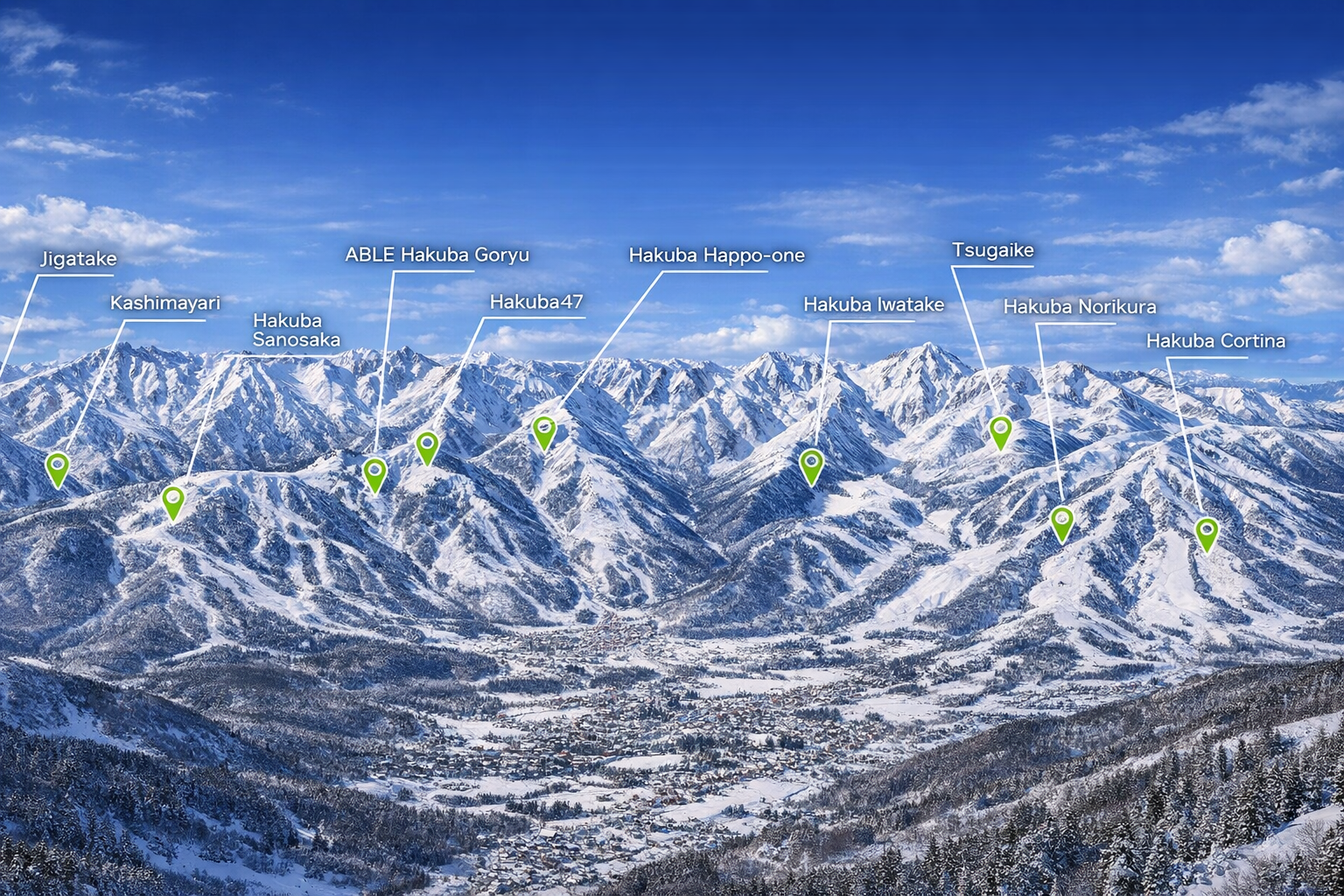
Hakuba Valley
Hakuba Valley: Japan’s alpine playground with ten different personalities
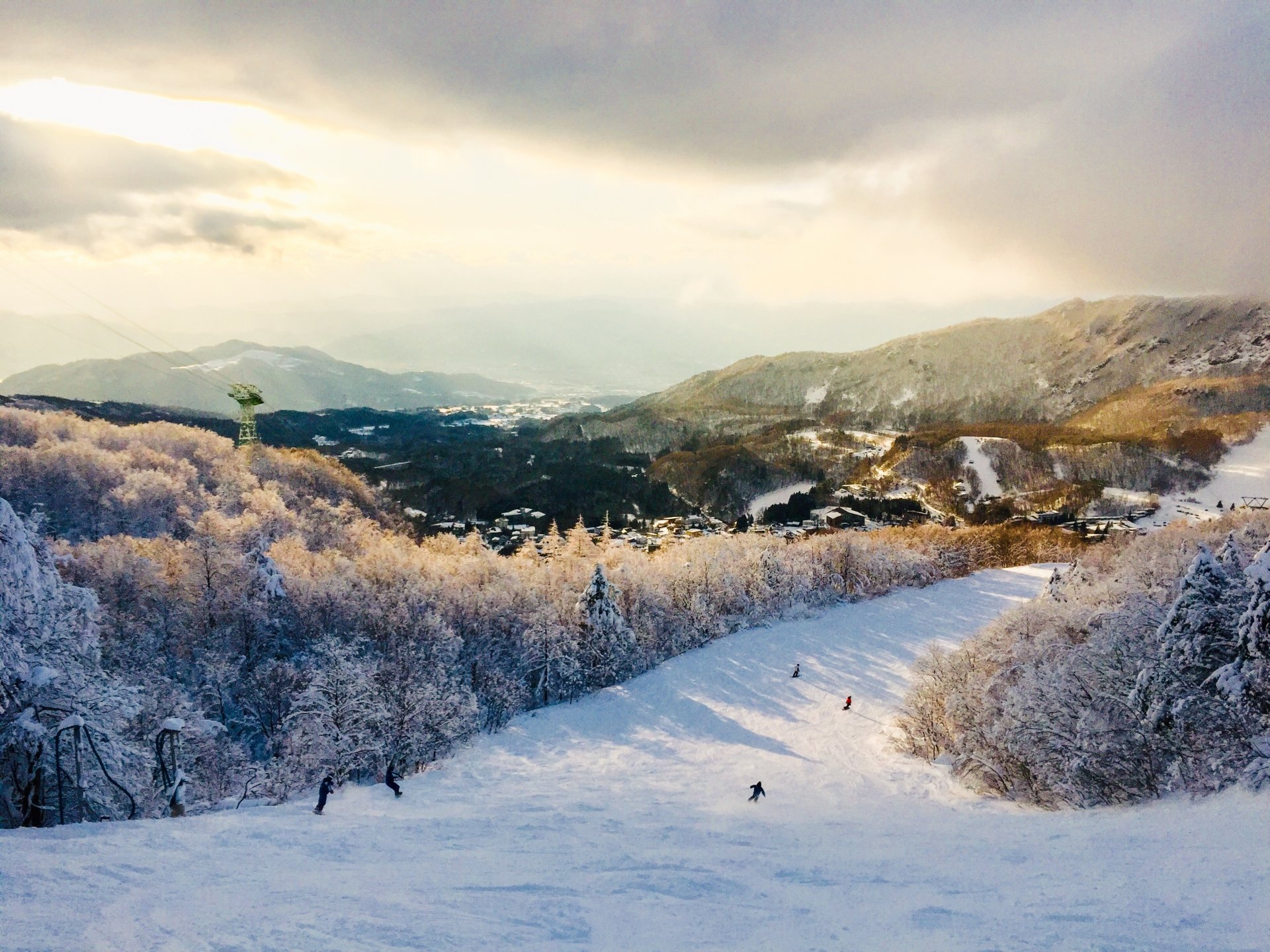
Shiga Kogen
Japan’s high-alpine giant with quietly reliable pow
Resort Comparison
Vibe check
Hakuba has range. You can spend the morning lapping Happo-One, shift to Goryu or 47, then end up eating in Echoland or Happo with a crew half in ski boots and half already on their second beer. The valley officially spans 10 resorts, and the whole place leans into choice. That is the appeal, but it is also why Hakuba can feel a little loose around the edges if your group cannot agree on anything.
Shiga Kogen is calmer, and that calm is the product. It is huge, but not rowdy. Your days tend to revolve around long linked ski missions, lunch in a mountain restaurant, then a soak and dinner rather than a bar crawl and a shuttle scramble. If Hakuba is the lively mate who keeps changing plans at breakfast, Shiga is the one who quietly racks up the best ski day of the trip.
Snow and weather
Estimated cumulative fresh snowfall at major on-mountain ski areas; actual totals vary substantially by resort, elevation, measurement location, and season.
Hakuba gets the big-alpine drama. The official valley site leans hard on abundant snowfall, high-quality powder, and long cruising terrain, and that checks out with the on-snow feel when storms line up. The valley sits below big peaks and can deliver proper storm skiing, especially when the upper mountain is firing.
Shiga Kogen is the safer answer for people who care less about hero days and more about consistent surfaces. Officially, it runs from 1,325m to 2,307m, markets its powder quality and long season, and makes a big deal of its high-elevation skiing. That higher, colder setup is why I would back Shiga for snow preservation, especially if you are travelling later in the season or hate soft lower-mountain afternoons.
Where you stay
In Hakuba, where you stay changes the whole trip. Echoland is the social one, Happo is the classic ski-town base near the famous resort, and Wadano sits a bit more tucked away with a quieter, lodge-heavy feel. That gives you flexibility, but also plenty of room to accidentally book yourself a charming little walk you stop finding charming by day three.
Shiga Kogen is more about choosing the right base area than choosing the right town. Ichinose works well as a central base, Okushiga and Yakebitaiyama feel more resort-like, and a lot of the accommodation is very close to the slopes and bus stops. Official listings repeatedly hammer the same point: slope access, hot springs, meals, and lift-ticket convenience. That is less sexy than a chalet strip, but it is extremely effective.
Terrain and tree skiing
For strong skiers and riders, Hakuba is the more exciting mountain proposition. The valley sells everything from gentle groomers to 8km cruisers, but the bigger story is how different the resorts feel from each other. Happo has that steep, serious energy. Goryu and 47 are dependable all-rounders. Tsugaike goes big on scale. Cortina and Norikura can turn a storm day feral in the best way. Hakuba also explicitly flags backcountry as part of the valley experience, which tells you plenty about the kind of skier it attracts.
Shiga Kogen has loads of mileage and enough variety to keep most people happy, but it is a different style of happy. Officially it pushes more than 80 runs across terrain for all levels, and that makes it brilliant for skiers who want to move, explore, and stay in motion all day. Where it is less convincing is raw steepness and tree-ski swagger. Shiga has good snow, good scale, and some playful side hits and natural terrain, but Hakuba feels more like a mountain hunter’s playground.
Crowds and lift flow
Hakuba can disperse people well on paper because it has 10 resorts and a valley shuttle connecting them. In practice, big-name lifts, key gondolas, and the most famous resort zones still get plenty of heat, especially on powder mornings and holiday periods. It is not broken, but it can feel a bit like everyone had the same bright idea at once.
Shiga Kogen usually feels smoother once you are in the system. One common pass covers all 18 ski resorts and 45 lifts and gondolas, and because the ski domain is so broad, people spread out better. The trade-off is that Shiga rewards planners. You want to understand your area connections, cat tracks, and bus options rather than just winging it.
Cost and value
Hakuba can absolutely rinse the budget if you let it. Prime locations, good chalets, popular restaurants, and the general volume of things to do mean it is easy to keep spending. The upside is choice. You can still do Hakuba more simply, but the best-located and best-known options get snapped up fast and the valley does not pretend to be a bargain-bin classic.
Shiga Kogen usually feels better value once boots hit snow. The accommodation style is more functional, the dining is more hotel-based, and the whole trip tends to revolve around skiing rather than spending money to solve problems. You are paying for access and snow, not for ski-town theatre. For a lot of travellers, that is a pretty good deal.
Food and nightlife
Hakuba wins this one comfortably. Between Echoland, Happo, and Wadano, there is a broad food scene and a real after-ski circuit. Even the tourism-oriented Hakuba resources warn that securing a table can be hard in peak winter, which tells you everything you need to know about demand. This is where you go when your crew wants ramen one night, cocktails the next, and maybe something a bit fancier when the legs stop working.
Shiga Kogen is more subdued and more traditional in rhythm. There are restaurants, bars, and some genuinely nice hotel lounges, but much of the food and drink scene sits inside hotels or resort buildings rather than along a lively village strip. If you stay off-mountain around Yudanaka or Shibu Onsen, you can add more character to the evenings, but if nightlife is a key part of the brief, Hakuba is the obvious winner.
Logistics
Hakuba is the cleaner short-trip play from Tokyo. The valley says you can get there in as little as 2 hours 50 minutes via Hokuriku Shinkansen and express bus, which is strong for a destination this size. Once you arrive, the inter-resort shuttle gives you a fighting chance of sampling the valley without renting a car.
Shiga Kogen is still very doable, but it is a bit more layered. Official access runs Tokyo to Nagano Station in about 1 hour 19 minutes by Hokuriku Shinkansen, then onward by direct bus or via Nagano Railway and bus through Yudanaka. That extra transfer is not a disaster, but for a four-night mission or a no-fuss family trip, Hakuba feels more straightforward.
The X-factor
Olympic valley-hopping versus snow-monkey ski safari
Hakuba’s party trick is that Olympic history is still baked into the skiing. The valley was a host of the 1998 Nagano Winter Olympics, and the whole place still skis with that big-stage confidence. You are not just choosing a resort there. You are choosing between moods, pitches, and micro-trips across a whole valley.
Shiga Kogen’s trick is different. It is the ski safari feel, the high-altitude mileage, and the fact it is the closest major ski resort to Snow Monkey Park. That makes the trip feel a bit more Japanese, a bit more tucked into the national park landscape, and a bit less like you are orbiting one ski town every day.
The tiebreaker
Pick Hakuba if you want bigger terrain personality, better nightlife, and a ski trip with more buzz, more choice, and more edge.
Pick Shiga Kogen if you want colder snow, smoother ski days, better value, and a trip that feels more quietly Japanese from first lift to post-dinner soak.
FAQ
Is Hakuba or Shiga Kogen better for first-timers to Japan?
Hakuba is the easier first date. It has a more obvious resort-town setup, broader dining options, and simpler Tokyo access. Shiga Kogen is great too, but it makes more sense once you know you want skiing to be the main event.
Which is better for powder, Hakuba or Shiga Kogen?
Hakuba has the flashier powder reputation on storm days and the more dramatic terrain to show it off. Shiga Kogen is the more reliable pick overall because of its higher elevation and colder, longer-season setup.
Which one is better for beginners and families?
For young kids and low-stress days, I would lean Shiga Kogen if you can book the right slope-side base. The resort officially highlights family zones, kids parks, and child-friendly areas, while Hakuba can feel more spread out unless you deliberately book a family-focused resort like Kashimayari.
Which one is better for advanced skiers?
Hakuba. It has more bite, more terrain personality, and more reasons for strong skiers to keep hunting across different resorts. Shiga Kogen has scale and mileage, but Hakuba is the one with more swagger.
Is Shiga Kogen cheaper than Hakuba?
Usually, yes in practical terms. Hakuba gives you more ways to spend money, from lodging to dining to nights out, while Shiga Kogen tends to channel the trip into ski, soak, eat, sleep. That often ends up feeling better value even before you look at lift passes.
Which is easier to get to from Tokyo?
Hakuba is simpler for most travellers, with official access in as little as 2 hours 50 minutes from Tokyo via shinkansen and bus. Shiga Kogen is quick to Nagano by train, but then still needs a bus or rail-plus-bus connection to get into the ski area.
When should I go to Hakuba or Shiga Kogen?
Midwinter is prime for both. If you are leaning later in the season or care about keeping snow quality high, Shiga Kogen’s altitude and officially long season make it the safer late-call choice.