
Shimokura
Tohoku’s tree-run playground with a proper steep wall
 下倉
下倉Small resort, big tree energy
Shimokura Hachimantai is one of those sleeper Tohoku spots that doesn’t scream “international destination” until you actually ski it. The vibe is low-key and practical: park, gear up, ride a couple of no-nonsense chairs, and disappear into the trees. It’s not about big gondolas, designer base villages, or nightlife. It’s about storm days, glades, and getting your turns in before you even think about your phone.
Terrain-wise, Shimokura punches above its weight because it’s not just groomers. There’s a proper steep course that earns its reputation, plus tree-run zones that feel built for powder hunting rather than sightseeing. If you like resorts where you can do a quick mental reset at the top, pick your line, and drop without a circus around you, Shimokura fits the bill.
Crowds are usually light, especially midweek, and even weekends tend to feel “busy for Tohoku,” not “tracked by 10am.” The flip side is lift speed: you’re not getting whisked uphill by a high-speed web of chairs, so you’ll want to ski efficiently. The good news is the layout is simple, and the best zones are easy to repeat once you’ve got them wired.
Affordability sits in the middle. The lift ticket is fair, and the bigger cost lever is where you sleep. Stay in Morioka and it’s a budget-friendly city base with endless food. Stay in the Hachimantai onsen area and you’re paying a bit more for the soak-and-snow rhythm. English is limited around the mountain and in town, but it’s the kind of place where a smile, a few basic phrases, and pointing at the right menu item gets you through just fine.
Resort Stats
- Vertical550m (1130m → 580m)
- Snowfall~8m
- Terrain 30% 30% 40%
- Tree Riding
- Lift Pass¥5,800
- Lifts1 triple chair, 2 pair chairs
- Crowds
- Out of Boundspatrol may take pass
- Night Skiing
- Family Friendly
- Trails7
- Skiable Area~91ha
- Vibequiet, tree-focused, no-fuss
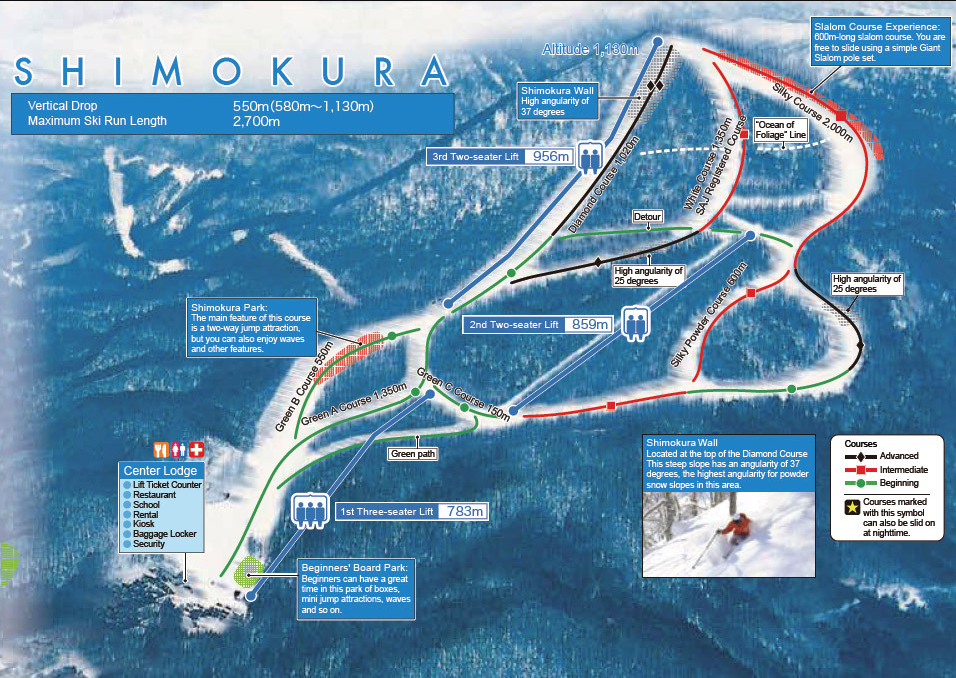
Trail Map
Accommodation
View MapThe most convenient stay for a ski-first trip is Hachimantai Mountain Hotel, which puts you in the resort orbit and makes early starts painless. It’s not a flashy scene, but it nails the basics: warm rooms, easy access to the slopes, and that comforting “mountain hotel” routine where your day is simply ski, eat, soak, sleep, repeat. It’s especially handy if you’re splitting time between Shimokura and the nearby Panorama area.
For the best overall Japan experience, base yourself in the Hachimantai onsen zone. Matsukawa Onsen Matsukawa-so and Matsukawa Onsen Kyounso lean into the old-school ryokan vibe: quiet nights, deep soaks, and meals that feel like part of the trip rather than a quick refuel. This is the move if you want your legs to recover properly and you don’t care about bars or late nights.
If you want maximum choice and better budget control, stay in Morioka and drive or bus up. City options like Dormy Inn Morioka (with its own hot spring setup) and Hotel Metropolitan Morioka make logistics easy, and the food scene is a legit perk. The trade-off is the commute, but if you’re doing multiple days and want variety off the hill, Morioka is the most flexible base.
Powder & Terrain
Shimokura’s snow story is classic northern Honshu: frequent storms, cold midwinter temps, and a steady rhythm of refresh days that keep the trees filled in. The base elevation isn’t alpine-high, but it’s also not sea-level low, so mid-season stays reliable. Where you feel the difference is later season swings: a warm push can make lower runs heavier, while the upper mountain stays the best bet for wintery snow.
The lift network is simple: three chairs that let you sample the whole hill without overthinking it. That simplicity is a feature once you’ve done a couple of warm-up runs, because you stop “navigating a map” and start skiing by feel. On storm mornings, the move is to get up high early and stay in terrain that keeps visibility and wind manageable. When it’s socked in, the trees do the job of giving you definition and confidence.
The resort’s calling card is its tree terrain, organized into clearly defined tree-run areas with personalities. EDGE tends to be the quick-hit zone where you can duck in and out fast. FUN is exactly what it sounds like, playful lines and natural rollers when coverage is good. CRUISE is the smoother, more flowy option when you want to keep speed without it turning into survival skiing. DROP is where things feel more committed and fall-line focused, and it’s the place you go when you want that “okay, no messing around” energy.
Then there’s the steep course that gives Shimokura its bite. It’s the kind of pitch that can be hero snow right after a storm, then turn into a real workout as it bumps up. It’s not a long sustained face that eats the whole day, but it’s steep enough to keep strong skiers honest and it adds a proper advanced anchor to a resort that could otherwise be written off as “trees and cruisers.”
Powder timing matters here. Because lifts are fixed-grip and the footprint isn’t huge, you don’t win by trying to ski everything once. You win by looping your best two or three zones and staying ahead of the crowd’s pattern. On weekends, most people stick close to obvious lines, so the best snow often sits just one decision away: a slightly less direct entrance, a line that starts narrow then opens, or a tree-run zone that people ignore because they’re intimidated by tighter spacing.
Backcountry and boundary discipline are not optional at Shimokura. The resort is strict about closures, and ducking ropes when areas are closed is a fast way to lose your day. Treat it like a serious mountain even though it feels friendly. If you want to venture beyond managed zones, do it with proper local knowledge, avalanche gear, and the right day. Otherwise, stay inside the designated tree areas and you’ll still get plenty of quality turns without rolling the dice.
Getting There
Closest airport is Iwate Hanamaki Airport, but most travellers will route through Tokyo to Morioka by shinkansen because it’s fast, comfortable, and easy. From Morioka, you’re looking at roughly 80 to 90 minutes by road to the resort area depending on conditions, with winter storms occasionally stretching that out.
A rental car is the best tool for Shimokura. It gives you freedom to chase weather, choose your timing, and stay in whichever accommodation fits your trip style. Winter driving here is real winter driving: proper snow tyres are a must, and carrying chains is smart insurance for storm days and icy access roads.
Public transport can work, especially on days when the schedule lines up, but it’s not the kind of place where you can rely on frequent late-night options. Plan to arrive early, keep an eye on storm forecasts, and build a little buffer into your day so you’re not rushing the last chair because you’re trying to make a tight ride connection.
Who's it for?
- First-timersOkay
- Powder huntersExcellent
- Non-skiersLimited
- BudgetOkay
- LogisticsLimited
If you’re an upper-intermediate who likes trees and you’re comfortable linking turns in ungroomed snow, Shimokura is a sweet spot. You get enough groomed terrain to warm up, then you can spend the rest of the day threading glades, hunting soft pockets, and sampling the steep course when you’re feeling sharp.
Advanced skiers and riders will love it most on storm cycles and the day after, when the trees are filled in and the steep pitch is in prime condition. It’s also a great “contrast resort” if your trip includes bigger names nearby, because the crowd vibe is calmer and the skiing feels more personal.
If you’re a true beginner, this is not the ideal home base. There is beginner terrain, but the soul of the mountain is off the groomed path, and families with first-timers will have a better time mixing in the nearby Panorama side of the resort for more forgiving progression. If you need nightlife, shopping, and constant entertainment, you’ll want to sleep in Morioka and treat Shimokura as your day mission.
Food & Après
On-mountain food is straightforward: think ski-lodge comfort meals, quick bowls, and the kind of fuel that gets you back on the chair without overthinking it. Don’t expect a “destination dining” lineup at the base. Expect warm, filling, and functional, which honestly suits Shimokura’s no-fuss personality.
For better eating, you’ve got two realistic plays. The first is heading toward Appi Kogen-side options where places like Richo-En are a reliable post-ski win when you want something hearty. The second is going all-in on Morioka for the full menu of local hits. If you’ve never done Morioka reimen, put Pyon-Pyon Sha on your list and thank yourself later.
Apres here is more about the onsen and the dinner table than a bar crawl. Grab a drink, loosen the legs, talk about which tree-run zone delivered, then get to bed so you’re not the one yawning in the lift line tomorrow morning.
Japow Travel Tips
- Lift hours: Shimokura typically runs 8:40 to 15:30.
- Avalanche / backcountry reality: The trees can feel “safe” because they’re in-bounds style terrain, but once you step beyond controlled areas you’re in real mountain conditions. Carry proper gear if you’re leaving managed zones, and don’t treat ropes as suggestions.
- Weather & snow patterns: Midwinter is the sweet spot for cold snow. Later season can see heavier snow down low on warm swings, while upper elevations stay best.
- Language/cultural quirks: English is limited. Be polite, follow signage, and don’t duck closures. Rule-breaking is taken seriously.
- Anything unique: The designated tree-run areas (EDGE, FUN, CRUISE, DROP) give structure to what could otherwise be chaotic off-piste. It’s one of the reasons Shimokura skis so well on storm days.
- Nearby resorts worth pairing: Combine with Hachimantai Panorama for more groomed variety and easier terrain, or go bigger with Appi Kogen. If you’re chasing deeper days in the region, Geto Kogen is a classic add-on.
Verdict: Tree Runs and Steep Walls, Minus the Circus
Shimokura Hachimantai is a powder chaser’s kind of resort: quiet chairs, legit trees, a steep pitch that keeps you honest, and enough snowfall consistency to make it a reliable mission when the storms line up. It’s not luxury, it’s not flashy, and it’s not trying to entertain non-skiers. It’s just a clean, practical mountain that rewards riders who know how to read terrain, respect boundaries, and keep hunting for soft snow all day.