

Rusutsu vs Zao Onsen
Powder Machine or Snow Monster Magic?
Rusutsu and Zao Onsen are both very good reasons to start checking flight prices and pretending you are only going for one week. But this is less apples and oranges, more ramen and whisky. Rusutsu is the polished Hokkaido operator: big linked terrain, fast lift infrastructure, ski-in ski-out convenience, and the sort of setup that makes it dangerously easy to rack up lazy, glorious powder laps all day. Zao Onsen is older, steamier, weirder, and far more atmospheric: an onsen village with snow monsters on the mountain and public baths waiting at the bottom.
The quick verdicts
- First-timers to Japan: Rusutsu. Easier to understand, easier to move around, and less likely to turn your first ski trip into a transport puzzle.
- Family with young kids: Rusutsu. Better resort convenience, kid-focused facilities, and a much smoother day-to-day setup.
- Family with older kids or teens: Rusutsu. More terrain to explore and more variety once everyone starts wanting different laps.
- Mates trip: Rusutsu. Better lift flow, stronger tree skiing, and more room for a crew to spread out then regroup.
- Budget trip: Zao Onsen. More old-school lodging choice and fewer premium-resort vibes baked into every decision.
- Luxe trip: Rusutsu. This is the one if you want the polished stay, slope-side comfort, and a bit more slickness.
- Powder reliability: Rusutsu. Hokkaido is the safer bet when your holiday mood depends on soft snow showing up properly.
- Big mountain terrain and variety: Rusutsu. Three linked mountains is hard to argue with.
- Culture and Japanese feel: Zao Onsen. Sulphur steam, ryokan, bathhouses, and a village that feels lived in.
- Short trip and easy logistics: Zao Onsen. Especially if your trip already includes Tokyo or wider Honshu travel.
The Resorts
Explore each full review for a deeper look at what each resort has to offer.
Vibe check
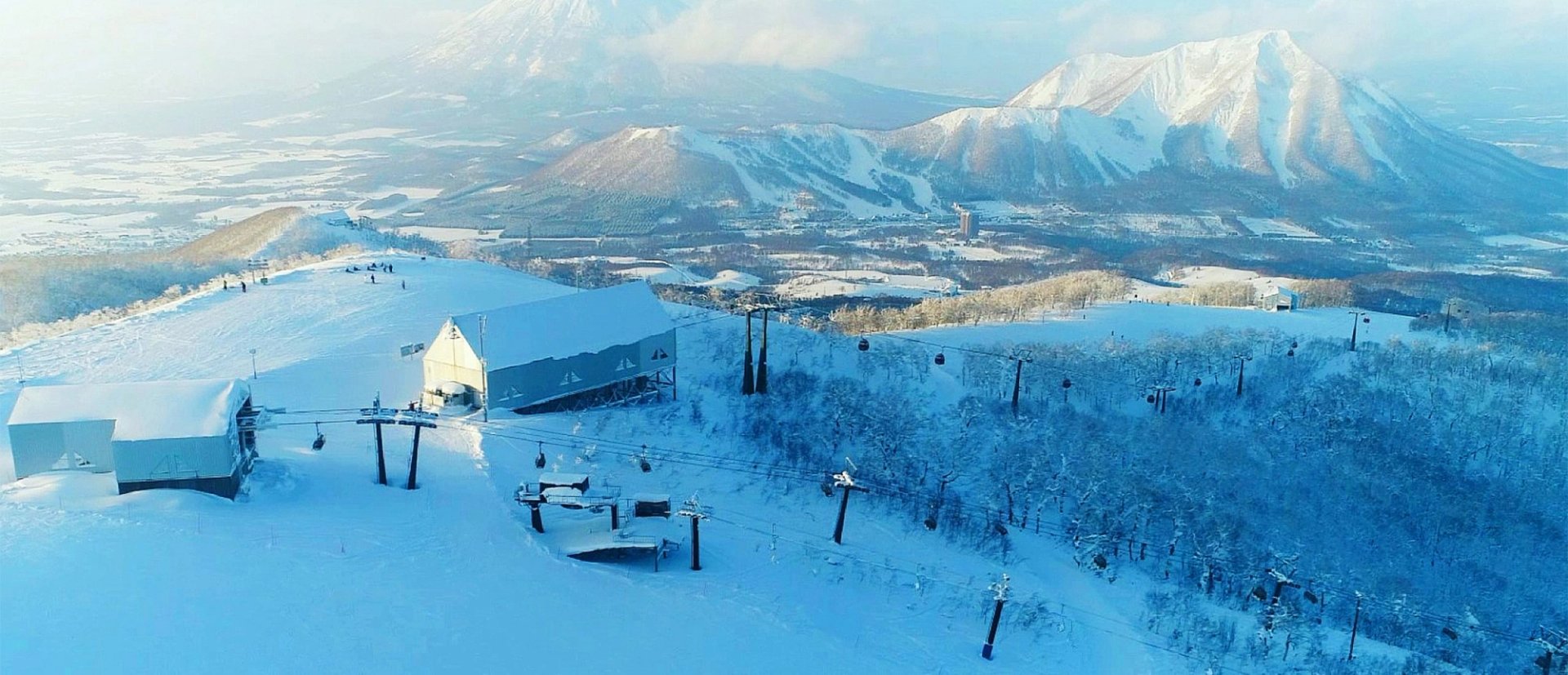
Rusutsu feels like a resort that wants your whole trip to happen neatly inside the resort orbit. That is not a criticism. For plenty of people, that is the dream. You roll out of bed, click in fast, move easily across a big ski area, and finish with dinner in a comfortable resort bubble. It is efficient, polished, and very easy to enjoy.
Zao Onsen has much more texture. The village is packed with inns, local spots, bathhouses, steam rising through the streets, and that lovely slightly chaotic mountain-town energy that makes a place memorable. It feels less curated and more real. If you want your ski trip to feel unmistakably Japanese rather than just internationally ski-comfortable, Zao is the stronger play by a mile.
Snow and weather
Estimated cumulative fresh snowfall at major on-mountain ski areas; actual totals vary substantially by resort, elevation, measurement location, and season.
For pure snow confidence, Rusutsu gets the nod. JNTO specifically highlights it for large snowfall, excellent tree runs, and strong lift infrastructure, and the resort spans three mountains with enough terrain that fresh snow does not feel wasted on one short zone. When people talk about that easy Hokkaido rhythm of storm, reset, repeat, Rusutsu is very much in that conversation.
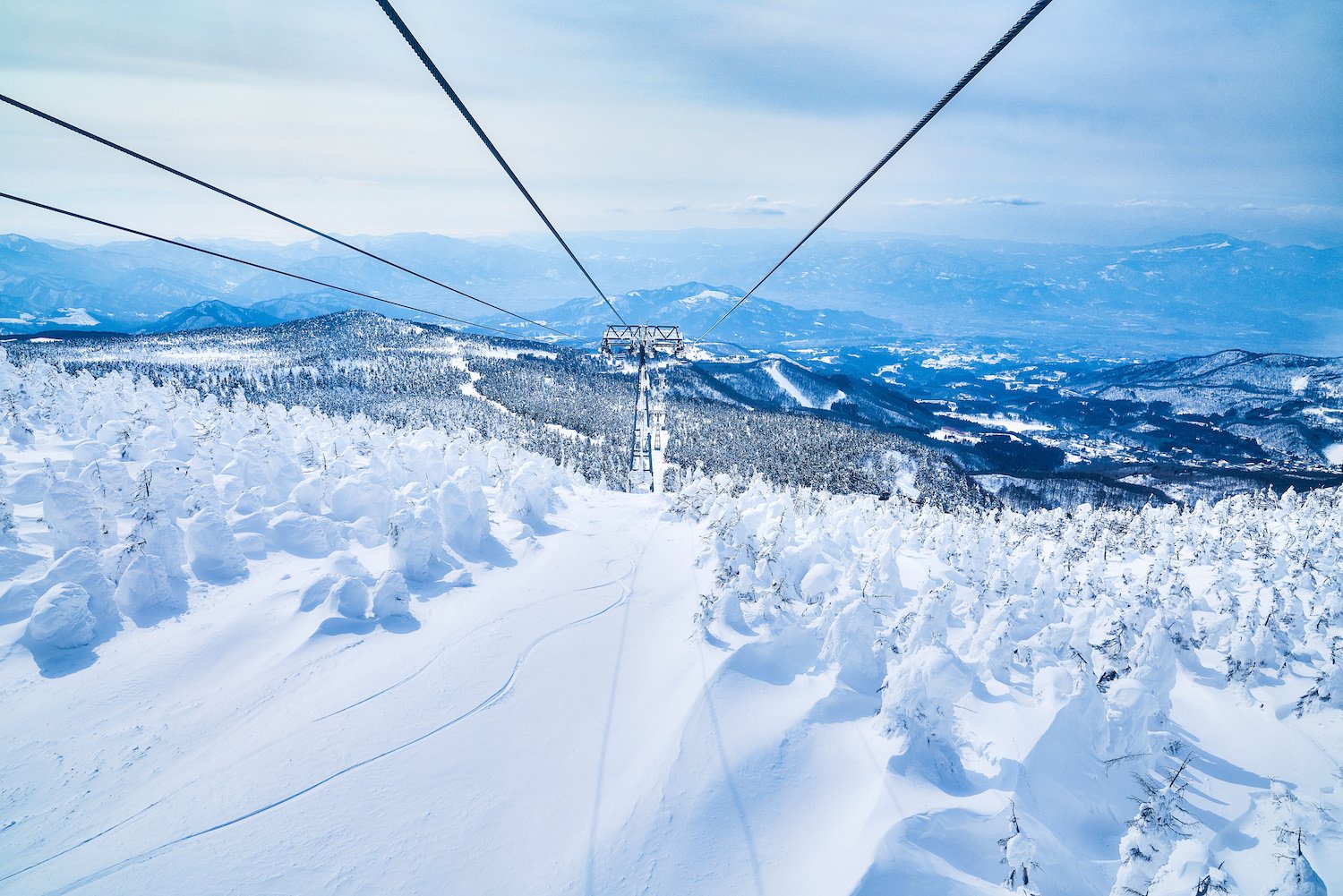
Zao’s snow story is different. It is colder-feeling, wind-shaped, and more dramatic up high, because the same weather setup that helps create the famous snow monsters is part of the mountain’s identity. That gives Zao huge visual magic, but it also means the upper mountain can feel more exposed and less mellow than the postcard version suggests. Rusutsu is the better powder holiday. Zao is the more atmospheric winter experience.
Where you stay
Rusutsu is the better choice if you care about slope-side convenience and a cleaner, more premium resort setup. The official resort accommodation mix is led by large resort hotels and condos, including the main resort hotel, Westin, and The Vale, and the whole place is built around making ski days easy. Great if you want low friction. Less great if you were hoping for loads of village wandering and little local surprises.
Zao Onsen gives you much more range and much more character. The official tourism site says there are more than 80 accommodation options, from historical ryokan to hotels and economical lodges, and JNTO notes that many hotels and ryokan have their own baths, alongside day-use facilities and public baths in town. That means you can shape the trip more easily around budget, atmosphere, or full bathhouse mode.
We go deeper on both in Rusutsu accommodation and Zao Onsen accommodation, base by base.
Terrain and tree skiing
Rusutsu is the stronger ski area, full stop. Three linked mountains, 37 courses, 42 kilometres of runs, and a lift network built for movement gives it day-long variety that Zao cannot really match. It is also one of the cleaner calls in Japan for skiers and snowboarders who want proper tree skiing without spending the whole day dealing with awkward traverses or a stop-start lift plan.
Zao still has plenty going on, but its strengths are different. It has a big, spread-out mountain with 26 slopes and courses, long descents, ropeway-served upper terrain, and some genuinely punchy sections like the expert walls around Hanenkamm and Yokokura. The famous 10 km Juhyogen course is classic Zao: scenic, distinctive, and memorable. But if your holiday is built around lapping trees and hunting the best soft-snow lines all day, Rusutsu is simply more your speed.
Crowds and lift flow
Rusutsu wins this one because it is built better for modern ski-day rhythm. Four gondolas, seven quads, seven lifts, and a broad spread across three mountains means the resort can absorb people far more cleanly than its reputation for popularity might suggest. It still gets busy at peak times, obviously, but it usually feels like a mountain designed for efficient laps.
Zao has an older, more stitched-together feel. That is part of the charm until you are cold, hungry, or standing around wondering why your route back to the village involved quite so many moving parts. JNTO also notes that the resort can get very busy on weekends, especially around the famous snow monster zones. Zao is fun, but it is not the king of lift-flow elegance.
Cost and value
Rusutsu is the more expensive-feeling trip, even before you start adding up the little extras. That is the trade-off for convenience, larger resort hotels, ski-in ski-out ease, and the generally more polished holiday package. You are paying for a smoother landing and a stronger ski product. Whether that feels worth it depends how much you value hassle-free ski days.
Zao Onsen is usually the better value play. The broader mix of ryokan, pensions, lodges, and small hotels gives it more room for normal humans to find something sensible, and the town feels far less like it is charging you for premium resort polish at every turn. You give up some slickness, but you gain character and usually a friendlier hit to the wallet.
Food and nightlife
Rusutsu has enough dining to keep most people happy, but it is still resort dining. You eat well enough, you can have a drink, and you can have a good time, but it does not have the organic town-night feel of somewhere built around streets, lanes, bathhouses, and local bars. It is more convenient than exciting.
Zao is quieter than major nightlife resorts too, but its evenings are far more memorable. The win here is not clubbing. It is doing a late soak, padding through the village, grabbing a solid meal, and finishing with that lovely mountain-town feeling that the night is part of the trip rather than just a gap between ski days. If food and nightlife means atmosphere over scene, Zao takes it.
Logistics
Rusutsu is straightforward once you commit to Hokkaido. The resort is about 90 minutes by car from New Chitose Airport and about 90 minutes from Sapporo by car, with bus access also built into the resort transport options. For Aussie and Kiwi travellers already eyeing Hokkaido flights, that is a pretty clean setup.
Zao Onsen is one of the better Honshu ski options for mixed Japan trips. JNTO says it is most easily accessed by an hourly 40-minute bus from Yamagata Station, with Tokyo to Yamagata on the shinkansen taking around two and a half hours. So if you want to combine city time, culture, and skiing without heading all the way north to Hokkaido, Zao is very hard to ignore.
The X-factor
Sulphur steam vs high-speed laps
This is the real divider between these two. Zao gives you a ski day that bleeds straight into onsen ritual. You ski under snow monsters, come down into a proper hot spring town, and finish the day in mineral-rich water with steam in the air and that faint sulphur smell telling you you are absolutely in the right place. Few ski resorts in Japan can match that blend of spectacle and bathhouse culture.
Rusutsu’s X-factor is totally different. It is the quiet satisfaction of a ski resort that just works. The mountains link up cleanly, the lifts keep you moving, the terrain has enough scale to stop the day from getting stale, and the accommodation is set up to make life easy. If Zao wins the memory contest, Rusutsu wins the please-let-me-do-that-again-tomorrow-without-changing-a-thing contest.
The tiebreaker
Pick Rusutsu if you want the stronger all-round ski resort: better lift flow, better tree skiing, better family convenience, and a safer bet for a powder-first trip.
Pick Zao Onsen if you want your ski holiday to feel more like Japan: snow monsters, bathhouses, old-school village charm, and a trip with more soul than polish.
FAQ
Is Rusutsu or Zao Onsen better for families?
Rusutsu is the easier family pick. It has a more resort-friendly setup, kids facilities, ski school infrastructure, and a smoother ski-in ski-out style of day that makes life easier when the group has mixed energy levels.
Which is better for powder skiing?
Rusutsu. It is the stronger choice for powder reliability, tree skiing, and day-long terrain variety, while Zao is more famous for its snow monsters and scenic upper mountain than for being a tree-lap powder factory.
Is Zao Onsen cheaper than Rusutsu?
Usually, yes. Zao has a much broader spread of ryokan, hotels, and budget-friendly lodgings, while Rusutsu leans more heavily into resort hotels and premium convenience.
Which resort feels more Japanese?
Zao Onsen, comfortably. JNTO describes it as a hot spring resort area with public baths and traditional inns, and the village atmosphere is a huge part of why people love it.
Which is better for advanced skiers?
Rusutsu is the better overall advanced-skier holiday because the terrain has more scale and better flow. Zao still has some proper steep sections and long descents, but it is not as consistently rewarding for strong skiers chasing variety every day.
How do you get to Rusutsu and Zao Onsen?
Rusutsu is about 90 minutes by car from New Chitose Airport or Sapporo, which makes it a straightforward Hokkaido resort once you arrive. Zao Onsen is reached most easily via Yamagata Station, then an hourly 40-minute bus, so it fits very neatly into a Tokyo plus Honshu ski itinerary.
When should you choose Zao Onsen over Rusutsu?
Choose Zao when you want the full village-and-onsen experience, not just the strongest ski resort. It is the better pick for travellers who care about hot spring culture, old-school mountain town atmosphere, and seeing the famous snow monsters as part of the trip.