

Rusutsu vs Shiga Kogen
Polished powder playground or endless ski safari?
Rusutsu and Shiga Kogen are both seriously good ski trips, but they scratch very different itches. Rusutsu is the polished operator. It is easy to like, easy to ski, easy to recommend. You roll up, lock into one slick base, and get on with the important business of chasing soft snow through some of Japan’s best in-bounds tree skiing.
Shiga Kogen is a different beast. It is bigger in feel, wider in scope, and a little less tidy around the edges. This is the place for long days, linked resorts, surprise detours, and that satisfying sense that you are exploring rather than just lapping. If Rusutsu feels like a premium powder machine, Shiga feels like a giant alpine puzzle that rewards people who like to roam.
The quick verdicts
- First-timers to Japan: Rusutsu. It is simpler, more intuitive, and far less likely to turn your first ski trip into a logistics side quest.
- Family with young kids: Rusutsu. The resort setup is smoother, the base area is easier, and the whole place feels built to reduce friction.
- Family with older kids or teens: Rusutsu. Better tree skiing, more fun side hits, and a more exciting on-mountain feel for stronger young skiers and riders.
- Mates trip: Shiga Kogen. Bigger mission energy, more terrain to explore, and a better fit for crews who like to ski hard all day.
- Budget trip: Shiga Kogen. It usually feels less premium-priced and gives you a lot of skiing without the polished-resort tax.
- Luxe trip: Rusutsu. This is the easier place to do comfort, convenience, and a more upscale resort stay.
- Powder reliability: Rusutsu. Hokkaido snow quality is the headliner here, and Rusutsu cashes in when the storms roll through.
- Big mountain terrain and variety: Shiga Kogen. It wins on scale, linked areas, and the sheer amount of terrain you can cover in a trip.
- Culture and Japan-ness: Shiga Kogen. It feels more domestic, more old-school, and less like a self-contained international resort bubble.
- Short trip and easy logistics: Rusutsu. Fewer moving parts, less route-planning, and more time spent skiing instead of navigating.
The Resorts
Explore each full review for a deeper look at what each resort has to offer.
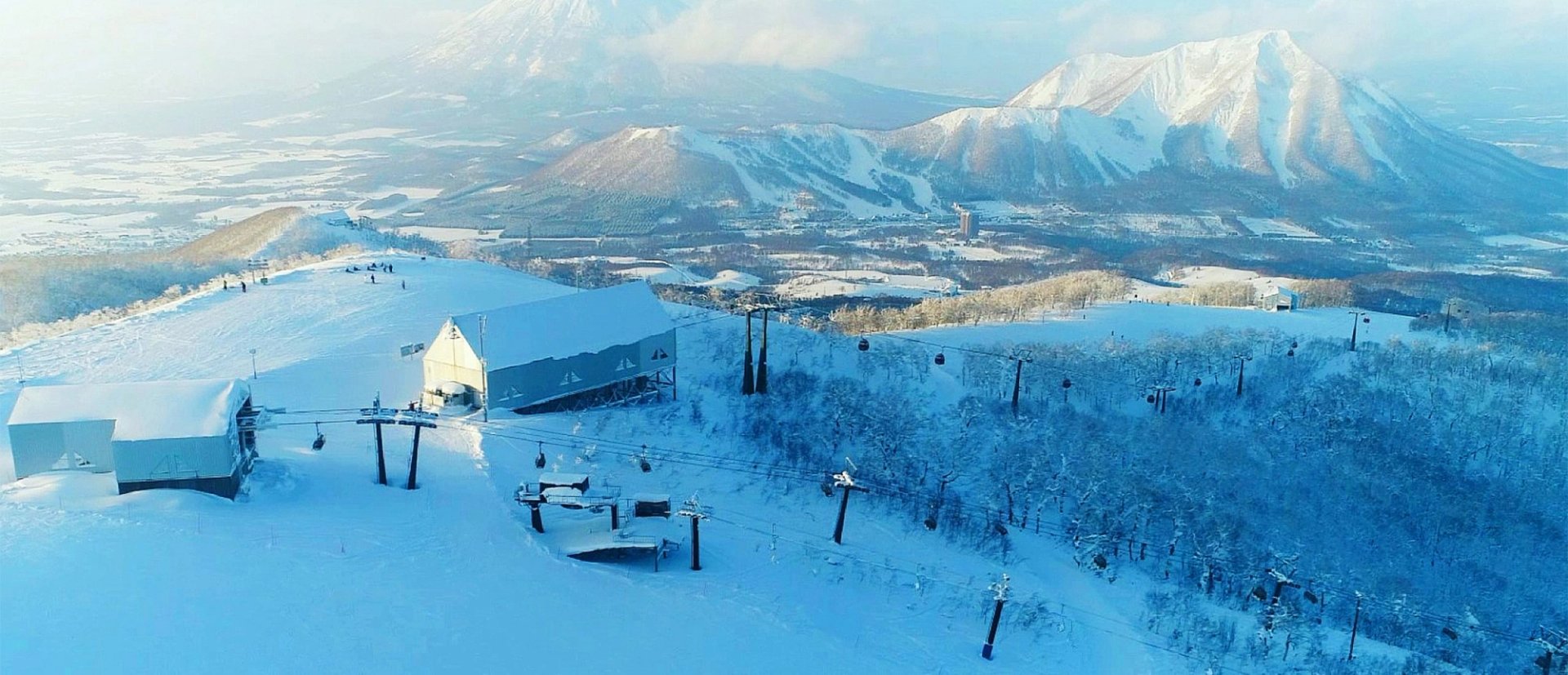
Rusutsu
Champagne Pow Under Mt. Yōtei
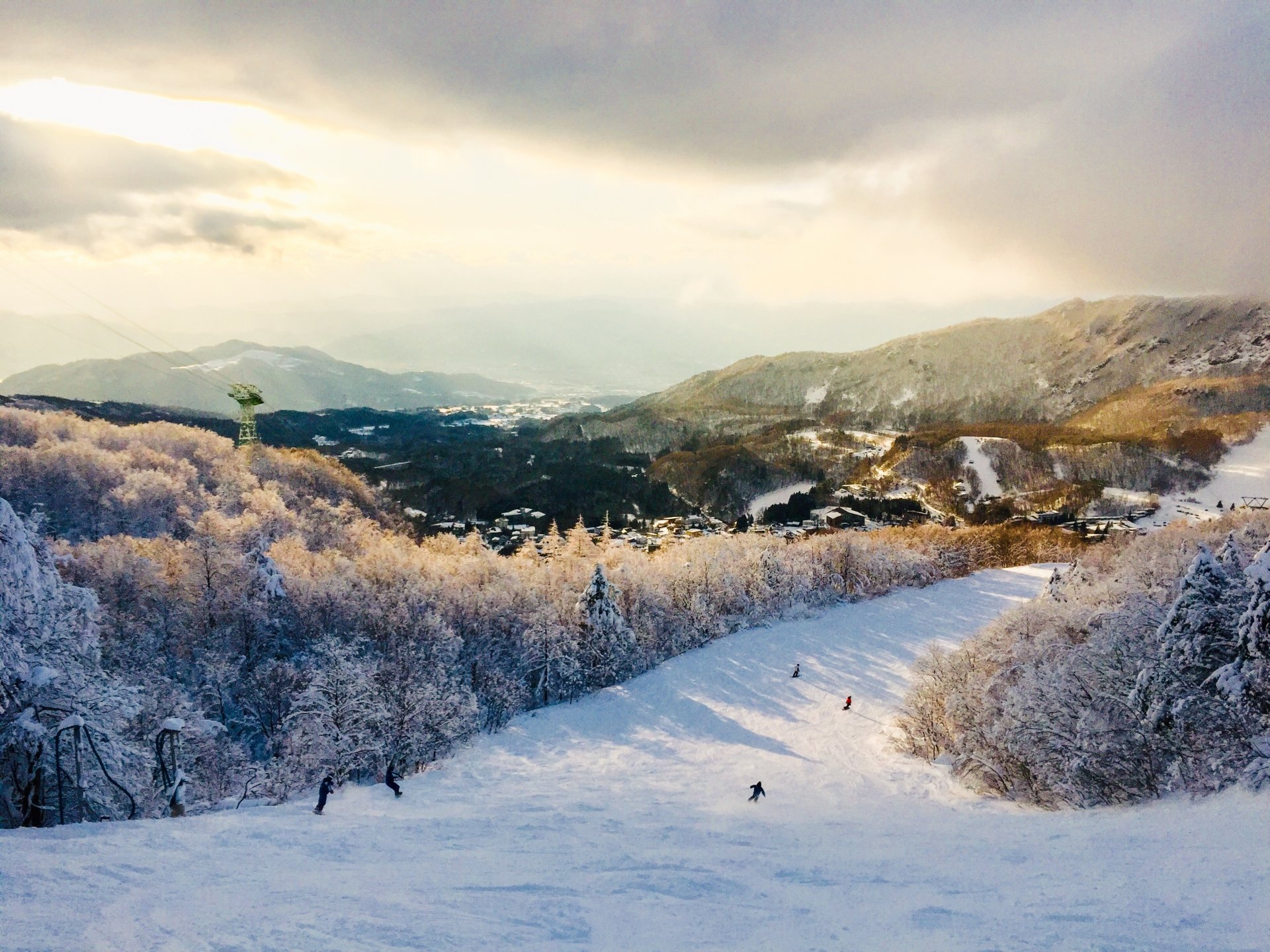
Shiga Kogen
Japan’s high-alpine giant with quietly reliable pow
Resort Comparison
Vibe check
Rusutsu feels polished without being flashy. It is purpose-built, comfortable, and very easy to settle into. You are not coming here for winding old lanes, steaming bathhouses, or a village stacked with character. You are coming because the skiing is good, the trees are good, and the resort knows how to keep things running cleanly.
Shiga Kogen feels older, broader, and more Japanese in its rhythm. It is not one neat little resort village with a single obvious centre of gravity. It is more like a collection of ski zones and hotel pockets spread across a high alpine area, which gives it a slightly retro, ski-patrol-map sort of charm. Less slick, more character. Less tidy, more adventure.
Snow and weather
Estimated cumulative fresh snowfall at major on-mountain ski areas; actual totals vary substantially by resort, elevation, measurement location, and season.
Rusutsu has that Hokkaido magic. Cold smoke, regular refreshes, and the kind of snow that makes average skiers think they have suddenly become artists. When it is on, it is absurdly fun. Snow quality is a major reason people come here, and it is not hype. This is one of the best places in Japan if your dream day involves soft trees and face shots before lunch.
Shiga Kogen plays a different snow game. It sits high, which helps preserve snow well, and it often skis nicely even when other Honshu resorts are getting a bit heavier or more weather-affected. The snow usually will not have quite the same celebrity fluff factor as Rusutsu, but it holds up well, stays wintry, and gives you a long season feel. For consistency of coverage and good surface quality across a big area, Shiga is quietly strong.
Where you stay
Rusutsu is the easier stay. Most people base themselves right at or very near the resort, and that makes life simple. Wake up, gear up, go ski. That matters more than people admit. Especially on a short trip, removing daily decision-making is worth a lot. The trade-off is that it can feel a bit resort-bubble, and accommodation at the convenient end of the spectrum is not usually where the bargains live.
Shiga Kogen offers more variety, but it asks more of you. Where you stay changes your trip quite a lot. Base yourself in the wrong pocket for your priorities and you may spend a chunk of time riding buses, shuffling between lifts, or wishing you were two valleys over. Stay selection matters here. Get it right and it is brilliant. Get it wrong and the resort can feel more fragmented than fun.
Once you have picked a side, where to stay in Rusutsu and where to stay in Shiga Kogen cover the bases and budgets.
Terrain and tree skiing
Rusutsu is the stronger choice for playful advanced skiers and riders who love trees. This is one of the best lift-accessed in-bounds tree destinations in Japan. The lines are accessible, the spacing is friendly, and the terrain keeps delivering that addictive combo of speed, flow, and repeatability. It is not the most extreme place in Japan, but it is ridiculously good at giving good skiers exactly what they want, over and over again.
Shiga Kogen wins on scope, but not on tree skiing. What it offers instead is mileage, variety, and the fun of linking zones together across a genuinely big ski area. There are cruisy sectors, steeper sections, racey groomers, and enough terrain to keep strong intermediates and piste-focused skiers happy for several days without repetition. If your happiest day is all about tree laps, Rusutsu wins. If your happiest day is one giant explore mission, Shiga has a serious case.
Crowds and lift flow
Rusutsu is impressively smooth for a resort with strong international appeal. Lift networks are straightforward, the base is easy to understand, and the mountain usually feels efficient. Even when other popular resorts are getting a bit chaotic, Rusutsu often manages to keep the day moving. That flow is a huge part of its appeal. You spend less mental energy figuring things out and more time skiing.
Shiga Kogen can be wonderfully uncrowded in parts, but its size comes with complexity. The challenge is not always queues. Sometimes it is simply movement. A wrong turn, a poorly timed traverse, or ending up in the wrong zone late in the day can turn a relaxed ski day into a small navigation puzzle. That is part of the charm for some people. For others, especially on a first visit, it can feel like the mountain is asking for homework.
Cost and value
Rusutsu is rarely the place people describe as a sneaky bargain. It feels premium because it is premium in the ways that matter: convenience, resort quality, grooming, lift flow, and overall ease. You are paying for a smoother experience and top-tier snow access, not necessarily for a huge village scene or broad budget range. If you want frictionless and high-quality, the spend can make sense.
Shiga Kogen usually feels like the better value play. There is a lot of skiing here, and it often gives off less polished-resort, more serious-skier value. That does not mean every stay is cheap or every trip magically runs on loose change. It means the overall equation can work better for people who care more about terrain and trip length than fancy resort packaging. For a ski-first traveller, Shiga is easier to justify.
Food and nightlife
Rusutsu is not dead, but it is not exactly a freewheeling ski town either. Dining is more contained, the après vibe is more muted, and the energy is calmer than big-name village resorts. That is totally fine if you are there to ski hard, eat well enough, and get some sleep before the next storm cycle. It is less fine if your ideal trip includes heaps of bar-hopping and spontaneous late-night options.
Shiga Kogen is also not a nightlife destination, but it wears that better because expectations are different. Evenings feel more old-school and more low-key, with hotel restaurants, simple local spots, and the occasional short mission off-mountain if you want more variety. This is not where you come for chaotic après. It is where you come to eat, recover, and get ready to do another big day.
Logistics
Rusutsu is the cleaner operation. Fly into Hokkaido, sort a transfer, and you are basically on rails. It is a straightforward trip by Japan ski standards, which makes it attractive for families, shorter holidays, or anyone who does not want a lot of interchanges standing between them and the chairlift. When people say a resort is easy, this is the kind of ease they mean.
Shiga Kogen is doable, but it is more of a route. The transfer chain is a little more involved, and once you are in the area, the geography continues to matter. That is fine for people who enjoy a bit of mission energy and do not mind planning their base carefully. It is less ideal for travellers who want maximum ski time with minimum fiddling. You earn Shiga slightly more, both on the way in and once you are there.
The X-factor
Single-base smoothness vs ski-safari freedom
Rusutsu’s special sauce is how easy it makes very good skiing feel. You do not need to overthink it. You do not need to constantly reposition. You can stay in one place, learn the mountain fast, and spend your day doing what you came to do. That simplicity is underrated, especially when the snow is good and all you want is another lap through soft trees.
Shiga Kogen’s magic is the opposite. It is the satisfaction of movement. Different sectors, different angles, different moods through the day. It feels expansive in a way few Japanese ski areas do. You are not just skiing a resort. You are navigating a whole zone. For people who love the feeling of covering ground and discovering pockets, that is catnip.
Tree laps vs groomer mileage
Rusutsu is a resort that flatters modern powder skiers and snowboarders. The tree skiing is not just available, it is central to the whole appeal. It is the kind of place where a storm day turns into a sequence of grinning chairlift rides and slightly ridiculous snow-covered selfies.
Shiga Kogen shines for a different skier. This is a dream trip for someone who values long groomers, mixed terrain, and the ability to ski all day without feeling boxed in. It is less about one signature type of run and more about the huge menu. If Rusutsu is a powder specialist, Shiga is a talented all-rounder with endurance.
The tiebreaker
Pick Rusutsu if you want the cleaner, easier, more polished powder trip with standout tree skiing and minimal fuss.
Pick Shiga Kogen if you want more terrain, more exploration, more old-school Japan feel, and better value for a ski-first adventure.
FAQ
Is Rusutsu or Shiga Kogen better for families?
Rusutsu is the easier family call, especially with younger kids. The resort layout is simpler, the stay experience is smoother, and parents do not have to think as hard about getting everyone where they need to be.
Which is better for powder skiing?
Rusutsu is the stronger powder pick. Hokkaido snow quality plus genuinely fun in-bounds tree skiing makes it one of the most satisfying powder resorts in Japan for strong intermediates and advanced skiers.
Which one has more terrain?
Shiga Kogen has more overall scale and a much bigger explore factor. It feels broader and more varied across a multi-day trip, even if not every individual zone hits as hard as Rusutsu on a powder day.
Is Shiga Kogen better for beginners?
It can be, especially if a beginner likes mellow groomers and lots of room to progress. That said, Rusutsu is often less confusing for first-timers because the resort layout is more straightforward and less spread out.
Which resort feels more Japanese?
Shiga Kogen. It has a more domestic, less international-resort feel, and the overall experience feels closer to an old-school Japanese ski trip than a self-contained destination resort.
Which is better for a short Japan ski trip?
Rusutsu. The simpler access and single-base convenience make it a better fit when every travel hour matters and you do not want to spend half your trip decoding the mountain map.
Which one is better value?
Shiga Kogen usually feels like the better value ski trip. Rusutsu delivers a smoother and more premium experience, but Shiga often gives you more skiing for your money if your priorities are terrain and trip length.