
Hakuba vs Zao Onsen
Olympic Valley or Snow Monster Fairytale?
Hakuba is the big, swaggering Alps play. Ten resorts, Olympic history, serious terrain spread, and enough bases, buses, bars and bed options to make it feel like a full ski region rather than one neat little resort.
Zao Onsen is a different beast. It is a steamy hot-spring town with lifts rising straight out of the village, a colder Tohoku feel, and the kind of snow-covered monster trees that make your camera roll look mildly unhinged.
The quick verdicts
- First-timers to Japan: Hakuba. It is more international, easier to navigate in English, and gives you a huge range of lodging, dining and resort choices once you arrive.
- Family with young kids: Hakuba. The valley has more mellow, family-friendly resort options and more accommodation styles, which makes it easier to build a low-drama trip.
- Family with older kids or teens: Hakuba. More terrain variety, more places to roam, and a much better chance of keeping everyone entertained for more than two days.
- Mates trip: Hakuba. Bigger nightlife, more restaurant choice, and enough terrain depth to stop stronger riders getting twitchy.
- Budget trip: Zao Onsen. It is usually the better value call, with a more compact town setup and less of Hakuba’s polished international resort spend. This is an inference from the resort styles and accommodation patterns.
- Luxe trip: Hakuba. This is the one with broader upscale lodging and more high-comfort dining options.
- Powder reliability: Zao Onsen. Hakuba can absolutely deliver huge storms, but Zao’s colder Tohoku setting feels steadier when you want a midwinter-safe bet. That comparison is an inference based on region and resort positioning.
- Big mountain terrain and variety: Hakuba. Ten resorts, an all-valley pass, Olympic lines and way more ways to shape a week.
- Culture and Japan-ness: Zao Onsen. The bath-town rhythm, steam in the streets and public onsen scene feel more rooted and traditional.
- Short trip and easy logistics: Zao Onsen. Once you arrive, it is a compact one-base setup with lifts in town, so you spend less time coordinating the crew.
The Resorts
Explore each full review for a deeper look at what each resort has to offer.
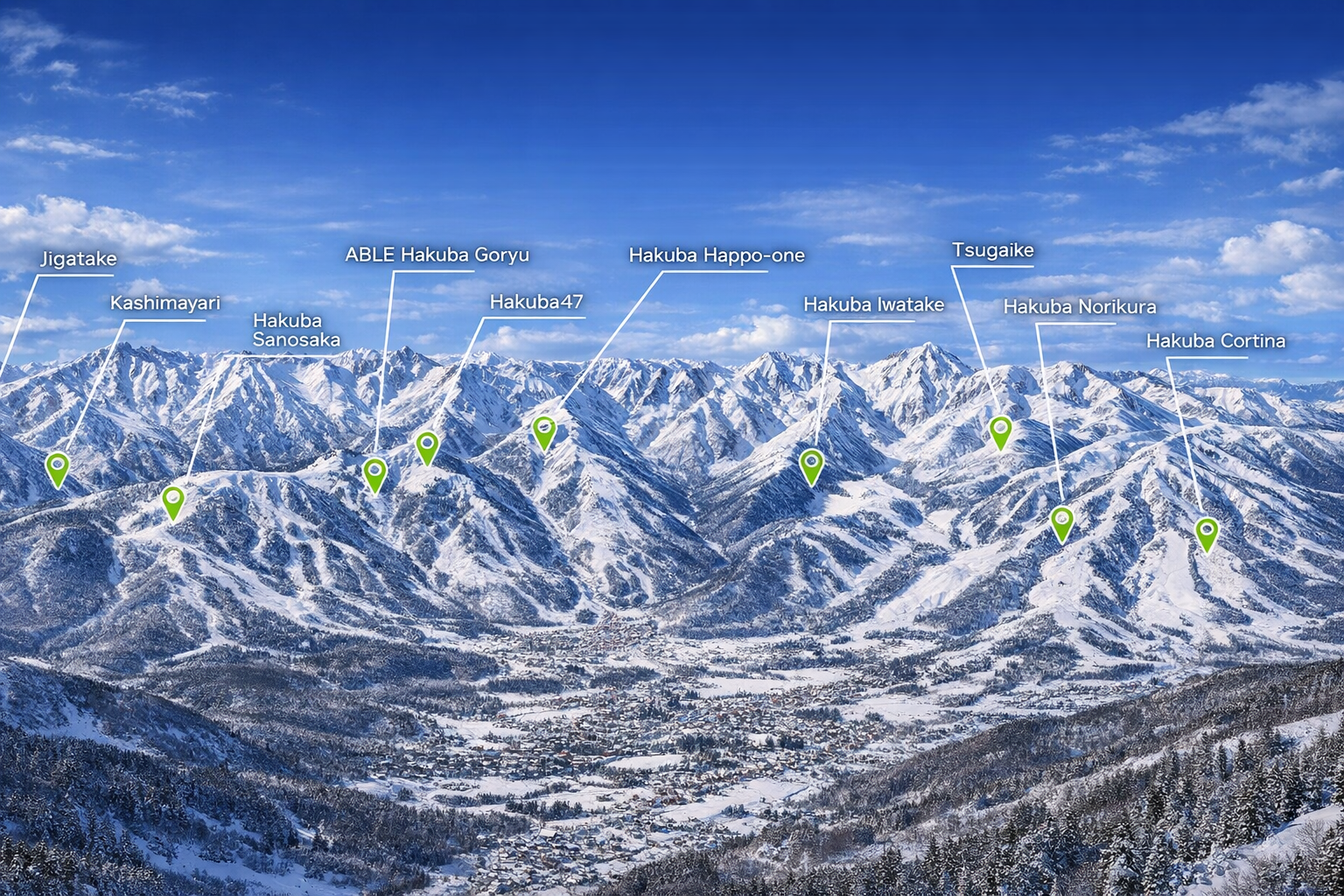
Hakuba Valley
Hakuba Valley: Japan’s alpine playground with ten different personalities
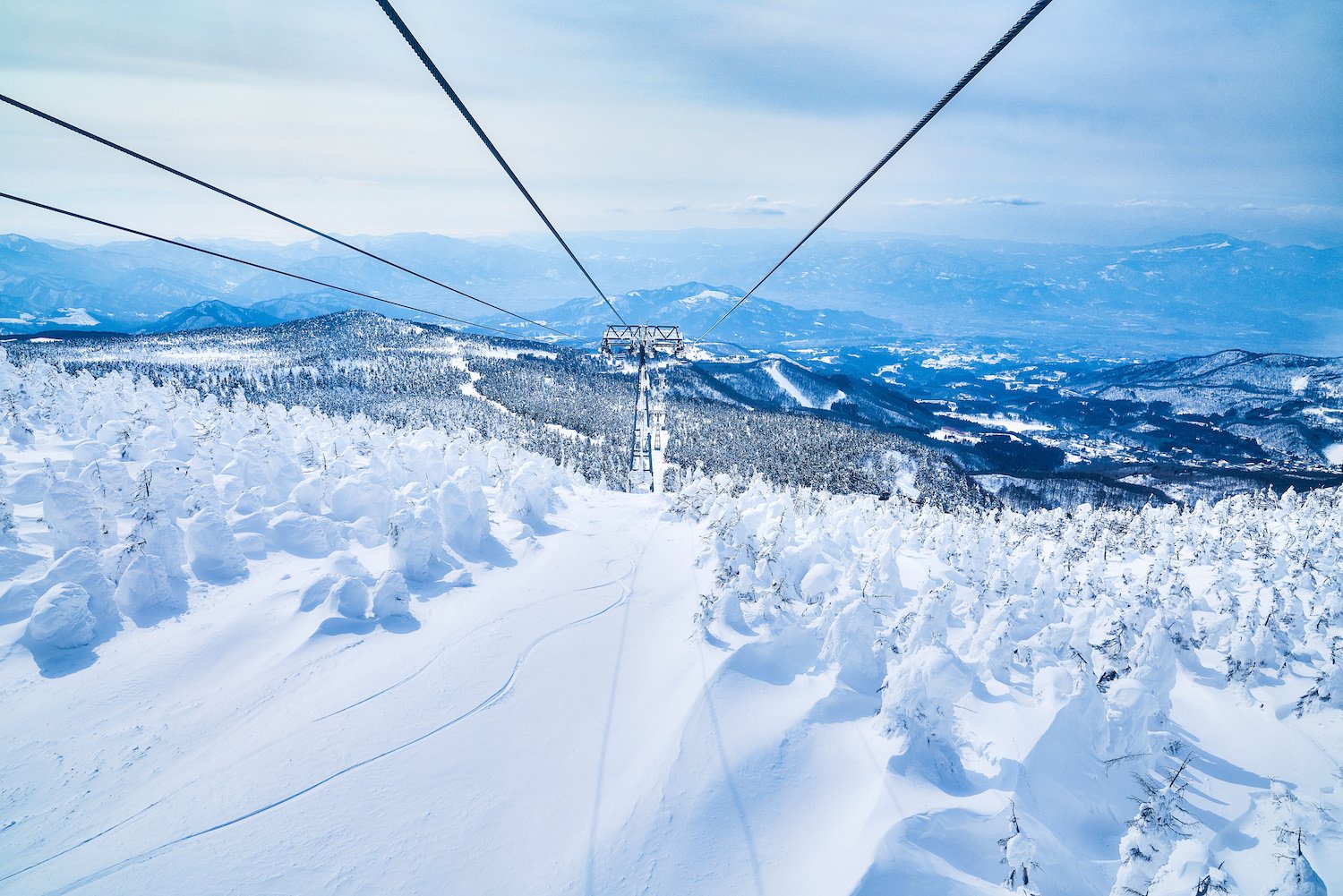
Zao Onsen
Where Snow Monsters Meet Champagne Pow
Resort Comparison
Vibe check
Hakuba feels like a choose-your-own-chaos ski week, in a good way. Stay in Happo or Wadano and you get that polished alpine base energy. Stay in Echoland and the trip leans more social, more restaurant-hopping, and a bit more international ski-town than old-school Japanese mountain hamlet.
Zao Onsen feels tighter, older and more atmospheric. You are not bouncing around a giant valley deciding which shuttle to catch next. You are in a sulfur-scented onsen town where skiing and bathing are basically the daily program, and the whole place revolves around that rhythm.
Snow and weather
Estimated cumulative fresh snowfall at major on-mountain ski areas; actual totals vary substantially by resort, elevation, measurement location, and season.
Hakuba has the bigger-menu version of a Japan ski trip. The valley gets major snowfall, spans ten resorts, and gives you enough terrain spread that if one zone is flat-light or tracked, you can usually shift the plan.
Zao’s calling card is not just deep winter, it is weird winter. The same conditions that build its famous juhyo, or snow monsters, also give the place a colder, more severe feel up high. When the monsters are fully formed, especially from mid-February into mid-March, the mountain looks like another planet.
Where you stay
In Hakuba, where you stay changes the whole trip. Happo puts you close to the marquee terrain, Wadano gives you a quieter polished base, and Echoland is the easy pick for food, bars and social energy. The upside is choice. The downside is that your trip can become a minor transport project if you pick the wrong base for your priorities.
In Zao Onsen, the town is the point. Inns and hotels sit among steaming streets and bathhouses, and the public baths are close enough to make onsen-hopping part of normal life rather than a side quest. It feels much more compact, more coherent, and more naturally Japanese from the minute you check in.
Terrain and tree skiing
This is where Hakuba pulls away for stronger riders. Across the valley you get everything from wide beginner zones at Tsugaike to Happo’s Olympic legacy and advanced feel, plus Cortina’s reputation for deep powder and off-piste tree riding. Hakuba is simply the richer playground if terrain variety matters more than postcard charm.
Zao is more scenic-cruiser than full-send power zone. It is a big resort area with plenty of lifts and enough variety for mixed-ability groups, but official travel sources are pretty clear that much of the mountain suits beginner to intermediate leisure skiers best. There are stronger lines and forested sections, but this is not the same kind of advanced terrain buffet as Hakuba.
Crowds and lift flow
Hakuba’s size helps, but its fame cuts both ways. Ten resorts and valley shuttles mean you can spread out, yet the best-known zones and the morning transport pinch points can still feel busy, especially when everyone has had the same powder forecast.
Zao tends to feel simpler. You are not dispersing across a giant valley, but you also do not have the same level of international destination pressure. The trade-off is that the famous upper mountain and snow-monster sightseeing routes can funnel people into the same corridors, especially when visibility is good and everyone wants the iconic lap.
Cost and value
Hakuba is the easier place to spend big without trying. There is everything from budget stays to five-star lodges, plus a more developed dining and nightlife scene that nudges the trip upward fast. That does not mean Hakuba has no value, just that temptation is absolutely everywhere.
Zao Onsen is usually the more sensible wallet pick. The town is smaller, the experience is more stripped back in a good way, and the rewards are built into the place itself: public baths, walkable atmosphere, and a strong sense that you are paying for the trip, not the hype. The value call here is an inference from the destination setup.
Food and nightlife
Hakuba wins this one cleanly. Echoland and the Happo side give you far more range, from Japanese spots to western comfort food, English pubs and late-night energy. If your ideal ski trip includes a proper dinner rotation and a few lively nights, Hakuba is miles ahead.
Zao’s food scene is more about the evening wind-down than a party plan. You eat, you soak, you maybe wander snowy streets, and that is the charm. The town also leans into local flavour, including the regional jingisukan lamb dish highlighted by Yamagata tourism.
Logistics
Getting to Hakuba from Tokyo is fast by Japan standards. Official sources put the quickest train-and-bus option at around 2 hours 40 to 2 hours 50, and the valley shuttle network makes multi-resort skiing possible without a car. That is a huge plus, even if moving around inside Hakuba still takes some planning.
Zao is a little slower from Tokyo, usually via Yamagata, but once you are there the trip becomes beautifully low-faff. The bus from Yamagata Station is about 40 minutes, the ropeway area is close to the terminal, and the lifts are woven into the town itself.
The X-factor
Snow monster theatre vs Olympic valley-hopping
Hakuba’s superpower is range. One pass gives you access across the valley, the shuttle links the resorts, and each area has its own personality. It is the place for skiers and riders who like options, side quests, weather pivots and the feeling that tomorrow can be a totally different mountain day from today.
Zao’s superpower is mood. You can ski past snow monsters, roll back into an old onsen town, and finish the day in acidic sulfur water before doing it all again. Hakuba gives you scale, but Zao gives you a winter story that feels far more specific and far harder to copy.
The tiebreaker
Pick Hakuba if you want the bigger ski trip, more terrain, more nightlife and more ways to tailor the week to your crew.
Pick Zao Onsen if you want the more atmospheric Japan trip, steadier midwinter feel, easier day-to-day flow and one of the most memorable ski settings in the country.
FAQ
Is Hakuba or Zao Onsen better for beginners?
Hakuba is the safer all-round beginner pick because the valley has more mellow resort options, including wide and gentle terrain at places like Tsugaike and family-friendly slopes at Jigatake. Zao works for beginners too, but its identity leans more toward scenic hot-spring ski town than beginner-first convenience.
Which is better for advanced skiers and snowboarders?
Hakuba, comfortably. Between Happo’s advanced reputation, Cortina’s off-piste tree-riding draw and the sheer spread of ten resorts, it gives stronger riders far more to play with over several days.
Which resort has better powder, Hakuba or Zao Onsen?
For pure terrain-plus-powder upside, Hakuba has the higher ceiling. For a more dependable-feeling midwinter powder trip, Zao has a strong case because of its colder Tohoku setting and winter pattern. That second point is an inference from region and resort positioning.
Is Zao Onsen better for culture and onsen?
Yes. Zao is first and foremost a genuine hot-spring town, with sulfuric waters, public bathhouses and a stronger traditional atmosphere than Hakuba’s broader international ski-valley setup.
Which is better for families?
Hakuba is better for most families, especially if you have younger kids or mixed abilities. The range of resorts and accommodation styles gives you more room to build the trip around convenience, while Zao suits families more if they value compactness and onsen charm over terrain choice.
Which is easier to reach from Tokyo?
Hakuba is usually quicker, with official sources putting the fastest train-and-bus run at roughly 2 hours 40 to 2 hours 50. Zao is still very manageable, but it is more like a Tokyo to Yamagata Shinkansen run plus a 40-minute bus.
When should you go to Hakuba or Zao Onsen?
For Hakuba, the sweet spot is when you want the full valley open and plenty of terrain choice. For Zao, midwinter is especially magical, and the snow monsters are at their biggest from around mid-February to mid-March.