

Shiga Kogen vs Zao Onsen
Ssulfur steam or endless ski legs?
Shiga Kogen and Zao Onsen are both proper Japan winter heavyweights, but they deliver the trip in very different wrappers. Shiga Kogen is the big, high-altitude, multi-area ski mission: more lifts, more zones, more map-folding, more chances to accidentally end up a ridge away from where you started. Zao Onsen is the hot-spring town with the famous snow monsters, where skiing and soaking feel welded together from the moment you arrive.
Put simply, Shiga Kogen feels like a ski trip first and a town trip second. Zao feels like a full-blown Japanese winter trip where the skiing, the sulfur steam, the ropeways and the ryokan all pile into the same experience. Neither is the wrong call. They just scratch a very different part of the snow-brain.
The quick verdicts
- First-timers to Japan: Zao Onsen. It hands you the full postcard combo of skiing, hot springs, ryokan atmosphere and snow monsters without needing much imagination.
- Family with young kids: Shiga Kogen. More varied mellow terrain and a long-standing family-friendly reputation make it the safer all-rounder.
- Family with older kids or teens: Shiga Kogen. The sheer scale gives them more to explore, which helps when everyone gets restless after a couple of days.
- Mates trip: Shiga Kogen. Bigger ski mileage, more terrain variety, and more room for a crew with mixed ability levels to fan out and regroup later.
- Budget trip: Zao Onsen. The town has a broad spread of places to stay, including more economical lodges, so it is usually easier to shape a cheaper trip.
- Luxe trip: Zao Onsen. The historic ryokan angle and proper onsen-town atmosphere make it feel more special once the boots come off.
- Powder reliability: Shiga Kogen. The high elevation and colder temperatures help the snow stay in better nick for longer.
- Big mountain terrain and variety: Shiga Kogen. Zao is sizeable, but Shiga is the one with the giant ski map and genuine area-to-area range.
- Culture and Japan-ness: Zao Onsen. Strong sulfur baths, old-school hot spring history and a proper town core give it more traditional winter-Japan flavour.
- Short trip and easy logistics: Shiga Kogen. The Nagano connection is smoother for many travellers, especially if Tokyo is part of the plan.
The Resorts
Explore each full review for a deeper look at what each resort has to offer.
Shiga Kogen
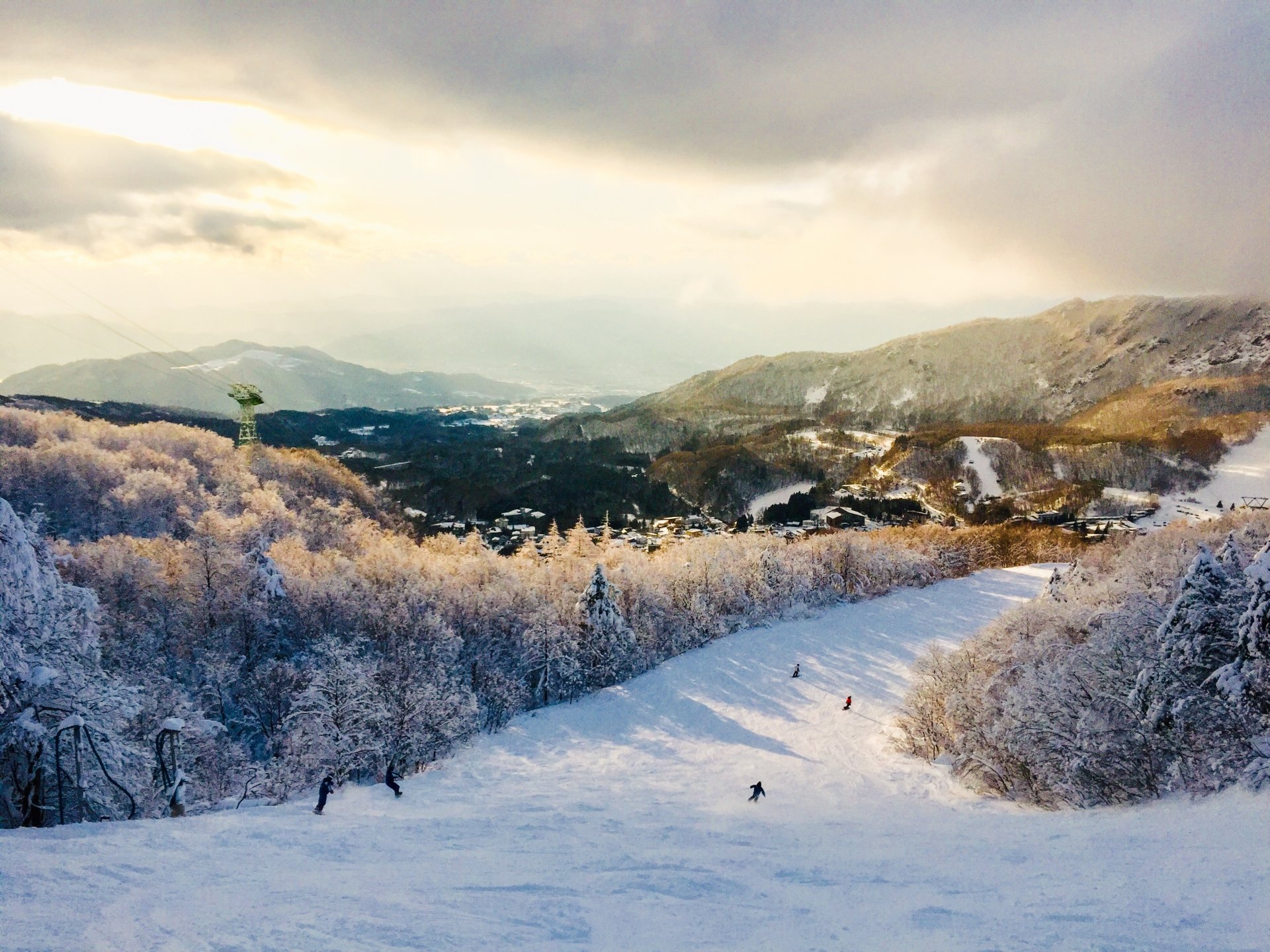
Japan’s high-alpine giant with quietly reliable pow
Zao Onsen
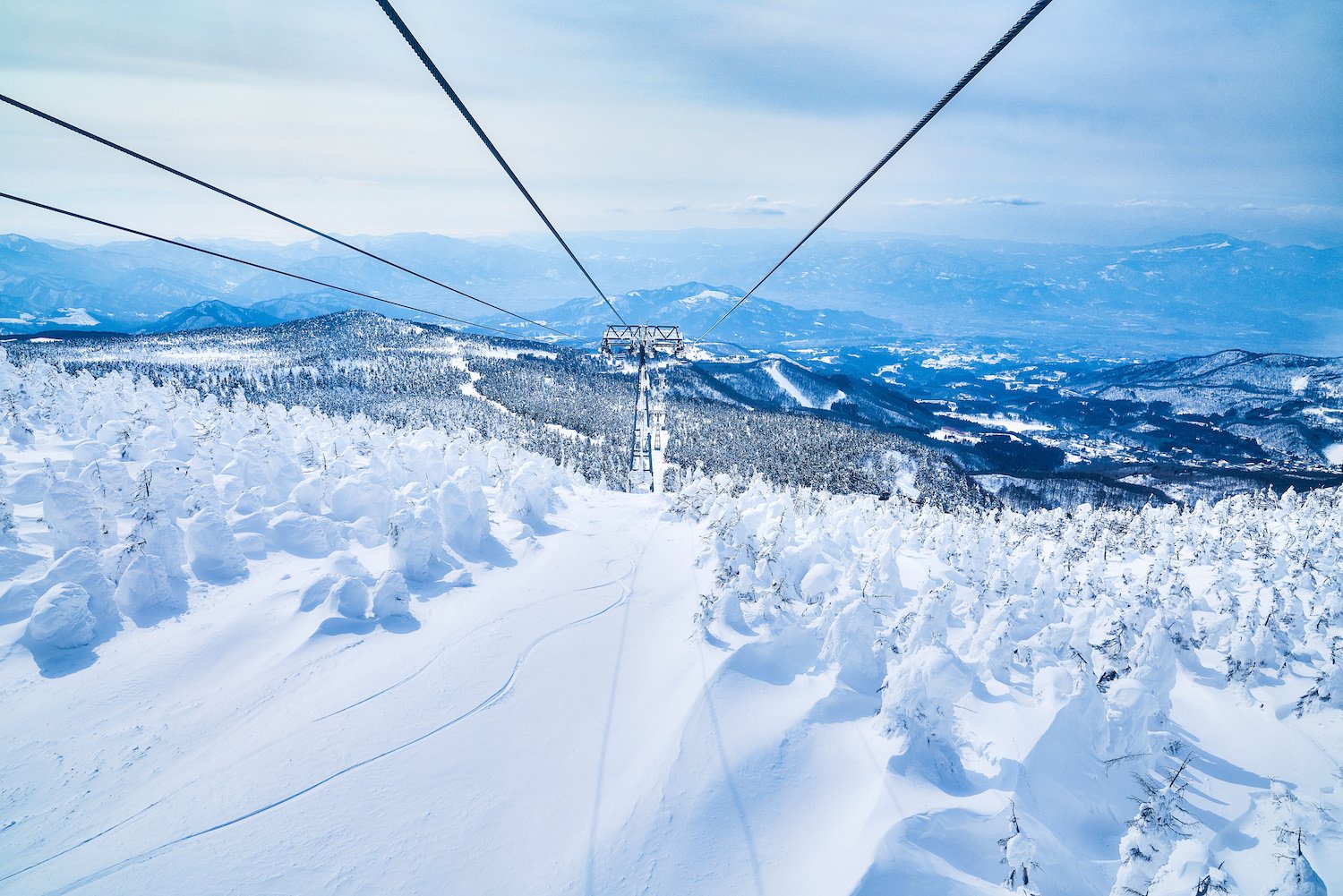
Where Snow Monsters Meet Champagne Pow
Resort Comparison
Town soul vs ski sprawl
Shiga Kogen has a lot going for it, but charm is not the first thing that hits you. Scale is. This is Japan’s highest ski area, with 18 connected resorts, nearly 50 lifts and more than 80 kilometres of trails spread across a broad alpine plateau that came to wider attention during the Nagano Olympics. The mood is ski-first, practical, a little spread out, and built around getting you onto another chair rather than dropping you into a cute main street.
Zao Onsen, by contrast, has a pulse the moment you step off the bus. It is a historic hot spring resort area with strong acidic sulfur water, public baths, ropeways overhead and a village feel that keeps the trip grounded even when the weather goes full white room. It feels older, stranger and more atmospheric than Shiga, in a good way.
Snow and weather
Estimated cumulative fresh snowfall at major on-mountain ski areas; actual totals vary substantially by resort, elevation, measurement location, and season.
For snow quality and staying power, I would lean Shiga Kogen. Its top elevation reaches 2,307 metres, official tourism materials describe it as the highest ski area in the country, and that extra elevation helps it stay colder and hold winter deeper into the season than many Honshu resorts. When other places start feeling a bit sun-touched or mashed by midday, Shiga is often still serving crisp, dry snow.
Zao Onsen still gets seriously good snow, and its upper mountain is home to one of Japan’s weirdest winter spectacles: the juhyo, or snow monsters, which are usually at their biggest from mid-February to mid-March. The catch is that a lot of Zao’s signature scenery lives up high and is tied to ropeway access, so its full magic is a bit more weather-theatre dependent. When it is firing, though, it is unforgettable.
Where you stay
At Shiga Kogen, your base matters more than people sometimes expect. Because the resort sprawls across 18 areas linked by lifts, traverses and shuttle buses, staying in one pocket can make certain zones feel easy and others feel like a bit of a mission. That is not a flaw, just something to be honest about. Shiga rewards people who enjoy plotting their day rather than rolling out the door and letting the village do the rest.
Zao Onsen is much simpler to read. The town has more than 80 accommodation options, from historical ryokan to hotels and economical lodges, and several slope access points sit right around the village and ropeway stations. It is the kind of place where you can ski, soak, wander for food, then do it again tomorrow without holding a morning strategy meeting.
Terrain and tree skiing
Shiga Kogen is the clear winner for sheer terrain appetite. Officially, you are looking at 18 ski areas and around 84 to 85 courses, with everything from beginner cruisers to longer advanced zones, plus standout pockets like Yakebitaiyama that lean harder into stronger skiers with powder-focused terrain and a higher percentage of intermediate and advanced runs. If you like covering ground and changing scenery all day, this place is a feast.
Zao’s terrain is more about long descents, dramatic upper-mountain skiing and a few signature hits rather than endless area-hopping. The official ropeway site talks up runs stretching to 10 kilometres and the Wall of Yokokura with a maximum pitch of 38 degrees. That gives Zao a bit more theatre than people expect, but the overall feel is still more compact and linear than Shiga’s giant patchwork of zones.
Crowds and lift flow
One of Shiga Kogen’s best tricks is simple: it is so big that people spread out. The combination of many resorts, nearly 50 lifts and shuttle links means the skier traffic gets diluted better than at tighter, more funnelled destinations. The trade-off is that movement is not always seamless. Sometimes the terrain flow is brilliant. Sometimes you are very aware that this is a huge ski complex stitched together over a broad mountain area.
Zao has a lot of lift infrastructure too, but its fame clusters attention around the ropeways and the snow monster side of the mountain. The town-access slopes are handy, and there is enough lift capacity to keep the resort functioning well, but it can feel more concentrated because the experience is visually pulled toward the same headline zones. Great when you want atmosphere. Slightly less great when everyone else wants the same photo and the same ropeway.
Cost and value
Shiga Kogen can be good value, but only if you use what makes it special. If you are the kind of skier who wants to roam, chase better visibility, test different zones and rack up serious vertical across multiple areas, the size pays you back. If you mostly want a compact holiday where everything happens in a neat little bubble, Shiga can feel like you are carrying around a bigger ski map than you really needed.
Zao Onsen tends to feel like the smarter value play for travellers who want skiing plus a proper town experience in one package. The wide accommodation mix helps, and the off-slope payoff is built right into the village rather than requiring a separate side trip. You are not just paying for ski terrain here. You are paying for a winter mood that starts before breakfast and keeps humming after dinner.
Food and nightlife
Neither of these is a neon, go-hard, last-chair-to-last-call kind of resort. Shiga Kogen is more subdued and scattered, with a lot of the eating anchored around hotels and mountain bases. If you want a wider food scene or more of an evening wander, the nearby Yudanaka and Shibu Onsen area gives you a better shot at that than the slopes themselves.
Zao Onsen has the stronger post-ski rhythm. The official town listings include soba spots, sweets, pubs and slope-side eateries, and because the resort is wrapped around an actual onsen village, it is easier to turn dinner into a little stroll instead of a logistics exercise. It is still not wild nightlife, but it has more soul once the lifts stop.
Logistics
For many travellers, Shiga Kogen is the easier one to slot into a Tokyo-heavy itinerary. The classic route is shinkansen to Nagano, then a direct express bus into the resort, with official guidance putting the bus at roughly 70 minutes. There is also the Yudanaka route if that fits your plans better. It is not ski-in-city-out instant, but it is pretty clean by Japan resort standards.
Zao Onsen is still very manageable, just a little more stitched together. From Tokyo, it is typically Yamagata Shinkansen to Yamagata Station, then about 40 minutes by bus into town. Not difficult, just one more reminder that Zao sits a little farther out from the main tourist conveyor belt. The reward is that you arrive in a place with more immediate character.
Snow monkeys vs snow monsters
This is the bit that makes this pairing fun. Shiga Kogen has the snow monkey bonus nearby, plus easy access to Yudanaka and Shibu Onsen at the foot of the mountain. So even though the resort itself is more ski-sprawl than storybook town, the surrounding area adds a very Japan-specific extra layer if you want a rest-day detour.
Zao Onsen answers with pure winter weirdness. The juhyo snow monsters are not just a marketing mascot; they are a real weather phenomenon, and they give the whole upper mountain an eerie, almost cartoonish look that very few ski resorts on earth can match. If you want a trip with a visual signature people instantly remember, Zao has a big, frosty ace up its sleeve.
The tiebreaker
Pick Shiga Kogen if you want the better ski product: more terrain, more variety, more reliable cold snow, and more room to roam.
Pick Zao Onsen if you want the better winter trip: more atmosphere, better onsen-town character, and a far more memorable off-slope personality.
FAQ
Is Shiga Kogen or Zao Onsen better for beginners?
Shiga Kogen is the safer bet for true beginners and mixed-ability families because it has lots of varied terrain and a strong family-friendly reputation. Zao is still beginner-friendly in parts, but its biggest appeal is the full town-and-onsen experience rather than just easy learning slopes.
Which is better for advanced skiers?
Shiga Kogen. The scale alone gives stronger skiers more to work with, and areas like Yakebitaiyama add more serious intermediate-to-advanced flavour. Zao has some standout steeper terrain, especially around Yokokura, but Shiga gives you more ways to keep the legs entertained for multiple days.
Which has better powder?
Shiga Kogen is the safer answer for powder reliability because its elevation helps preserve snow quality and stretch the season. Zao still gets excellent snow, but part of its appeal is wrapped up in the upper-mountain spectacle and ropeway-access scenery, not just pure powder mileage.
Which resort feels more Japanese?
Zao Onsen, comfortably. The hot spring history, public baths, sulfur smell and ryokan-heavy town make it feel more culturally immersive than Shiga’s more spread-out, ski-centred layout. Shiga can still deliver that side of Japan, especially if you add Yudanaka or Shibu Onsen.
Which is easier to reach from Tokyo?
Shiga Kogen gets the nod for simplicity for a lot of travellers, mainly because the Tokyo to Nagano leg is easy and the direct bus onward is straightforward. Zao Onsen is still very doable by shinkansen and bus, just a touch less plug-and-play.
When is the best time to go?
Midwinter is strong for both, but for different reasons. Shiga Kogen benefits from colder, higher-altitude snow, while Zao’s snow monsters are usually at their biggest from mid-February to mid-March, which adds a very specific reason to time the trip well.
Which is better for a non-skier partner or mixed ski group?
Zao Onsen is better if someone in the group wants more than just skiing. The hot springs, town atmosphere and snow monster sightseeing give it a stronger non-ski identity. Shiga works better when most of the crew mainly want to ski and maybe tack on snow monkeys or onsen off the mountain.