
Nakayama Tōge
Spring park, early storms, zero fuss
 中山峠
中山峠First tracks, last tracks, one lift
Most Hokkaido ski trips involve some kind of commitment: a transfer, a booking, a plan. Nakayama Tōge asks for none of it. Pull off Route 230 at the pass, click in beside the lodge, and you're gliding toward Mount Yotei inside five minutes. What makes the place worth knowing is its calendar rather than its terrain, it tends to open before the destination resorts finish pre-season prep, then runs on natural snow clear through to Golden Week.
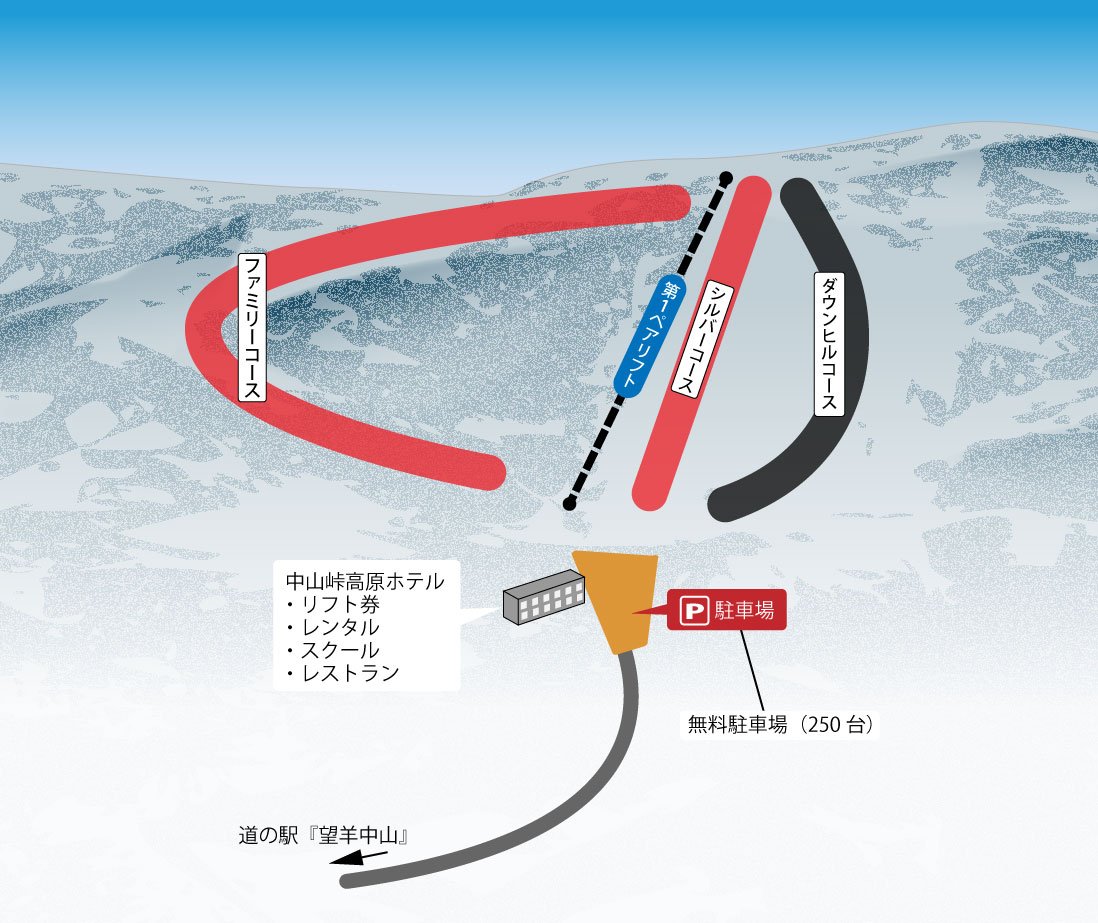
Two named runs handle the whole mountain, plus a couple of unofficial variants for anyone bored of the main lines, and a terrain park gets staked out to one side once spring conditions settle in. There's enough fall line to build real edge confidence if you're still finding your feet, and enough pitch for a stronger rider to push speed or hunt whatever small natural feature the last storm left behind. Winter belongs to the groomers, spring belongs entirely to the park crowd.
Nothing about this place attracts a crowd, which is precisely the point. Midweek the single lift carries mostly locals and school groups, weekends add a handful of boarders stacking park laps. Without a gate system or a headline off-piste zone, snow quality holds up far longer than you'd expect from a one-lift hill.
Apres, such as it is, happens at the roadside station right at the pass, best known for ageimo, deep-fried potato skewers, with an uninterrupted view of Yotei. Proper meals and beds live downhill in Jozankei Onsen or further toward Rusutsu. On-hill English is thin, but the setup is simple enough that a first-timer won't struggle.
Resort Stats
- Vertical180m (980m → 800m)
- Snowfall~8m
- Terrain 20% 60% 20%
- Tree Riding
- Lift Pass¥5,000
- Lifts1, fixed-grip pair
- Crowds
- Out of Boundsno gates; patrol focus
- Night Skiing
- Family Friendly
- Trails2
- Skiable Area~14ha
- VibeEarly birds, spring park, quick turns
Trail Map
Accommodation
View MapThere's no village, you'll sleep down the road regardless. Most people default to Jozankei Onsen, 30 to 40 minutes back toward the city: river-view ryokan, steam off the baths, vending machines humming at midnight after your soak. The range runs genuinely cheap to proper luxury, and most options come with a decent buffet. Groups who'd rather have hot water than a bar scene will feel at home.
If your crew wants more than an onsen and a bed, Rusutsu Resort sits further along Route 230 with indoor pools, arcades for the kids, ski-in lifts, and direct Sapporo buses that stop right at the pass for a snack break. Peak winter pricing runs high, but shoulder-season rates can be genuinely good around spring park season. See our guide to where to stay in Rusutsu for the full rundown.
Tighter budget still? Business hotels and pensions on the city fringe or the small towns toward Lake Tōya will do the job, a 45 to 90 minute drive depending on the roads, for real savings and more restaurant choice. Whatever base you land on, the plan barely changes: sleep well, shred the pass, eat properly.
Powder & Terrain
As a genuine local's hill, Nakayama Tōge keeps it simple: one fixed-grip pair lift, two named runs, and 180 m of vertical that skis quicker than it sounds thanks to a fall line running almost straight off the pass. It's natural snow only, no snowmaking, so storm timing matters more here than infrastructure does, an overnight top-up turns the whole hill to easy corduroy by first chair. There's no gate network and no real sidecountry, patrol keeps a tight boundary given the terrain drops straight to the highway on both sides, so this is a groomer and small-feature spot rather than a powder-stash mission. On a storm morning, just lap the pair lift before the plough trucks finish clearing Route 230, snow stays untouched longest right off the top before day traffic arrives.
Getting There
Fly into New Chitose (CTS). Driving from Sapporo takes about 60 minutes via Route 230, a genuine mountain pass road, so come with real winter driving skills. Continuing to Rusutsu adds another 90 to 120 minutes, and the pass sits right on that route if you want to break the drive up with a few runs.
Without a car, Donan Bus runs between Sapporo and Tōyako with a stop at the pass, a 15 minute walk in. Resort shuttles heading to Rusutsu also tend to pause here for a rest break. Once you've arrived there's nothing to navigate, one parking lot, one lift, one building.
Weather at a mountain pass flips faster than the valley below it. Carry chains in a rental and assume ice in the shade regardless of sun elsewhere, that same microclimate is why this small hill opens early and stays open late.
Who's it for?
- First-timersLimited
- Powder huntersLimited
- BudgetOkay
- LogisticsLimited
This suits efficiency over ambition: a dawn session before work, a quick detour on a road trip, or a spring afternoon in the park. The simple layout and steady, edge-rewarding pitch click fast for upper intermediates. Advanced riders can still enjoy a storm morning's corduroy or a good spring jump line, but anyone chasing real steeps or a tree maze should treat this as a warm-up act, not the headline. It earns its place stitched into a run with Rusutsu, Kiroro, Sapporo Teine or Sapporo Kokusai. For more hills that fly under the radar, see our guide to Japan ski resorts with less crowds.
Food & Après
The roadside station right at the pass built its reputation on ageimo, skewered deep-fried potato balls that land exactly right after a cold run. Around it you'll find fried chicken, imomochi and soft serve, unpretentious Hokkaido fuel with Yotei framed in the window. Upstairs, the restaurant runs to hearty rice bowls and curry, low-key apres you didn't realise you needed until you're eating it.
Jozankei carries the heavier lifting: izakaya, ramen counters and hotel buffets leaning on Hokkaido seafood and dairy. Heading back to the city, reward yourself with soup curry or jingisukan on the way. Continuing toward Rusutsu, the resort's food halls run from a quick convenience bowl to a genuine steak dinner.
Japow Travel Tips
- Lift hours: typically 09:00 to 16:30 in season, spring hours often 09:00 to 16:00. No night skiing.
- Operations cadence: runs early season, closes mid-winter, reopens for spring through to early May. Plan around that window rather than assuming a standard season.
- Avalanche and off-piste: not a backcountry hill. Stay in bounds, save the touring gear for the bigger hills nearby.
- Snow and weather: natural snow only. Early season can deliver legitimate winter turns, spring means corn and park laps. Wind and fog can affect the pass.
- Language: on-hill English is limited but basic services and signage are straightforward.
- Nearby missions: Rusutsu for varied terrain, Kiroro as a storm magnet, Sapporo Kokusai on a good storm cycle, Sapporo Teine for steeper skyline lines, all workable as day trips.
- Facilities: lodge restaurant 10:00 to 15:00, shop 09:00 to 16:00, lockers from early morning. Simple, close, no fuss.
Verdict: pass-side perfection for early birds and spring die-hards
Forget acreage, this hill is entirely about timing. Show up for the first legitimate turns of the season, or the last good days of spring, and an unpretentious pass on the way to Rusutsu quietly delivers both. One chair, a straight fall line, snow that owes nothing to a snow gun, and ageimo in the parking lot, work it into a Sapporo circuit and you'll wonder why you waited this long.