
Fu’s
Storm Chase in City Limits
 フッズ
フッズSapporo's cheapest storm chase
Fu's sits in the southern hills above Sapporo, the kind of place locals duck out to before work, after school, or the second a storm warning lights up their phone. Officially it's the Fujino Outdoor Sports Facility, opened back in the 1960s, and it still carries that no-frills community-hill feel: compact base building, straightforward lifts, staff who know half the regulars by name.
Price is the standout feature. A full-day adult ticket costs less than a decent lunch at one of the bigger Hokkaido resorts, and the night ticket is cheaper again. If you're based in Sapporo waiting on the radar to turn blue, Fu's is a simple call: subway to Makomanai, hop the free shuttle, and you're clicking into bindings without a rental car or a long bus transfer. English is limited but the basics are covered, and the lifties are patient with pointing and smiling.
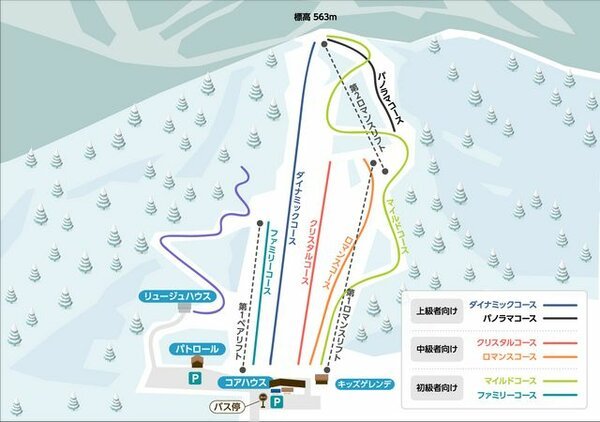
Terrain is modest but genuinely well suited to progression. The lower half is broad, confidence-building green and easy blue, ideal for breaking in new gear or teaching a mate to link turns. Higher up, the steeper reds let intermediates open things up properly, and the longest line runs close to 1.8 kilometres end to end with pitches touching 38 degrees, more bite than the small footprint suggests. On a storm cycle, the piste edges and gaps between courses fill with soft chalk that skis a lot better than the stats promise.
Crowds are mostly a non-issue. Weeknights and storm mornings can feel like a private training ground, broken up only by school groups and the odd race club running gates. Space opens back up fast even when it gets busy. If Sapporo's copping a proper dump, the move is an evening session: soft snow under lights, a hot can of vending-machine cocoa, and the city glowing below.
Resort Stats
- Vertical300m (562m → 250m)
- Snowfall~7m
- Terrain 35% 40% 25%
- Tree Riding
- Lift Pass¥3,300
- Lifts3 × fixed-grip double chairs
- Crowds
- Out of BoundsNot permitted
- Night Skiing
- Family Friendly
- Trails6
- Skiable Area~33ha
- VibeLocal, nighta-friendly, wallet-kind
Trail Map
Accommodation
View MapThere's no lodging at the hill itself, which is fine because Sapporo covers every budget and mood. Susukino and Odori are stacked with business hotels and serviced apartments, clean, simple, and built for gear-and-go skiing. Prices run well below resort-town rates, and you can walk to ramen, soup curry and bars without changing out of your beanie. Our guide to where to stay in Sapporo is worth a look if you want the neighbourhood breakdown.
For the onsen experience, base yourself in Jozankei, the hot spring valley a short way up Route 230. Traditional ryokan and modern spa hotels there deliver outdoor baths under falling snow, a kaiseki dinner, and a sleepy riverside walk home. It's an easy drive or bus back into the city, and just as close to Fu's, so you can mix powder turns with hot springs without switching beds.
Travelling as a group, apartments around Nakajima Park or Tanukikoji make sense: a kitchen for big breakfasts, coin laundry for wet gloves, and quick subway access to Makomanai.
Powder & Terrain
Three double chairs, quick cycles, and a fall line that rides better than the numbers suggest once it's dumping. The steepest line off the top loosens into a leg-saving pitch lower down, and one course carries enough of a practice-mogul culture to build your legs up fast if you let it. The snow itself is classic Sapporo hill snow: not as cold or bottomless as Kiroro or Sapporo Kokusai up at elevation, but reliably soft, especially through a night session once temperatures drop. Off the edges you'll find tight birch pockets and short cutbacks rather than proper tree runs, and the boundary ropes are enforced. Read it as a groomer mountain with a bit of seasoning, not a freeride venue, and it delivers exactly what it promises.
Getting There
Fly into New Chitose (CTS), take the JR or a rapid bus into Sapporo, then ride the Namboku subway line to Makomanai. From there, Fu's runs a free shuttle most days in season, check the timetable first since it doesn't run continuously. Driving is a straightforward run from central Sapporo along Route 230, with a short, steeper access road near the end. Winter tires are mandatory and a light foot helps once that last stretch turns slick. Parking is easy and you can be clicked in roughly 40 minutes after leaving downtown. If Fu's is one stop on a bigger Hokkaido loop, our guide to getting around on a Japan ski trip covers the wider transfer picture.
Who's it for?
- First-timersOkay
- Powder huntersLimited
- Non-skiersOkay
- BudgetGood
- Après / nightlifeGood
- LogisticsGood
If you're based in Sapporo and want to ride the moment the sky turns on, Fu's is your local answer. Intermediates who love carving clean arcs will get plenty out of it, and advanced riders chasing a tune-up day or a quick night-storm harvest will leave smiling, provided expectations on vertical and off-piste scope stay realistic. Anyone chasing big terrain, gates or proper tree lines is better off day-tripping to Sapporo Kokusai, Sapporo Teine or Kiroro, and keeping Fu's in reserve for the two-hour window when it's snowing and there's nowhere better to be.
Not sure which Hokkaido hill fits your trip best? The Japan Ski Resort Finder is a quicker way to sort that out than reading through a dozen reviews.
Food & Après
On the hill, the cafeteria sticks to the reliable trio: curry rice, ramen, crepes, nothing that will win awards but exactly what you want between laps in the cold. The real reason to eat properly is waiting downtown once the lights click off. Sapporo runs on late-night ramen counters, soup curry joints, and izakayas where a beer and a plate of grilled hokke disappear fast after a session. Apres here means city apres: no lodge bar, no stumbling home in boots, just a subway ride into one of the best food scenes in the country.
Japow Travel Tips
- Lift hours: day tickets typically run 9am to 4pm, with night skiing to 9pm and last chair around 8:45pm.
- Tickets and deposit: lift media is an IC card, expect a refundable ¥500 deposit at purchase.
- Boundaries: treat the ropes as hard lines. There's almost no sanctioned off-piste, and ducking one gets you a firm word from patrol. Keep it on-piste or keep it discreet and safe within the marked areas.
- Weather and snow: low city elevation means quick refresh during storms and quicker set-up during dry spells. Night sessions are the pick whenever temperatures drop.
- Language: English is limited, simple phrases and a translation app go a long way.
- Unique extra: a dedicated luge and bobsled training track sits right next to the ski area, a genuine curiosity built for Olympic-era competition training. Ask at the front desk about taster sessions if rocketing down an ice chute on a sled sounds like your kind of apres.
- Nearby resorts: Sapporo Teine for sea-view steeps, Sapporo Kokusai for deeper snow at higher elevation, Kiroro for proper storm-day trees. Our Best Ski Resorts Near Sapporo and New Chitose Airport list covers how to string them together.
Verdict: the answer to "it's snowing, now what"
Fu's isn't chasing anyone's bucket list, and it doesn't need to. What it delivers is a genuinely useful piece of infrastructure for anyone based in Sapporo through winter: cheap turns, minimal commitment, and a lift ticket that costs less than the taxi to get there at some resorts. Judge it against Kiroro or Niseko United and it loses instantly. Judge it as the thing that turns a random Tuesday storm into an actual ski session, and it's one of the best value plays in Hokkaido. Keep the season pass in reach, and let Fu's soak up every spare hour the weather hands you.