
Owani Onsen
A mellow Tsugaru hill with sneaky stashes and hot-spring vibes
 大鰐温泉
大鰐温泉Quiet turns, hot springs, happy crew
Three chairlifts, a bathhouse town at the base, and a trail map that never once tries to be something bigger than it is. That's the whole pitch for this hill above the hot spring town of Owani, and once you stop expecting a destination resort it starts to make a lot of sense. Most of the terrain is easy, the pace is unhurried, and there's just enough steep stuff on the far side of the hill to keep a strong rider occupied for a session before the soak.
What actually sells the place is the combination, not the skiing alone. Half a day on gentle groomers, a hot bath afterward, a bowl of something good, an early night. It's a rhythm you can't really get at a resort built around chasing bigger numbers, and the town below leans into it: quiet streets, mineral baths, and a slower gear than anywhere else on an Aomori itinerary.
Keep your expectations honest and this hill delivers. It won't hand you a hidden freeride stash or a reason to fly across the country for it specifically, but it's a genuinely dependable local mountain with more character in its terrain than the numbers on a trail map suggest. On a big storm day, when the coastal wind is shutting down lifts elsewhere, a sheltered little hill like this one can end up being the smartest call you make all trip.
Resort Stats
- Vertical338m (550m → 212m)
- Snowfall~9m
- Terrain 62% 29% 9%
- Tree Riding
- Lift Pass¥3,500
- Lifts3 pairs
- Crowds
- Out of Boundsnot allowed
- Night Skiing
- Family Friendly
- Trails9
- Skiable Area~90ha
- Vibeonsen town, uncrowded, old-school
Trail Map
Accommodation
View MapHirosaki is the practical base, a 15 to 25 minute drive depending on snow and traffic, with a solid spread of business hotels, smaller pensions and enough restaurants to keep a week of dinners interesting. It's also the better launchpad if the storm track shifts overnight and you decide to chase snow at a different Aomori hill the next morning.
For the fuller experience, sleep down in the onsen town itself. Traditional ryokan and smaller hot spring hotels line the streets, most pumping genuine mineral water straight from the source. If a ryokan stay is new to you, our guide to what a ryokan actually is walks through what to expect, from the kaiseki dinner to the yukata robes. Breakfasts here are generous and early, timed for a crew chasing first chair, and the owners tend to know the mountain's moods better than anyone.
Travellers chasing something more indulgent can push further into the wider Tsugaru hot spring belt for a splurge night. Apple-scented baths and the odd shamisen performance are genuinely part of the furniture up here, not a tourist add-on, before sliding back down for the next ski day. Parking at the resort itself is plentiful and free, and nobody blinks at an early boot-up in the car park.
Powder & Terrain
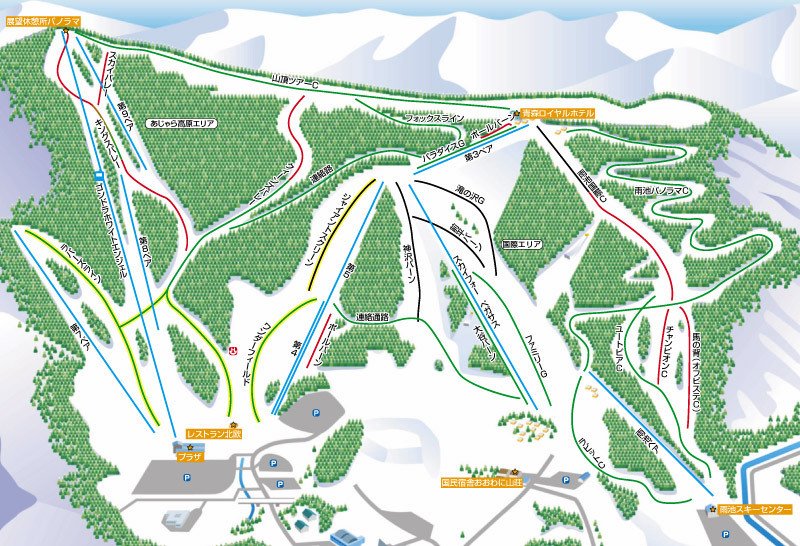
Nine courses, three lifts, just over 10 kilometres of skiable distance. The trail map leans heavily toward wide, forgiving groomers, and that shapes how a day here actually plays out: beginners and mixed groups get an easy, stress-free mountain, while stronger riders need to plan around a handful of specific runs rather than expect variety everywhere they look.
Rabbit Course and Amaike Panorama do the heavy lifting for beginners and families, wide and predictable enough to build real confidence. Amaike International, the resort's FIS-certified competition run, is where the mountain earns some respect: over two kilometres long and genuinely demanding once it steepens through the middle. The real prize sits off to the side, Kamizawa and Maedaira are both labelled super-advanced on the resort's own map, short steep barns worth hiking or lapping on a powder morning before the groomers flatten everything out.
Takinosawa is the connector between the two worlds, a proper advanced pitch that isn't as punchy as Kamizawa or Maedaira but keeps the middle of the mountain interesting on a lap day. None of this adds up to tree skiing or sidecountry in any real sense, and the resort doesn't pretend otherwise. What you get instead is groomed skiing as the backbone, with pockets of ungroomed terrain on the steeper barns that ski a lot better than a hill this size has any right to when the timing lines up.
Snow-wise, this corner of Tsugaru sits in a decent band but not in the same league as Aomori's headline powder hills further north. A proper storm cycle can leave it skiing very well for a day or two, and the resort explicitly warns that avalanche risk climbs on the ungroomed terrain in a fat snow year, which tells you the sidewalls aren't just decorative. The real value is shelter. This hill often sits calmer than the exposed coastal mountains when the wind is up, so it earns its place as the fallback plan rather than the headline act.
Getting There
Land in Aomori and the drive south down the Tohoku Expressway is simple, about a quarter hour off the interchange nearest the resort. Travelling by rail, the JR Ou Main Line runs to the local onsen station, with a short taxi covering the final stretch to the lifts. Tyres matter more than the map here: this is standard Tohoku winter driving, so proper snow tires are assumed and chains are worth having in the car after a heavy overnight dump or if you're exploring the smaller roads around town.
Who's it for?
- First-timersGood
- Powder huntersOkay
- Non-skiersOkay
- BudgetGood
- LogisticsLimited
This is an intermediate's mountain first. Long, confidence-building groomers, forgiving pitches and enough runs to fill a full day without repeating a lap too often. Advanced riders won't be bored either, Kamizawa and Maedaira give a genuine hit of steep terrain on a storm cycle, but they'll want to treat it as a bonus rather than the reason for the trip. Families get an easy run of it too: the base zones are gentle, the lift lines rarely bite, and the whole layout is built for a group with mixed ability. If you need big vertical, real trees or a managed gate system, this isn't it, that trip belongs at Hakkoda or Aomori Spring instead. Not sure which fits your crew? Our Japan Ski Resort Finder sorts that out in a couple of questions.
Food & Après
The on-mountain cafeteria is unpretentious and reasonably priced, ramen, katsu curry, noodles and simple plates that won't test a family budget. The dish worth seeking out is moyashi, hot spring grown bean sprouts that are this town's genuine culinary claim to fame, folded into a bowl of ramen or served over rice, with a crunchy, almost sweet snap a normal supermarket sprout can't match. Evenings run quiet: a soak, a hot bowl, maybe one izakaya beer, then an early bed so tomorrow's first chair doesn't go to waste.
Japow Travel Tips
- Lift hours: 08:30 to 16:45 through the season, which typically runs late December into early or mid March depending on how the snow holds up.
- Backcountry reality: there's no gate network here, and the resort is explicit that you stay within the managed area and off any closed course. This isn't the hill to test boundary rules on.
- Weather pattern: coastal storms funnel repeatedly through the Tsugaru corridor. January and early February are the reliably driest weeks, with the season settling into firmer chalk and groomers by March.
- Language and culture: hospitality from staff is warm even though English is limited, and multilingual signage has started appearing in the last few seasons. A handful of smaller local spots are cash only, so carry yen.
- Unique to this hill: the moyashi bean sprout tradition and the FIS-certified Amaike International course are two things you won't find at any other Aomori ski area.
- Pair it with: Aomori Spring for bigger vertical and modern lifts, or Hakkoda for genuine backcountry ropeways. Our Northern Tohoku Storm-Chaser Loop guide strings the region together into a full trip.
Verdict: Storm-day sweetheart in an onsen robe
This is what a happy, honest local ski hill looks like: simple lifts, forgiving terrain, and just enough bite on Kamizawa and Maedaira to keep an advanced rider entertained when a storm rolls through. Slot it into a wider Aomori circuit for low-stress powder mornings and mellow midweek corduroy, then let the onsen do the rest. Choosing the quiet road over the famous one has its own reward, and this hill is a good argument for taking it.